A temp email for Xano can be useful for early backend testing, signup verification, and keeping another developer-tool trial out of your main inbox, but it becomes risky once production APIs, real user data, collaborators, billing, or account recovery matter.
If you are only evaluating Xano or building a throwaway sandbox, a temporary inbox is reasonable; if the backend may become real infrastructure, switch to a stable address you control before the project gets serious.
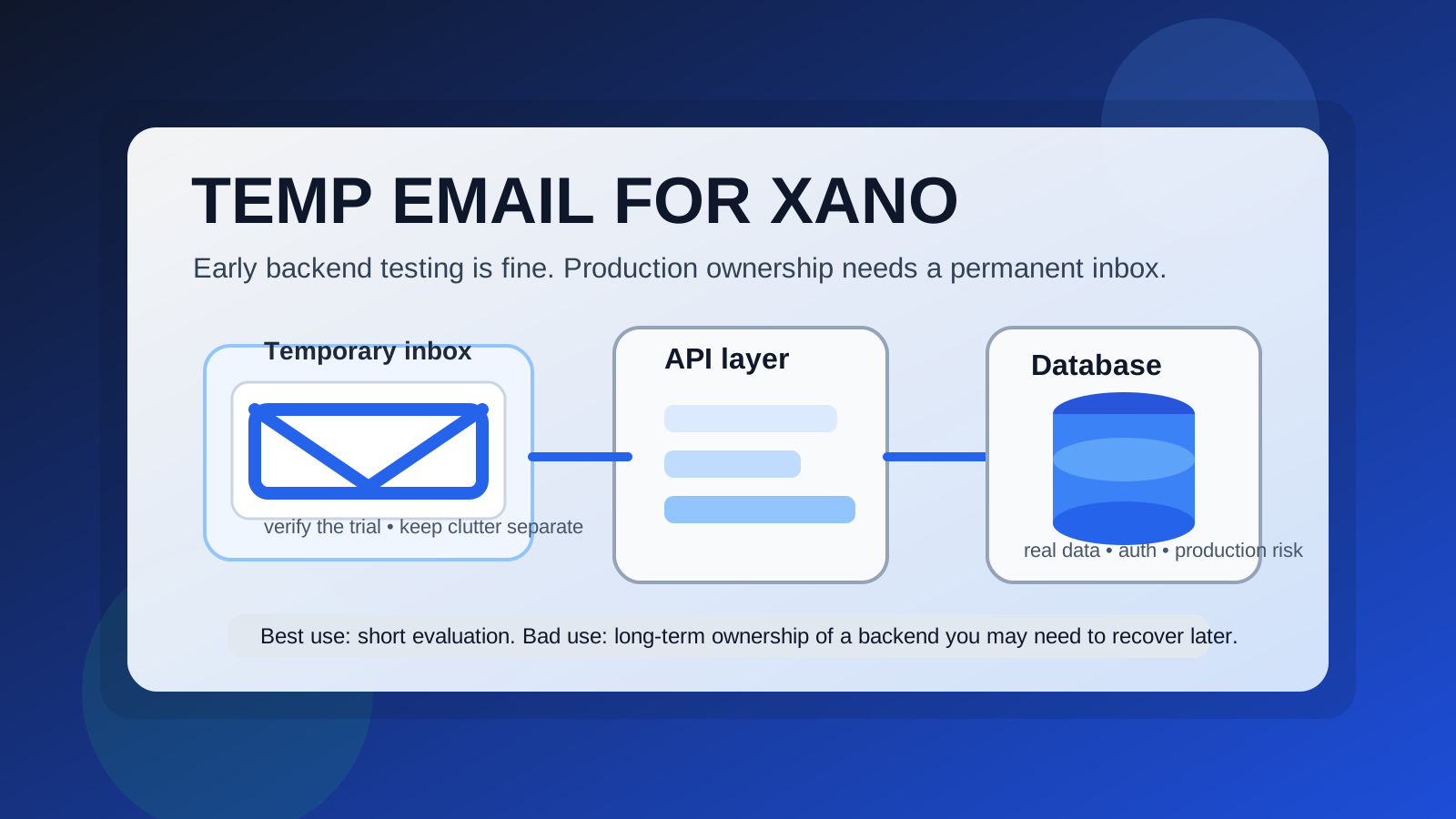
That is the practical answer most people actually need. Xano is the kind of platform that starts as a quick experiment and then quietly turns into something important. You might sign up just to test the database builder, inspect the API layer, explore auth options, or compare it with another backend stack before making a bigger decision. In that early phase, a temporary inbox can be handy because it lets you receive the verification email, look around, and keep your permanent inbox from collecting another long software-trial sequence.
The catch is that backend tools do not stay low-stakes for long. A harmless test workspace can become the API layer for a real client project, an internal app, a startup prototype, or a production workflow that other people depend on. Once that happens, the email behind the account stops being a minor detail and starts becoming part of ownership, continuity, and recovery.
Why people look for a temp email for Xano
Most people searching this are not trying to do anything shady. They are trying to solve a normal software-evaluation problem: too many platforms want a real email address before you even know whether the product fits your workflow.
Xano is especially easy to trial in that way. You may only want answers to a few practical questions:
- Does the backend builder feel fast enough for your style of work?
- Can you model tables and relationships the way your app needs?
- Do the API endpoints, auth controls, and logic layers feel flexible enough?
- Is Xano a better fit than another backend or no-code stack you are testing?
If that is all you need at first, a temporary inbox is a sensible privacy buffer. A service like Anonibox can help you grab the verification message and open the product without automatically tying your primary personal or work address to yet another onboarding sequence.
When using a temp email for Xano makes sense
1. You are only doing a first-pass evaluation
If your goal is to verify the account, click through the dashboard, inspect the data model tools, and decide whether Xano belongs on your shortlist, a disposable inbox is reasonable. At that stage, the account is still part of research rather than long-term infrastructure.
2. You are comparing several backend or no-code tools at once
It is common to compare multiple products side by side before choosing one. Maybe you are weighing Xano against a different backend platform, a low-code builder, or a more traditional stack. Separate trial inboxes help keep those evaluations organized and keep your main email from filling up with overlapping welcome sequences, demo prompts, webinar invites, and upgrade nudges.
3. You are building a true throwaway sandbox
Sometimes the project really is temporary. You may want one quick test for a hack-day idea, a personal learning exercise, or a proof of concept you are comfortable discarding. If losing the account later would not matter, a temp inbox matches the level of commitment.
4. You want less vendor follow-up before you commit
Even perfectly normal SaaS products can create a lot of inbox residue. A temporary address lets you isolate early curiosity from long-term contact. That can be useful if you only want to inspect the product before deciding whether it deserves a real place in your stack.
Where temporary email starts to become risky
1. Your backend becomes production infrastructure
The biggest turning point is simple: the project stops being a toy. Once your Xano workspace powers a live app, a client portal, a mobile backend, or an internal workflow that matters, the account email becomes part of real operational infrastructure. At that point, a throwaway inbox is a weak foundation.
2. Production APIs and automations depend on the account
Xano is often used to power APIs, business logic, scheduled tasks, integrations, and data workflows. If your account starts holding environments, API groups, secrets, or operational settings you may need to revisit later, recovery matters much more than short-term inbox cleanliness.
3. Other people need access
The moment teammates, contractors, or clients become involved, the account is no longer just a private experiment. Collaboration changes the risk. A temporary inbox can create fragile ownership, confusing handoffs, and unnecessary recovery problems if the workspace becomes shared.
4. Real data enters the picture
Plenty of evaluations begin with sample records and end with customer data, internal workflow data, or business-critical logic. Once you are modeling real users, real tables, real endpoints, or real auth behavior, you should not treat the admin inbox like a disposable accessory.
5. Billing and account recovery start to matter
Password resets, suspicious-login alerts, plan notices, payment reminders, and ownership confirmations all tend to route through email. A temporary inbox feels convenient right up until you need it again and no longer have dependable access.
How to use a temp email for Xano without creating future problems
Set a clear boundary between test mode and real mode
The easiest way to stay out of trouble is to decide upfront what counts as a disposable evaluation and what counts as a real backend. If the project is truly exploratory, a temp inbox is fine. If you already suspect it may become a serious app, use a permanent address from the beginning.
Switch before the project becomes important
Do not wait until after teammates are invited, endpoints are in use, or production logic is built. The best time to switch to a stable email is before the workspace becomes something you would hate to lose.
Keep throwaway experiments separate from serious builds
If you want to move fast, keep the disposable account for learning and the permanent account for anything you might retain. That keeps your evaluation flexible without mixing temporary access with long-term ownership.
Document what matters while you evaluate
If your first sandbox turns out better than expected, save the important pieces: schema ideas, endpoint patterns, auth decisions, and workflow notes. That way you can rebuild or migrate cleanly under a durable account instead of clinging to a temporary inbox longer than you should.
Do not let convenience outrun governance
This is especially important for teams. It is easy to justify a burner address on day one because “we are just testing.” A week later, the same workspace may already hold logic that people rely on. The faster the project grows, the more quickly you should move it under a monitored, shared-safe email setup.
Signs you should stop using the disposable inbox now
- You plan to return to the same workspace next week or next month.
- You have started modeling real business data instead of throwaway sample records.
- You are inviting teammates, collaborators, or clients into the project.
- You are connecting the backend to a real app, frontend, or production workflow.
- You are considering a paid plan or expect billing emails to matter.
- You would be genuinely annoyed if you lost control of the account tomorrow.
If several of those are true, the right move is simple: switch to a permanent address you control while the project is still easy to clean up.
A practical checklist before signing up
Before you use a temp email for Xano, ask yourself:
- Am I just evaluating the product, or am I already building something I may keep?
- Will this workspace ever hold real user data, client work, or production APIs?
- Will anyone else need access later?
- Do I expect billing, plan changes, or recovery emails to matter?
- Would I be comfortable abandoning this exact account if the inbox disappeared?
If your honest answer is “yes, I could abandon it,” a temporary inbox is probably fine for the first pass. If the answer is “no, I may need this later,” start with a real address or migrate sooner rather than later.
Final answer: should you use a temp email for Xano?
Yes, but only for the truly temporary stage. A temp email for Xano is useful when you want to verify an account, inspect the backend builder, compare platforms, or keep early trial noise away from your main inbox.
It becomes the wrong tool once the workspace starts powering real APIs, holding meaningful data, involving collaborators, or needing dependable recovery. Use temporary email for evaluation, not for long-term backend ownership. That gives you the privacy and convenience benefit up front without turning a throwaway signup into a future account headache.