If you are testing Alchemer, a temp email can be useful for account verification and first-pass survey setup without sending every trial message to your main inbox.
It becomes a bad long-term choice once your workflow depends on live respondent follow-ups, reminder emails, team notifications, or anything you need to own permanently.
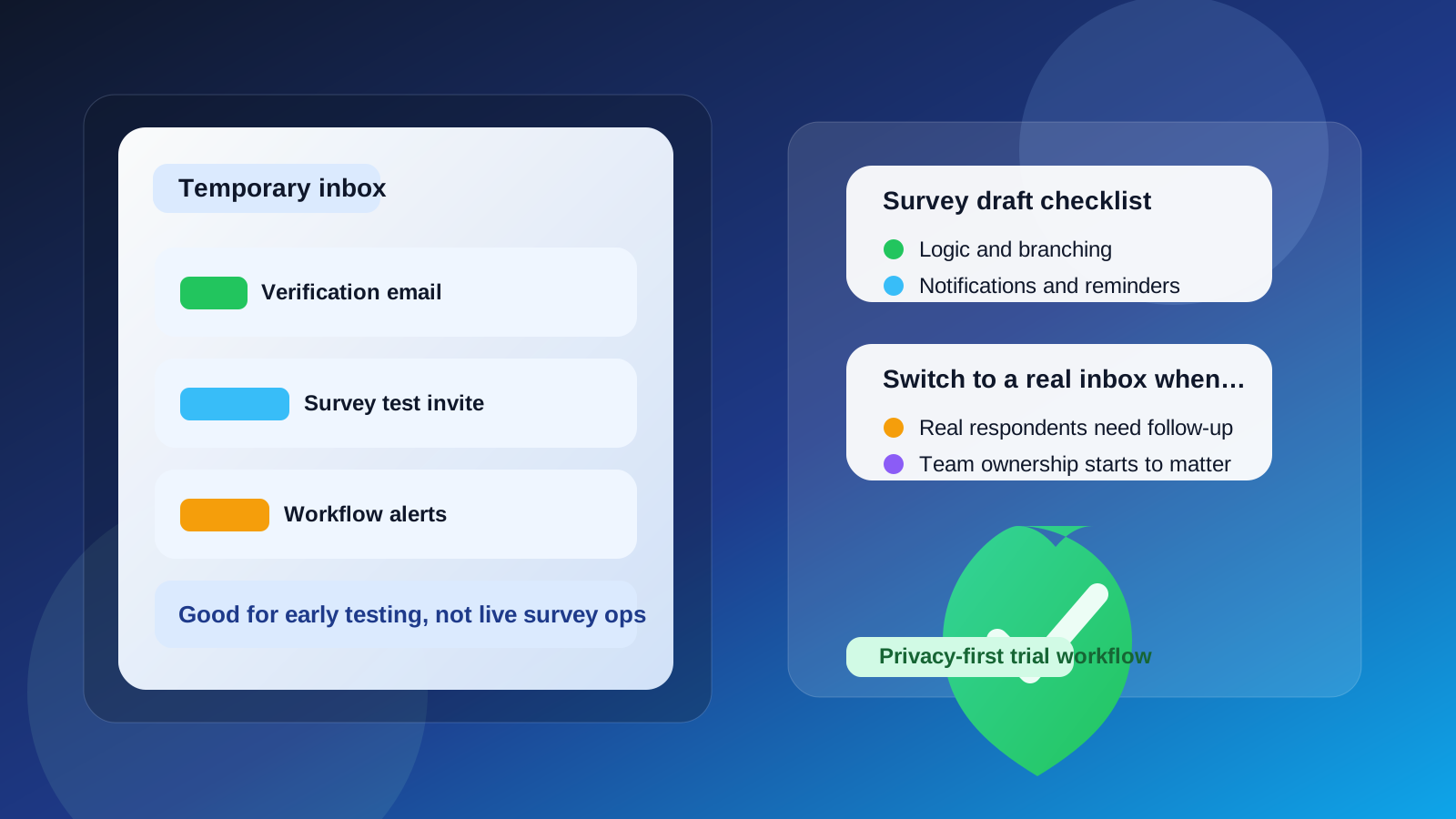
Why people look for a temp email for Alchemer
Alchemer is commonly used for surveys, feedback forms, research projects, internal questionnaires, and customer experience workflows. That makes the signup useful, but it also means the first few emails can pile up quickly. A single trial can bring account verification messages, onboarding tips, demo nudges, reminder suggestions, integration prompts, and team-invite follow-ups before you have even decided whether the platform belongs on your shortlist.
That is where a temporary inbox helps. If your goal is simple early evaluation, a disposable address keeps the noise out of your everyday email while still letting you open the account, confirm the signup, and test the basics. It is a practical way to separate “I want to look around” from “I am ready to run real survey operations here.”
Short answer: useful early, risky later
The best way to think about temp email for Alchemer is by stage. In the earliest stage, when you just want to inspect the dashboard, create a test survey, and understand how the workflow feels, a temporary email is usually fine. You can verify the account, read the welcome sequence, and evaluate the product without inviting long-term inbox clutter.
Once the project becomes real, the trade-off changes. If respondent invitations, notification rules, internal approvals, or handoffs between teammates start to matter, a burner inbox quickly turns from convenient to fragile. At that point, stability matters more than privacy from marketing emails.
When a temporary inbox makes sense
- You are only doing a first-pass product check. You want to see how the editor works, what the dashboard looks like, and whether the platform feels usable.
- You are comparing several survey tools at once. A disposable address keeps vendor follow-up from spilling into your main inbox while you compare Alchemer with other platforms.
- You are testing survey logic with dummy data. If the project is still synthetic and no real audience depends on the messages, a temporary inbox is lower risk.
- You want cleaner inbox boundaries. Trial signups often lead to a lot of “helpful” follow-up. A separate inbox keeps that clutter contained.
If that sounds like your use case, a tool like Anonibox can be handy for the first checkpoint. You still receive the verification email and early onboarding notes, but you do not have to hand over your main address before the product has earned it.
When it becomes a bad idea
A temporary email stops being smart when the survey project moves from isolated testing into live operations. That includes situations like these:
- Real respondents need follow-up. If reminders, confirmations, or response-linked workflows matter, you need an inbox you control for the long haul.
- Multiple teammates need shared ownership. Temporary inboxes are weak foundations for collaboration, handoffs, and admin continuity.
- The account is becoming a serious finalist. Once procurement, support, or implementation conversations begin, a real work address is the safer choice.
- You are relying on notifications. If alerts about quotas, responses, logic problems, or workflow events matter, you do not want those tied to an inbox that may disappear.
- You are connecting the platform to real business processes. The more integrations, approvals, and internal dependencies involved, the less sense a disposable address makes.
In other words, temporary email is a good screening tool, not a strong permanent operating model.
How to use a temp email for Alchemer without creating new problems
1. Use it only for the earliest evaluation stage
Create the temporary address before signup and use it for the initial account verification, welcome emails, and first exploratory session. That gives you a clean test lane with very little commitment.
2. Save the messages that actually matter
Do not assume a temporary inbox is the right place for long-term storage. If a message contains a verification link, setup note, or onboarding instruction you may need later, save it immediately. The whole point of a disposable inbox is that it is disposable.
3. Test with fake or low-stakes survey scenarios first
Early testing is the right time to check draft logic, branching, hidden fields, thank-you pages, and basic user flow. It is not the time to depend on a throwaway inbox for live respondent communication or internal governance.
4. Switch to a permanent address once the platform survives the first review
If Alchemer makes the shortlist, do not stay on the temporary inbox out of inertia. Move the account to an address your team owns before you rely on it for important workflows.
What to evaluate inside Alchemer during the trial
A good trial is not just “did the signup work?” It should tell you whether the platform fits the job you actually need it to do. While your temporary inbox handles the early messages, focus on the practical questions inside the product.
Survey-building speed
How quickly can you build something real? Look at question types, page flow, layout clarity, logic setup, and whether the editor feels efficient or fiddly. A tool can look powerful on paper and still slow your team down in practice.
Logic and branching
If your surveys depend on conditional questions, screening logic, or segmented paths, test those early. Complicated survey logic is often where tools start to feel either capable or frustrating.
Email and notification behavior
Because email is part of the topic here, pay attention to how the platform handles alerts, reminders, and response-linked messages. A temporary inbox is fine while you are observing the pattern, but you should also ask whether that pattern will be manageable once the workflow goes live.
Respondent experience
Open the survey as if you were a real participant. Is it clear, fast, and mobile-friendly? Does the flow feel polished, or does it create friction that will hurt completion rates?
Internal workflow fit
If your team needs approvals, exports, shared review, or handoffs across departments, think past the form itself. A survey platform may be perfectly good for one-person testing and still awkward for real organizational use.
When to move off the temporary inbox
There is usually a clear moment when the disposable address has done its job. Switch to a real inbox when any of these happen:
- You plan to keep the account beyond quick testing.
- You want multiple people involved in ownership or admin work.
- You need dependable notifications for live responses or workflow events.
- You are sending surveys to real customers, employees, applicants, or research participants.
- You are speaking with sales, support, or implementation teams in a serious way.
The rule is simple: if losing access to the email thread would be annoying, or worse, disruptive, it is time to stop treating the account like a throwaway trial.
Common mistakes to avoid
- Using a disposable inbox for a live survey launch. That is fine until a workflow breaks and the important alert goes somewhere you no longer monitor.
- Forgetting to save the verification or setup details. Small admin steps are easy to lose when the inbox is temporary by design.
- Staying on the temp address too long. If the platform is clearly useful, switch early instead of waiting for a problem.
- Confusing privacy with permanence. A temporary inbox protects your main inbox from clutter, but it does not replace proper account ownership and team governance.
Quick decision checklist
Before you use a temporary email for Alchemer, ask yourself:
- Am I only testing the platform, or am I about to run a real survey workflow?
- Will I need long-term notifications, reminders, or response-linked emails?
- Will other teammates need reliable access to account communications?
- Would losing this inbox later cause friction or missed work?
If the answers lean toward short-term evaluation, a temp inbox is reasonable. If they lean toward real operations, it is smarter to start with a permanent work address or switch very quickly after the trial begins.
Final takeaway
Temp email for Alchemer is a sensible privacy move when you are doing early survey testing and want to avoid turning one trial signup into long-term inbox noise. It lets you verify the account, look around, and judge the product before committing your main address.
Just do not confuse that early convenience with a durable workflow. The moment your surveys, notifications, respondents, or teammates need reliability, the right move is to transition to an inbox your team actually owns and monitors. That gives you the best of both worlds: cleaner early evaluation and fewer avoidable problems later.