A temp email for Carrd can be a smart short-term choice when you only want to test a landing page, link-in-bio setup, or one-page site without tying another experiment to your main inbox.
It becomes a bad long-term choice once the page is live, real leads can reach you, contact forms matter, or account recovery could affect something attached to your brand.
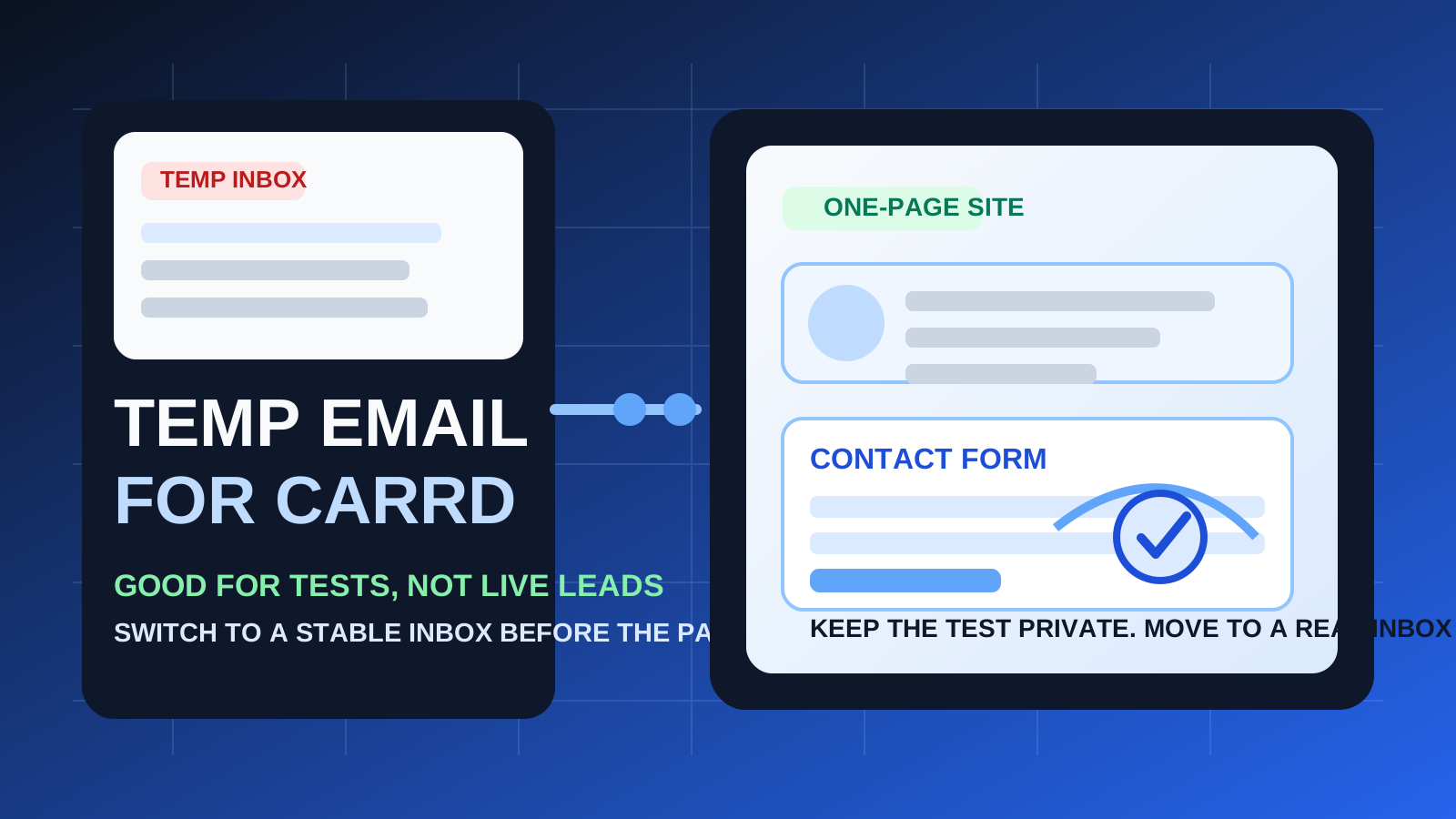
Carrd is one of those tools that starts small and gets important fast. You might sign up just to test a simple creator bio page, a waitlist, a personal profile, a launch teaser, or a one-page client concept. In that early stage, a disposable inbox can genuinely help because it keeps your primary address out of another welcome sequence, promo funnel, and long tail of product emails.
But Carrd also sits close to public identity. A page you build in ten minutes can quickly become the URL in your Instagram bio, your portfolio homepage, a lead-capture page, or a lightweight business site. Once that happens, email is no longer just a signup detail. It is part of account continuity, notifications, and the practical safety of something you may depend on later.
That is why the best answer is not “always use a burner” and not “never use one.” The smarter answer is stage-based: use temporary email for low-stakes evaluation, then switch to a stable inbox before the page becomes real.
Why people look for a temp email for Carrd
Most people are not looking for a temp email for Carrd because they are trying to do anything shady. Usually they just want better boundaries while testing.
- They want to try Carrd without committing a permanent inbox immediately.
- They are comparing it with adjacent tools like Linktree, Beacons, or Framer.
- They want less inbox clutter from onboarding messages, upgrade nudges, and product announcements.
- They are building an experimental page that may never go public.
- They want to keep side projects separate from their real creator, freelance, or business inbox.
That is a reasonable instinct. If you use a service like Anonibox for first-pass testing, you can verify the account, inspect the editor, and decide whether Carrd actually belongs in your workflow before giving it a long-term email address.
When a temp email for Carrd actually makes sense
Temporary email works best when the account is temporary in practice too. If the page is low-stakes, private, and reversible, a disposable inbox can be perfectly reasonable.
1. You are only exploring the product
Maybe you just want to see how fast Carrd feels, whether the templates are good enough, or whether the editor is simpler than heavier tools. In that case, a temp inbox is a tidy way to receive the verification email and first-run setup messages without adding another tool to your permanent inbox.
2. You are comparing several lightweight site builders
People often test Carrd next to other one-page or creator-facing platforms. If you are evaluating multiple options at once, every signup can trigger its own sequence of tips, promos, announcements, and upgrade reminders. A temporary inbox helps isolate each experiment so the comparisons stay cleaner.
3. You are drafting a private page that may never launch
You might be mocking up a simple bio page, a one-off event page, a waitlist concept, or a placeholder homepage for an idea you are still debating. While the page remains private and disposable, the email attached to it matters much less.
4. You only need short-term access
If the goal is just to confirm signup, look around the builder, maybe preview mobile layouts, and then decide whether to continue, a disposable inbox is often enough. You get the early access you need without promising long-term attention to a product you may never keep.
Where a disposable inbox starts becoming risky
The risk changes as soon as the Carrd page stops being just a test.
1. The page is going live in public
Once the URL is in your social bio, creator profile, email signature, or ads, the account is no longer a toy. It has become part of how people find you. That is the point where losing easy email access can become annoying fast.
2. Real leads or inquiries may depend on the site
Even if the lead form itself routes elsewhere, the page still belongs to an account that may need updates, ownership changes, or recovery later. If the page matters to your business, freelance work, or audience growth, a disposable inbox becomes a weak foundation.
3. You may need account recovery later
This is where temporary email usually fails people. A burner inbox feels fine until you need it again. Password resets, security checks, ownership questions, plan notices, and simple “I forgot how I signed up for this” moments become harder when the original inbox is gone.
4. The page is attached to a client or team workflow
If you are building something for a client, a shared project, or a real campaign, continuity matters more than inbox cleanliness. Even a lightweight one-page site can become operationally important once another person depends on it.
What can go wrong if you keep the temp email too long?
The biggest problems are practical, not theoretical.
- You lose recovery access if you forget your login or return to the project months later.
- You make ownership messy if the page later needs to be transferred, updated, or maintained seriously.
- You create hidden business risk because a page that captures attention, links to products, or supports a brand is now tied to a fragile account setup.
- You increase cleanup work later when future-you has to remember which throwaway inbox was used for which test.
None of those problems show up during the first five minutes of signup. That is why disposable email can feel deceptively safe. The weakness appears later, exactly when the page becomes worth keeping.
A simple rule: use temp email for testing, not for ownership
If you are evaluating Carrd, a temp email is reasonable. If you are claiming a page you expect to keep, publish, monetize, or rely on, use a durable inbox instead.
This rule is simple, but it saves people from a lot of needless friction. Temporary email is a convenience tool. It is not a strong long-term account strategy.
How to use a temp email for Carrd safely
1. Be honest about the likely outcome
Before you sign up, ask yourself a blunt question: is this really a throwaway test, or is there a decent chance I will keep this page? If the page might become a real creator hub, launch page, portfolio, or lead asset, use a stable inbox now or switch early.
2. Keep the first session focused
A disposable inbox works best when you actually use it for a short evaluation window. Verify the account, review the builder, inspect template options, test responsiveness, and decide quickly whether Carrd is staying in the stack.
3. Save what matters while you still have access
If you receive anything you may want later — a verification email, account note, or useful onboarding link — save it right away. Temporary inboxes are great for short access, not for dependable future retrieval.
4. Switch before anything public depends on the account
Do not wait until after the page is in your bio, live in a campaign, or attached to a client deliverable. If the test has clearly become real, move the account to a long-term email before you forget.
Better alternatives than a burner forever
Many people do not actually need a throwaway inbox forever. What they really want is separation. In that case, a separate permanent project or creator email is often the better solution.
- Use a dedicated creator inbox if the page will represent your public brand.
- Use a separate project inbox if the page belongs to a campaign, side business, or product idea.
- Use a temp inbox only for first-pass trials when you truly do not know whether the account will matter later.
That approach gives you privacy and organization without creating avoidable recovery headaches.
Realistic examples
Good use case
You want to compare Carrd with other simple page builders, test a draft bio page, and decide whether the workflow is fast enough for your needs. You do not plan to publish the page, connect it to anything important, or keep it long term. A temp email is a good fit.
Borderline use case
You are creating a quick waitlist page for a side project and telling yourself it is “just a test,” but you already suspect you will send the link to friends, early users, or potential collaborators. That is usually the point where a separate permanent inbox is smarter than a disposable one.
Bad use case
You are building a live profile page, portfolio, client landing page, or lead-generation page that may stay online for months. Do not anchor that to a burner inbox. Use an address you can control later.
Quick checklist before you sign up
- Am I only testing Carrd, or am I likely to keep this page?
- Will the page be public soon?
- Would it be annoying if I lost easy access next month?
- Could real inquiries, brand traffic, or client work depend on this page?
- Do I really need disposability, or do I actually need a separate long-term inbox?
If your answers lean toward short-term, private, and reversible, temp email is fine. If they lean toward public, ongoing, or important, switch to a stable address before the page becomes real.
Final takeaway
A temp email for Carrd is genuinely useful for early testing, quick comparisons, and keeping one more software experiment out of your main inbox.
It becomes risky when the page is public, tied to real leads, or important enough that recovery and continuity matter. Use temporary email for temporary work. Use a stable inbox for anything you would care about losing.