A temp email for WeWeb is useful for early frontend testing, quick no-code comparisons, and one-off signups when you want to keep another software trial out of your main inbox.
It becomes risky once you invite collaborators, publish a real app, connect production data, add billing, or may need dependable account recovery later, so disposable email works best only at the evaluation stage.
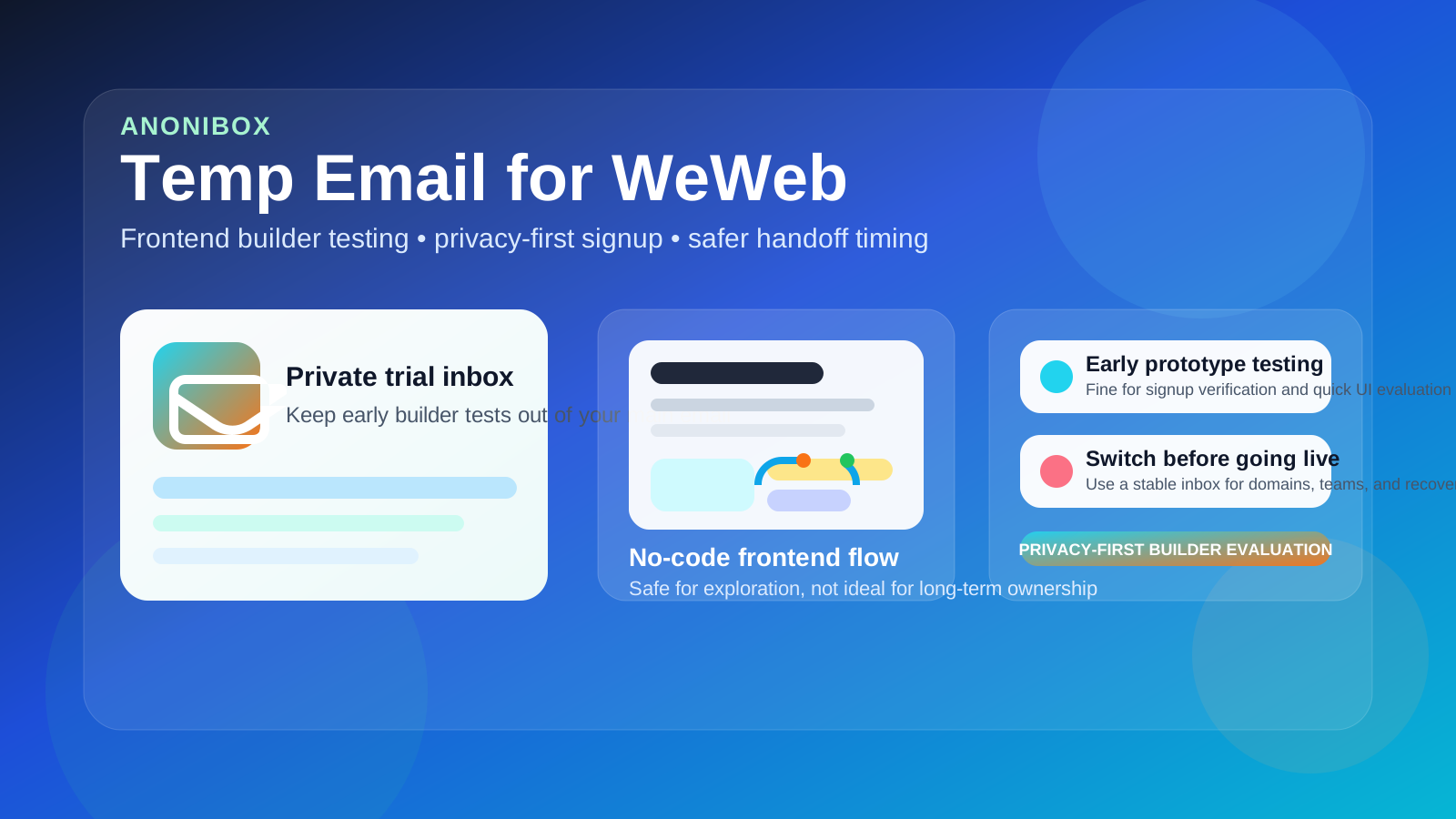
That is the practical answer most people actually need. WeWeb is the kind of tool that often starts as an experiment and then turns into something real much faster than expected. You might sign up to compare it with Bubble, Softr, Retool, Webflow, or another builder. You might want to test the visual editor, see how data bindings feel, or decide whether the platform is good enough for a prototype before you commit to it. In that early phase, a temporary inbox can make sense because it helps you verify the account and explore the product without automatically putting your primary email into yet another onboarding sequence.
The problem is that no-code frontend tools rarely stay low-stakes forever. A harmless test can become a client portal, an internal dashboard, a startup MVP, a support interface, or a published app with real users. Once that happens, the email behind the account matters a lot more than it did during the first login. It is no longer just the place where a welcome email landed. It becomes part of ownership, recovery, billing, and long-term control.
Why people look for a temp email for WeWeb
Most people are not looking for a burner inbox because they are doing anything shady. They are trying to solve a normal SaaS problem: too many trials, too many follow-up emails, and too many products demanding a real address before you know whether the tool is even worth keeping.
WeWeb fits that pattern perfectly. It is attractive to builders, founders, agencies, consultants, and product teams who want to move quickly. Sometimes you only need to answer a few questions:
- Does the editor feel intuitive enough for my workflow?
- Can I prototype the interface I have in mind without writing everything from scratch?
- Will the data and design layers behave the way I expect?
- Is this better for my use case than Retool, Bubble, Glide, Softr, or a traditional coded frontend?
If that is all you need to learn, using a temporary inbox for the first pass can be reasonable. It keeps your everyday address cleaner while you evaluate whether the platform deserves a more permanent place in your stack.
When a disposable inbox makes sense
There are several situations where using temporary email for WeWeb is a sensible privacy move.
1. You are only testing the builder
If your goal is simply to look around, open the editor, click through features, and understand the product, a disposable inbox can be enough. You are not making a long-term commitment yet.
2. You are comparing multiple tools
It is common to evaluate several platforms side by side before choosing one. Maybe you want a front-end layer over existing data, maybe you are building a light internal app, or maybe you are deciding how much control you need. Separate inboxes can help keep those experiments organized and stop your main email from filling up with overlapping product tours and sales prompts.
3. You want less inbox clutter
Builder platforms usually send more than one confirmation email. They send welcome messages, feature walkthroughs, upgrade nudges, webinar invites, pricing reminders, and product announcements. None of that is unusual, but it does get noisy fast. A temporary inbox gives you a clean buffer between casual interest and real adoption.
4. You are doing low-stakes prototype work
If you are just mocking up an idea or learning the interface for a one-time exercise, the account itself may still be disposable. In that specific case, a temporary email fits the level of commitment.
Where a temp email for WeWeb starts to become risky
The risk usually appears the moment the project starts to matter.
Published apps are not throwaway assets
A frontend builder can go from blank canvas to real product surprisingly quickly. Once a project is published, shared, or used outside your private test environment, the account behind it stops being casual. If the only admin access is tied to an inbox you may not control later, that convenience can turn into a recovery problem.
Team access changes the stakes
As soon as teammates, clients, or collaborators get involved, the account is no longer just yours to experiment with. Other people may depend on it. Shared ownership, permissions, and workspace continuity matter more than the short-term benefit of keeping a trial out of your main inbox.
Connected data makes the setup more serious
Many people use WeWeb because it can connect to real APIs, databases, or business systems. Even if you begin with sample data, the project can evolve into something tied to actual workflows. When that happens, the admin email should be stable, monitored, and recoverable.
Billing and domains raise the cost of mistakes
If you add a paid plan, attach a custom domain, or use the project for live delivery, the account should not depend on a throwaway inbox. Receipts, renewal notices, security alerts, and account changes belong in a reliable mailbox you can access long term.
Account recovery matters more than you think
People underestimate this until they need it. Password resets, suspicious-login alerts, verification steps, and ownership changes all run through email. A temporary inbox is convenient right up until you need it again and it is gone.
How to use temporary email for WeWeb without creating future problems
If you want the privacy benefit without the usual downside, use it with a clear boundary.
Start with a simple rule: test mode versus real mode
If the project is genuinely exploratory, a temporary inbox can be fine. If you already suspect the app may become important, skip the disposable step and start with a dependable address from day one.
Keep trial projects separate from production plans
Use the temporary inbox only for experiments that you are comfortable abandoning. Do not build your first meaningful live version under an email identity you would not trust for recovery later.
Switch before collaborators depend on the account
A good cutoff point is the first real handoff. If another person is about to access the project, review it, or rely on it, move ownership to a stable email first.
Do not leave critical connectors behind a throwaway inbox
If the project begins touching real business data, internal tools, customer-facing flows, or automation logic, treat the account like infrastructure rather than a casual demo.
Save anything you care about
If a prototype turns out better than expected, document it, duplicate it, export what you can, and move the account to a permanent inbox before the project becomes harder to untangle.
Practical examples
Example 1: quick builder comparison
You want to compare WeWeb with Retool and Bubble for an internal tool prototype. You only need enough access to inspect the editor, connect a sample source, and understand the workflow. A temp inbox is reasonable because the project is still disposable.
Example 2: agency proof of concept
You build a rough proof of concept for a client and realize the prototype may turn into the actual delivery base. That is the moment a burner inbox stops being smart. Before client reviews, collaborator invites, or domain planning, switch to a stable account.
Example 3: founder MVP test
You sign up just to test a product idea for a weekend. Fine. But if the prototype starts collecting user feedback, powers a demo, or becomes part of fundraising or customer discovery, the account is no longer a throwaway experiment. The email should not be either.
Better alternatives when you want privacy and reliability
A fully disposable inbox is not the only option. For many people, a middle ground works better.
- A dedicated trials email: stable enough for recovery, separate enough to keep your main inbox clean.
- An email alias: helpful if you want filtering and control without exposing your primary address directly.
- A temporary inbox only for first verification: then change the account email as soon as the project shows real promise.
That last option is often the most practical. A service like Anonibox can help during the earliest signup and testing phase, especially if you are only verifying access and exploring the product. But it should not be confused with a long-term ownership solution for a live builder project.
Signs it is time to move off a temp email
- You published the app or plan to publish it soon.
- You invited a teammate, client, or contractor.
- You connected real data sources or meaningful workflows.
- You upgraded to a paid plan.
- You attached a custom domain or care about brand continuity.
- You would be frustrated if you lost access tomorrow.
If any of those apply, your account is already more important than a disposable inbox should support.
A quick checklist before you sign up
- Is this account only for evaluation, or could it become a real app?
- Will other people depend on the project?
- Am I testing with fake sample data or real business data?
- Would I know how to recover the account later?
- If the project succeeds, am I ready to switch to a stable email quickly?
If your answers point toward temporary curiosity, a temp email for WeWeb is a fair choice. If they point toward ownership, collaboration, live publishing, or recurring use, start with a permanent email instead.
Final answer
Using a temp email for WeWeb is smart for early frontend testing, no-code product comparisons, and low-stakes signups when you want less inbox clutter and a little more privacy. It is a weak long-term setup for anything you may keep, share, publish, or depend on.
The simplest rule is this: disposable email is fine for disposable interest. Once the WeWeb project becomes real, move the account to a stable inbox before convenience turns into avoidable risk.