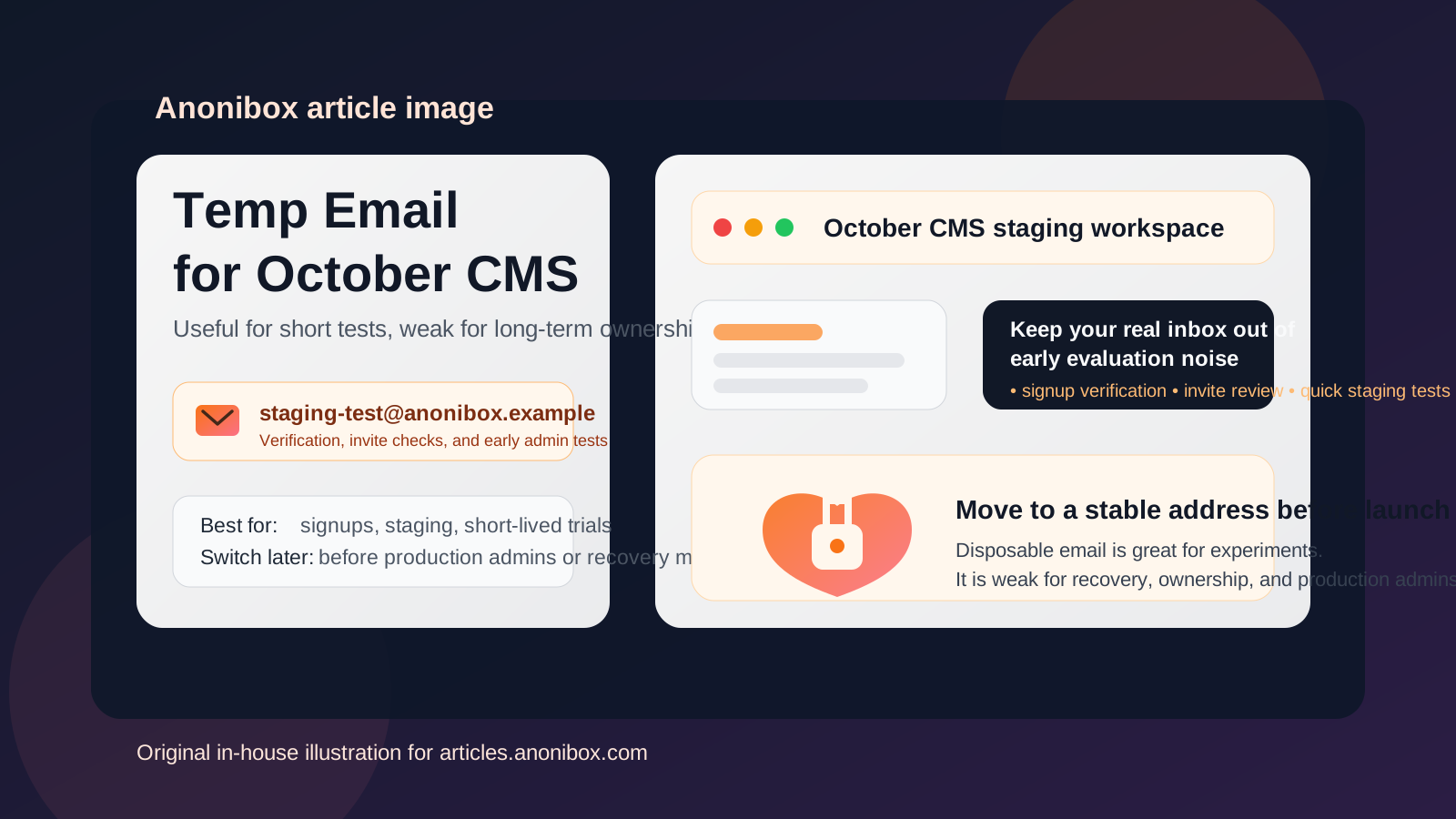
Yes — a temp email for October CMS can help with early signups, staging-site tests, and short-lived admin checks when you want to keep your main inbox private. No — it is a poor choice for production ownership, long-term team access, password recovery, or anything tied to a live site.
That is the useful line to remember. A disposable inbox works well while October CMS is still an experiment, proof of concept, or one-off client demo. The moment the project starts owning real content, real users, or real publishing responsibility, you should move to a stable email address you can keep and control.
Why people look for a temp email for October CMS
October CMS often gets tested before it gets trusted. A freelancer may want to see how quickly a staging site can be set up. A small agency may want to compare it with other CMS options before recommending it to a client. An internal team may just want to check editor access, email-driven flows, or admin usability without giving another product their normal inbox right away.
That is where temporary email becomes practical. You can receive the verification message, open a test account, review an invite, and keep the early evaluation separate from the mailbox that already handles real work. If the test goes nowhere, you avoid another stream of updates, newsletters, and follow-up messages sitting in your primary inbox for months.
Anonibox fits that phase nicely because it keeps one-off signups lightweight. The catch is that lightweight signups should stay lightweight. A disposable inbox is great for short-lived evaluation, but it becomes fragile once the account starts mattering to other people or to a live project.
When a temporary inbox makes sense
Early platform evaluation
If you are still deciding whether October CMS is worth deeper attention, a temp inbox is reasonable. At that stage you usually need only a handful of emails: the initial verification note, a welcome message, maybe an invite, and possibly a few setup instructions. There is no strong reason to commit your long-term address before you know whether the tool deserves it.
Short-lived staging or sandbox tests
Temporary inboxes are also useful when the environment itself is temporary. If you are spinning up a rough staging project, checking admin access, or testing whether email-related actions arrive as expected, a disposable address helps you isolate the experiment from your day-to-day inbox.
Agency proofs of concept
Agencies and consultants often build quick demonstrations before a client formally approves a stack. In those cases, the project may exist only long enough to show a workflow, test an editor experience, or compare content models. A temp email is fine there because the entire exercise is meant to be disposable unless it proves valuable.
Keeping multiple CMS trials organized
If you are comparing October CMS with tools like Drupal, TYPO3, Silverstripe, Craft CMS, or Statamic, temporary inboxes can reduce clutter and help you keep evaluation messages separated by product. The point is not secrecy. The point is organization and restraint: do not feed your main inbox into every trial unless the trial is becoming real.
Where using a temp email becomes risky
Production admin accounts
A production admin account should never depend on an inbox you might lose next week. If a password reset, security alert, or account confirmation later goes to an address you no longer control, recovery becomes painful fast. That kind of friction is avoidable, so avoid it early.
Team invites and shared responsibility
The more people who depend on the account, the worse a disposable email becomes. Once teammates, editors, clients, or contractors rely on the project, continuity matters more than signup convenience. Shared work needs stable ownership, not a throwaway address that was fine for a two-hour experiment.
Client handoffs and long-term maintenance
If an October CMS project may be handed to a client or maintained over time, the account email should already be something durable and intentional. Client-facing systems are exactly where forgotten inbox choices come back to cause annoying support problems later.
Anything tied to billing or operational notices
Even if the early test felt disposable, important messages can become less disposable over time. Plan updates, account notices, support replies, or ownership-related emails should go to a stable address once the project is serious. Disposable email is a weak foundation for operational continuity.
A safer workflow that still protects your privacy
1. Use the temp address only for the first stage
Create the temporary inbox before signup so the whole evaluation stays separated from your regular mailbox from the start. Use it for verification, welcome messages, and any short-lived invite you need during the trial phase.
2. Save the few messages that matter
Most trials do not produce many truly important emails. Save the verification link, any invite you may need again, and any setup note worth keeping. Do not assume the inbox should become permanent just because it worked once.
3. Decide quickly whether the project is disposable or durable
This is the most important step. If the October CMS test was just curiosity, let it stay disposable. If the project is moving toward a real site, a real client, or a real internal workflow, move ownership to a durable email address before the account becomes important.
4. Switch before production work begins
Do not wait until launch week. Do not wait until multiple editors are involved. Do not wait until someone needs recovery access. The best time to replace the temporary inbox is when the project first starts looking permanent, not when the first problem appears.
5. Separate privacy from permanence
This is the mindset that keeps the whole process sane. Use a tool like Anonibox for privacy during exploration. Use a controlled long-term inbox, alias, or team-managed address for continuity once the account matters. Those are different jobs, and they deserve different tools.
Common mistakes people make
Forgetting to replace the email later
The most common mistake is not using a temp email. It is leaving the temp email in place after the project stops being temporary. Teams move quickly from trial to implementation, and account hygiene often gets ignored until someone suddenly needs access they cannot recover.
Using one throwaway inbox for several unrelated tools
That sounds efficient, but it quickly becomes messy. If you are testing several products, separate inboxes or clear tracking make life easier. Otherwise you end up sorting through mixed messages and forgetting which email belonged to which platform.
Treating disposable email as a complete security strategy
A disposable inbox can reduce clutter and early exposure, but it does not replace sensible account management. You still need deliberate ownership, controlled admin access, and a stable recovery path once the system matters.
Good uses versus bad uses
Good uses
- Checking signup and verification flow
- Testing a rough staging setup
- Reviewing one-off invites during evaluation
- Comparing October CMS with other CMS platforms without feeding every trial into your main inbox
- Keeping low-stakes tests separate from your real work email
Bad uses
- Primary production admin ownership
- Long-term client handoff and maintenance
- Password recovery for a live site
- Shared team workflows with ongoing responsibility
- Anything that would be painful if the inbox disappeared tomorrow
Quick checklist before you use one
- Is this just a short-lived test or proof of concept?
- Will anyone else depend on the account later?
- Could this inbox become the recovery path for a real site?
- Would losing access next month be harmless or painful?
- Do you already know which permanent address should replace it if the project moves forward?
If the answers point toward a low-stakes experiment, temporary email is fine. If the answers point toward a long-lived website or shared operational responsibility, switch to a stable address sooner rather than later.
Final takeaway
A temp email for October CMS is useful when you are doing early CMS testing, staging-site experiments, or one-off admin checks and you want to avoid spreading your main inbox across every platform you evaluate. It keeps those early messages contained and helps reduce long-term clutter from projects that never become real.
But the same disposable setup becomes a liability once October CMS is tied to production admins, shared ownership, account recovery, or client-facing work. Use the temp inbox for the trial, then move to a durable address before the project becomes something you cannot afford to lose.