A temp email for Assertible is fine for low-stakes signup, quick API test automation trials, and early monitor evaluation.
It becomes risky once shared monitors, alert emails, team access, or account recovery depend on that inbox.
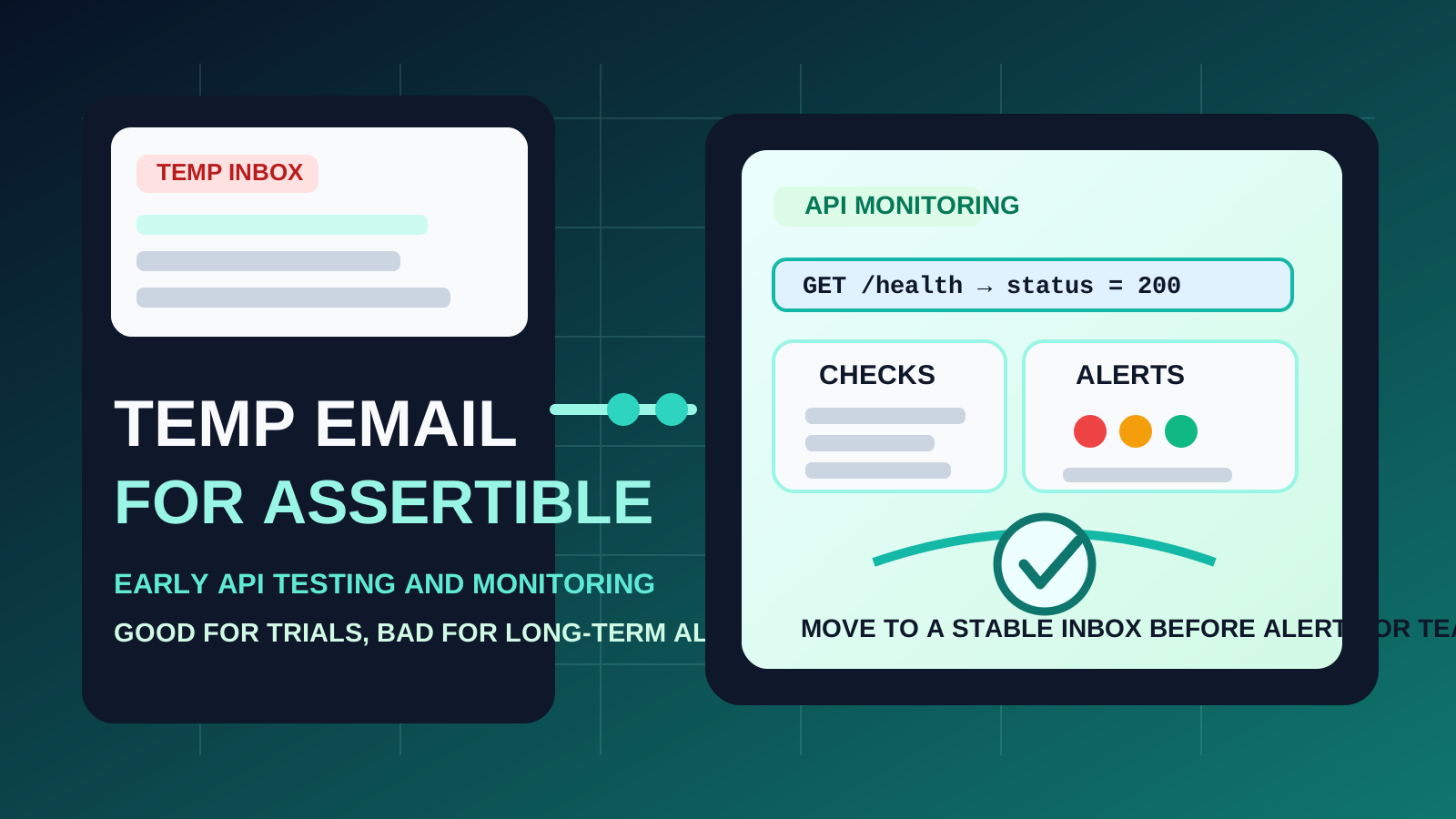
If you compare API tools regularly, your inbox can get cluttered fast. A single week of product testing can turn into welcome sequences, trial reminders, webinar invites, alert configuration nudges, and follow-up emails from products you only meant to try once. That is why a temporary inbox can be useful when you want to verify a signup and inspect a platform without giving every trial permanent access to your main email address.
Assertible fits that pattern well. It is the kind of tool you might want to test quickly to see how its API checks, assertions, scheduled monitoring, and alert flows feel before deciding whether it belongs in your real stack. In that early stage, a disposable inbox can help you keep evaluation noise contained. But the moment your account starts holding useful tests, active monitors, team access, or alert ownership, temporary email stops being efficient and starts becoming fragile.
If you use Anonibox or another throwaway inbox for the first pass, the safest mindset is simple: treat the account as temporary too unless you deliberately move it onto a stable address before anything important depends on it.
When a temp email for Assertible makes sense
There are a few common situations where using a temporary inbox is a practical choice.
- Quick product comparison: you want to check Assertible alongside tools such as Postman, Apidog, ReadyAPI, or SoapUI without committing your main inbox to every vendor immediately.
- One-off verification: you only need to confirm the account, open the dashboard, and see whether the workflow feels worth deeper testing.
- Low-stakes experimentation: you are trying a few sample API checks or monitors, not setting up production alerting for a real team.
- Inbox hygiene: you want to keep early vendor outreach, onboarding mail, and trial follow-ups out of your permanent work email until the tool earns a place on your shortlist.
That is the ideal use case. A disposable address gives you access to the trial while reducing long-term noise from tools you may never adopt.
Where disposable email starts becoming risky
Assertible is not just a landing page with a confirmation link. It is the kind of product people may return to, build routines around, and share with other people. That is where a temporary inbox becomes a liability.
1. Shared monitors need stable ownership
If an API monitor matters to your team, the email address tied to the account matters too. Temporary inboxes are fine for checking whether the product works. They are a poor foundation for an account that may own live monitors, recurring checks, or collaboration settings later.
2. Alert emails can become operational
During evaluation, alert messages are just part of the test. In real use, those messages may signal downtime, failing assertions, broken authentication, or changes in API behavior. If important notifications are linked to an inbox you no longer control, you create a very avoidable risk.
3. Team access gets messy fast
The moment another person joins the workspace, the account stops being a casual personal trial. Invitations, permissions, ownership questions, and shared responsibility all become easier when the account is attached to a permanent email that someone can still access later.
4. Recovery and security flows depend on the email address
The biggest problem with disposable email often shows up later rather than immediately. Password resets, verification checks, suspicious-login prompts, or account changes tend to rely on the original email. A throwaway inbox feels convenient until you need it again and it is gone.
5. Useful work has a way of lingering
A common mistake is signing up casually, then building something worth keeping. Maybe you create a few checks that catch real issues. Maybe you refine assertions or document an endpoint with helpful context. Once the account becomes useful, the original “this is just temporary” assumption breaks down.
A practical rule of thumb
Use a temp email for Assertible when you are evaluating the tool. Do not rely on one once the account begins to matter operationally.
That simple rule removes most of the confusion. Disposable inboxes are good for filtering, comparing, and reducing trial clutter. Permanent inboxes are better for continuity, recovery, collaboration, and long-term ownership. Problems start when people mix the trial phase and the real-use phase together.
How to use a temp email for Assertible without creating problems later
1. Decide whether this is a trial or the start of a real setup
Before you sign up, be honest about the goal. Are you just checking whether the product feels good? Or are you already hoping to keep the account if the first hour goes well? If you expect a real rollout is likely, start with a stable inbox from day one.
2. Save the early messages that matter
During a short evaluation, you usually only need a few emails:
- the account verification message
- the welcome or setup email
- any quick-start instructions you may want to compare later
- details that would help you recreate the account properly if the tool makes the shortlist
Do not assume you will remember everything or still have the inbox available later. Save the important pieces while the trial is fresh.
3. Test the workflow on purpose
The point of using temporary email is to speed up evaluation, not to create another neglected account. Move through the product deliberately. For example, you might check:
- how easy it is to create an API test from scratch
- whether assertions are clear and practical for your team
- how understandable the monitor setup feels
- what the alert and notification flow looks like
- whether the interface feels faster or cleaner than the alternatives you are considering
This is where a throwaway inbox helps most: quick verification, less clutter, and a cleaner first-pass evaluation cycle.
4. Migrate early if the tool proves useful
If the product looks like a keeper, switch before anything real depends on it. Do it before teammates join, before monitors become meaningful, and before you start treating alerting or saved tests as part of your normal workflow. Early migration is easy. Late migration is annoying.
When a permanent inbox is the better choice
Start with a stable email address instead of a temporary one if any of these are true:
- you expect to keep the account beyond a quick test
- you plan to invite teammates or share ownership
- you want reliable account recovery later
- you are building checks or monitors you may genuinely rely on
- you are evaluating the product for client work, internal tooling, or production-adjacent processes
Once one of those is true, the convenience of a disposable inbox is usually smaller than the recovery headache it can create later.
Realistic examples
Example 1: solo tool comparison
You are reviewing several API testing tools in one afternoon and only want to inspect how each one handles setup and basic monitoring. A temp inbox makes sense here. You get access fast and keep low-value follow-up mail out of your primary inbox.
Example 2: proving out a side project workflow
You want to test a few endpoints from a personal project and see whether the product fits your style. A disposable email can still be reasonable, as long as you remember that the account itself should remain disposable until you decide the work is worth keeping.
Example 3: team-owned API monitoring
This is where temporary email usually stops being a good idea. If multiple people may rely on the account, or if the monitors may become important to your workflow, start with a permanent address and avoid future migration or recovery problems.
Common mistakes to avoid
- Using a throwaway inbox for a non-throwaway account: the biggest mistake is creating something valuable in an account you cannot confidently recover.
- Letting evaluation drift into production habits: what starts as a quick test can quietly turn into a semi-important workflow if you are not careful.
- Forgetting that alert ownership matters: notifications are not just marketing mail. They can become operational signals.
- Waiting too long to switch: if the tool is clearly useful, move to a stable inbox early instead of promising yourself you will fix it later.
- Thinking only about signup: the risky part is rarely the first email. It is the account recovery, team access, and ongoing notification flow later on.
A cleaner way to evaluate tools like Assertible
- Use a temporary inbox for the first-pass trial.
- Verify the account and review the early onboarding.
- Test the core workflow in one focused session.
- Decide quickly whether the product is disposable to you or worth keeping.
- If it is worth keeping, move the account to a stable inbox before shared monitors, alerts, and team access matter.
That approach gives you the privacy and inbox control benefits of disposable email without pretending it is the right choice for every stage of adoption.
Final takeaway
A temp email for Assertible is useful when you want to test the platform, compare it against other API tools, and keep low-stakes signup noise out of your main inbox.
It is a poor long-term choice once the account becomes something you want to keep, share, recover, or trust for meaningful alerts. Use temporary email for the evaluation phase, then switch to a stable address before real work starts depending on the account.