Yes, a temp email for ReadMe can make sense when you are only testing a developer hub, previewing docs layouts, or comparing documentation platforms without pushing more trial mail into your main inbox.
No, it becomes a poor long-term choice once shared docs, contributor access, billing ownership, or account recovery depend on that address still being available later.
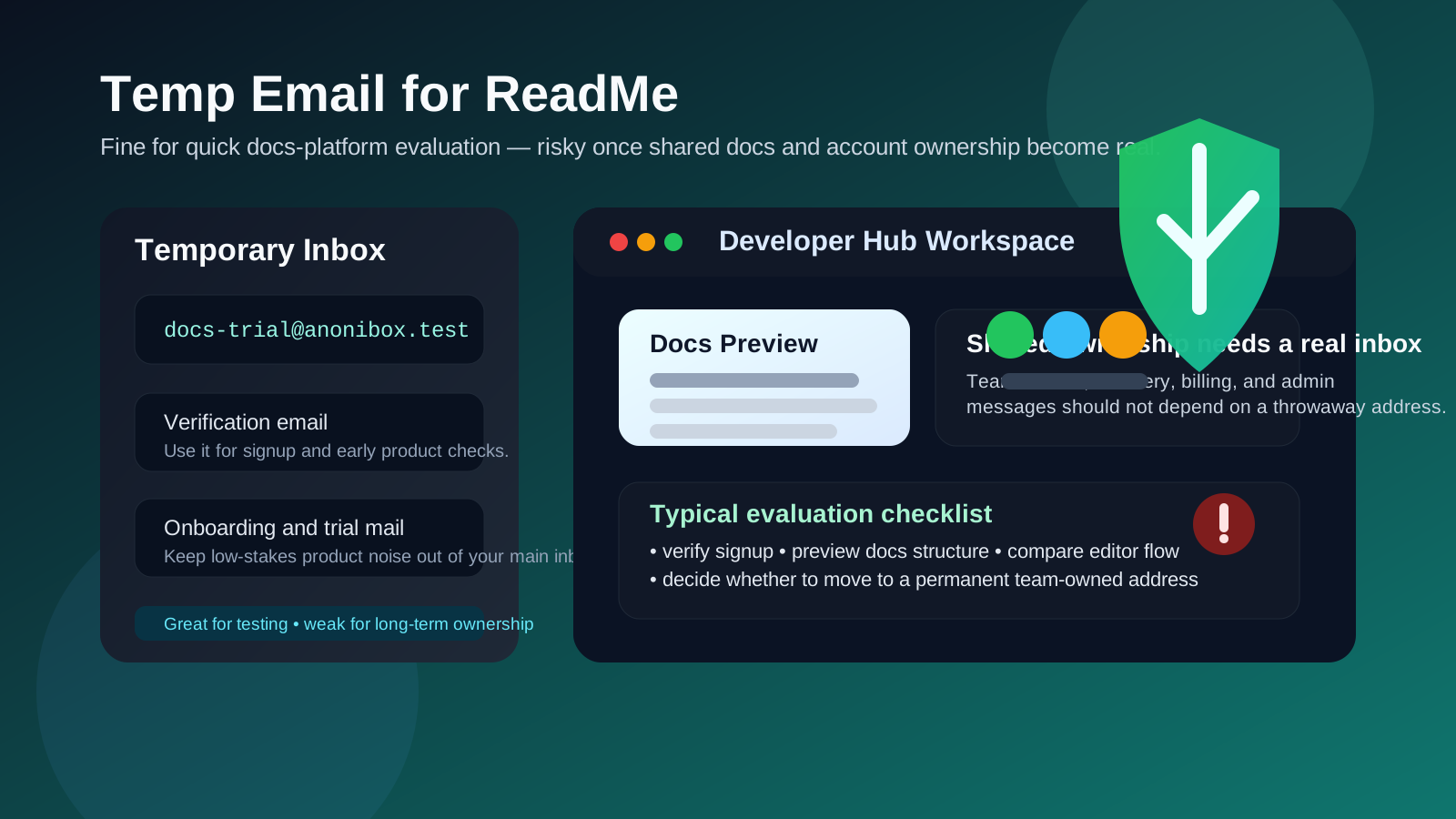
If you evaluate documentation tools often, you already know the pattern. One quick product test turns into a stream of verification messages, onboarding tips, webinar invites, release notes, and follow-up emails that linger long after you decided the tool was not for you. A disposable inbox can be a practical buffer during that first comparison round.
ReadMe fits that pattern well because people often sign up while exploring options, not while committing to a long-term documentation stack on day one. They want to see how quickly they can stand up a developer hub, preview API reference pages, inspect navigation and onboarding flows, and decide whether the product deserves deeper work. In that early stage, a temporary inbox can help keep your main address cleaner.
The decision changes once the account matters. If the workspace becomes the place where real docs live, where teammates collaborate, where public developer resources get managed, or where recovery and billing messages land, the inbox behind that account stops being a convenience detail. It becomes part of operational ownership.
That is the core rule here: a burner inbox is fine for a burner evaluation. It is a bad foundation for a real docs workspace.
When a temp email for ReadMe actually makes sense
There are several normal situations where a temporary inbox is a sensible choice.
- Fast product comparison: you are evaluating multiple docs platforms and want to separate low-stakes signups from your permanent inbox.
- One-off verification: you only need to verify an account, enter the workspace, and inspect whether the product is worth more time.
- Layout and navigation testing: you want to preview how a developer hub feels before you attach any important work to it.
- Inbox hygiene: you want to avoid months of follow-up mail from a tool you may never use again.
- Short-lived exploration: the account is truly temporary and you do not plan to rely on it for published docs, teammates, or long-term ownership.
That is the best use case for a service like Anonibox: quick access to the verification email, a clean trial session, and less clutter in the inbox you use for real work.
Why people look for a disposable email here
Most people searching for this are not doing anything shady. They usually want one of three things: less trial spam, a little more privacy during evaluation, or clearer separation between casual research and real company infrastructure.
That is reasonable. Documentation teams, founders, developers, and technical marketers often compare tools in batches. They may test GitBook, Mintlify, Redocly, Document360, Archbee, and ReadMe in the same week. If every short experiment starts sending ongoing email into the same inbox, the cost of “just checking one more tool” becomes unnecessarily annoying.
Temporary email lowers that friction. You can validate the account, see the dashboard, check the editor or portal flow, and move on quickly if the product is not right. The catch is that the account must stay low-stakes too. Once it starts holding anything important, the disposable inbox stops being a neat shortcut and starts becoming a future problem.
Where a burner inbox becomes risky
1. Shared docs and published resources create real ownership
Early testing is private and disposable. Live documentation is not. The moment a workspace starts holding real onboarding guides, API references, internal process notes, or customer-facing help content, the account behind it needs stable ownership. You do not want something that important tied to an inbox you may lose access to.
2. Team invites and contributor workflows need continuity
Documentation work rarely stays solo forever. A writer, engineer, support lead, product marketer, or agency partner may need access later. Once collaboration enters the picture, the original account becomes an anchor point for permissions, admin decisions, and handoffs. That is a poor place to rely on an address that was only meant for a 20-minute test.
3. Billing, domain, and admin messages matter later
If the account starts touching spend, admin notices, or important workspace settings, the inbox attached to it needs to be dependable. The question is not whether you can sign up with a temporary address. The question is whether you want long-term accountability tied to an inbox you may no longer control next month.
4. Recovery is where disposable choices usually fail
The first login is easy. The failure point comes later: a password reset, a sign-in challenge, a confirmation request, or a message proving you still control the account. Temporary inboxes are convenient right up until the platform expects the address to still exist and still be monitored.
5. A “trial” workspace can quietly become the real workspace
This is one of the most common mistakes. Someone creates an account just to experiment. They import a few docs, invite one teammate, connect a real project, and tell themselves they will clean it up later. A month later, the throwaway workspace is production enough to matter, but the email foundation is still flimsy.
A practical rule of thumb
Use a temp email for ReadMe only if the account itself is temporary.
If you are only comparing docs platforms, looking at the editing experience, or checking whether the product fits your team, a disposable address is fine. If the account could become the home of real docs, real permissions, or real ownership, start with a permanent inbox or switch to one early.
How to test ReadMe without creating a future mess
1. Decide whether this is a toy account or a real candidate
Before you sign up, ask a simple question: if this tool looks good, could this very workspace survive past today? If the answer is yes, it may be smarter to use a durable address from the start. If the answer is no and you are clearly only exploring, a burner inbox can be perfectly reasonable.
2. Keep the evaluation narrow
A temporary inbox works best when the trial stays focused. Instead of letting the account drift into real usage, run through a short checklist:
- Can you understand the setup quickly?
- Does the docs experience feel good for your audience?
- Is the information architecture easy to picture at scale?
- Would your team actually want to maintain content here?
- Is the product worth a second, more serious evaluation with a permanent inbox?
That kind of narrow trial is where disposable email shines. You get a clean signal without turning the account into something you must preserve forever.
3. Save the few messages that matter
During early testing, you normally only need a small number of emails: the verification message, maybe a welcome link, and perhaps one setup note you want to reference. If those matter, save them somewhere you control. Do not assume the inbox will still be available when you remember it next week.
4. Avoid attaching real stakeholders too early
If you are still using a temp inbox, do not invite a bunch of teammates and pretend it is harmless. Shared access turns a private shortcut into a team dependency. Finish the lightweight evaluation first, then move to a real address before anyone starts relying on the workspace.
5. Switch before the workspace becomes operational
The best migration point is early, before the account matters. Once you have real docs, real users, or real settings tied to the workspace, changing the foundation becomes more annoying than it needed to be.
When a permanent inbox is the better choice from day one
- you already expect the workspace to survive beyond a quick trial
- you may invite teammates or outside contributors soon
- you may connect billing or other admin ownership
- you need a dependable path for recovery and security notices
- you plan to publish or maintain docs that real users will rely on
- you want clean long-term ownership instead of fixing it later
If any of those are true, the convenience of a disposable inbox is probably smaller than the cleanup cost it creates.
Realistic examples
Example 1: comparing documentation tools over an afternoon
You want to open a few platforms, look at templates, preview navigation, and decide which ones deserve deeper evaluation. That is an ideal temp-email scenario. The account is low-stakes, the decision window is short, and your main goal is to avoid feeding more trial mail into your permanent inbox.
Example 2: building a rough proof of concept
If you are only mocking up docs structure or testing whether a portal feels right, a temporary address can still be fine. The important part is staying honest that this is still a proof of concept, not the start of the production workspace everyone will depend on later.
Example 3: setting up the actual docs home for a team or product
This is where disposable email usually stops making sense. If the workspace may become the source of truth for customer docs, API references, onboarding material, or internal documentation, stable ownership matters more than a cleaner inbox.
Common mistakes to avoid
- Treating a disposable trial like it will always stay disposable: that assumption fails constantly.
- Waiting too long to switch: people often plan to change the email later, then only remember once the workspace already matters.
- Thinking only about signup spam: account recovery and admin continuity are usually the bigger long-term issues.
- Inviting teammates before the account foundation is stable: once shared work starts, the cost of a throwaway inbox rises fast.
- Confusing evaluation privacy with operational ownership: the first is fine with a burner inbox; the second usually is not.
How this compares with adjacent docs tools
The same pattern shows up with nearby platforms like GitBook, Mintlify, Redocly, Document360, Archbee, and Confluence. A burner inbox is often helpful while you are deciding whether the product fits. It becomes risky when the workspace shifts from “trial” to “home.”
ReadMe makes that transition easy to underestimate because developer docs experiments often start small. A quick test can become the basis for onboarding, API references, or shared product documentation faster than people expect. That is exactly why the inbox choice matters.
Final takeaway
A temp email for ReadMe is useful when you are doing short-lived documentation research, low-stakes signup verification, or early developer hub testing.
It is a poor long-term choice once shared docs, contributor access, billing ownership, or account recovery matter. Use temporary email for the first-pass evaluation if you want privacy and inbox hygiene, then move to an address you actually control before the workspace becomes real.