A temp email for Slite can be useful for a quick trial, a one-off workspace test, or early product evaluation.
It becomes a poor long-term choice once shared docs, team invites, password resets, and account recovery start to matter.
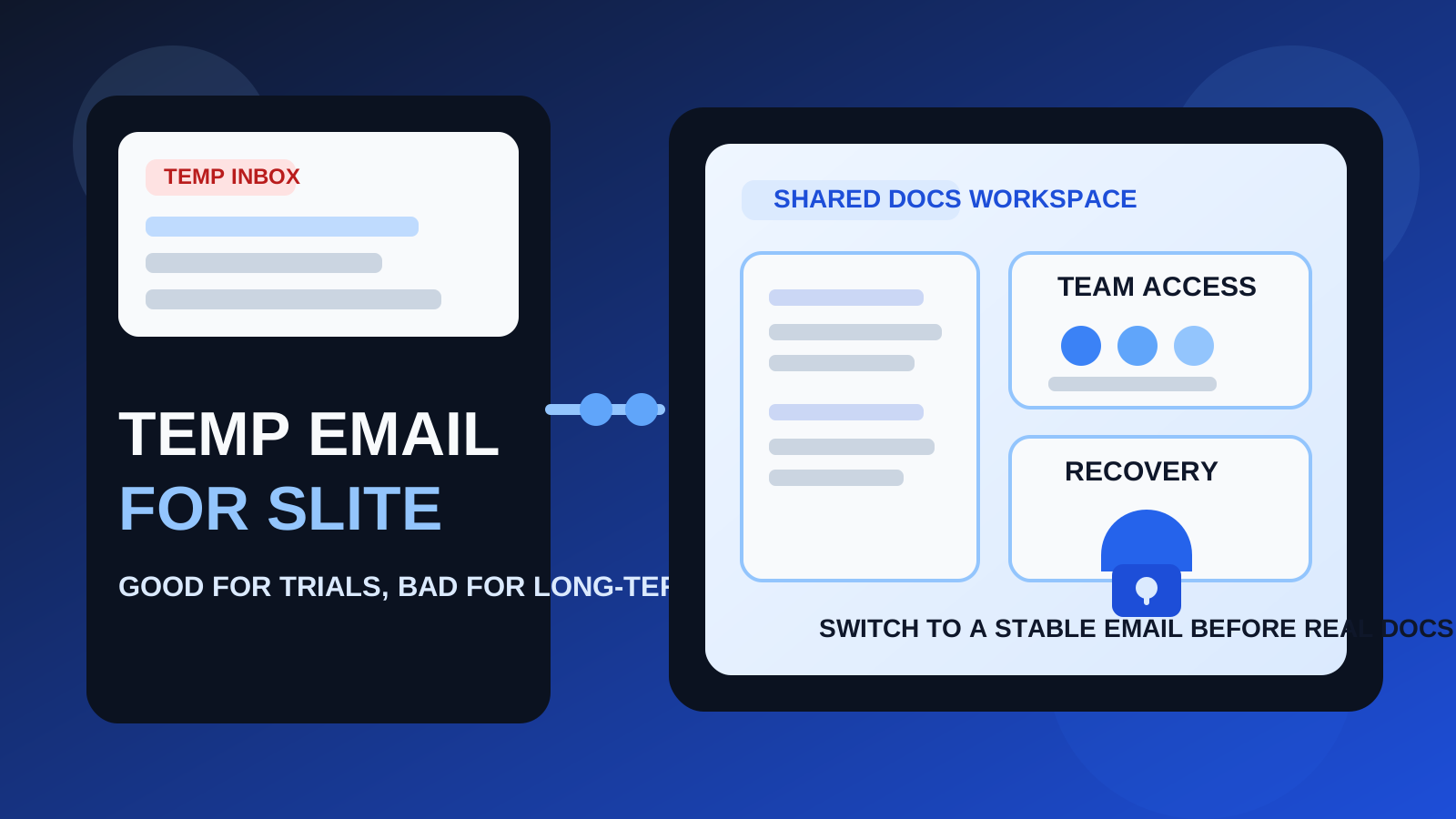
That trade-off matters more than it first appears. Slite is the kind of tool people often sign up for casually, just to see how the editor feels or how quickly a workspace can be created. But it is also the kind of tool that can turn into something important once notes become team documentation, onboarding material, internal how-to pages, or project references. The email you use at signup decides whether the account stays disposable or quietly becomes something you may need months later.
If you are only comparing products, a temp inbox can save your real email from another sequence of welcome messages, feature updates, webinar invites, and “book a demo” nudges. That is especially useful if you are reviewing Slite alongside tools like Confluence, Nuclino, Tettra, or GitBook. But if your goal is real collaboration, using a throwaway address past the testing phase can create avoidable headaches.
Why people use a temp email for Slite in the first place
Docs and knowledge-base tools are easy to over-collect. A founder might try three in a weekend. An operations lead might test five before making a recommendation. A customer education team may open several trials just to compare permissions, editor quality, search, and workspace structure. That is exactly where temporary email has value.
- You can verify the account quickly without tying another vendor trial to your long-term inbox.
- You can compare several docs platforms cleanly instead of mixing all trial messages together.
- You reduce low-value follow-up email from tools you may never use again.
- You keep early research separate from the address you actually rely on for work.
That is the best-case use of a disposable inbox: fast access, low commitment, and less clutter.
When a temp email for Slite actually makes sense
A temporary inbox is reasonable when the account itself is temporary too. That usually means one of these situations:
- You are doing a first-pass trial. You want to create a workspace, test the editor, click through the UI, and decide whether Slite is even worth deeper attention.
- You are comparing multiple knowledge tools. You may want to review setup flow, navigation, permissions, and templates before choosing a finalist.
- You are protecting your main inbox during research. If you expect most trials to go nowhere, keeping them away from your daily email is practical.
- You are running a low-stakes solo experiment. Maybe you just want to see whether Slite fits your personal workflow before involving anyone else.
In those situations, a temp inbox works because losing the account later would not be a disaster. The account exists to help you evaluate, not to hold important information.
Where the disposable approach starts breaking down
The problem is not the first login. The problem is what happens after the first login if the workspace becomes useful.
Shared docs do not stay “temporary” for long
Documentation tools create value quietly. A test page becomes a process note. A process note becomes onboarding material. A quick comparison workspace becomes the place where your team stores meeting notes, policy drafts, internal guides, or project context. Once that happens, the inbox behind the account matters a lot more than it did on day one.
Team invites need continuity
If you invite coworkers into the workspace, the account stops being a personal trial and starts becoming a collaboration asset. Ownership, permissions, and admin access all work better when the original account is tied to an email address you actually control long term.
Password resets and security checks become a real dependency
A disposable inbox feels fine until you need it again. Then it becomes obvious how much is riding on email access. Password resets, account-verification prompts, suspicious-login confirmations, and admin changes all assume you can still receive messages. If that inbox is gone, so is your easiest recovery path.
Comments, mentions, and workflow updates are easy to miss
Knowledge-base platforms are not only about static pages. They often depend on notifications, shared editing, and follow-up emails that keep people aligned. A throwaway address can be good for a one-time verification email, but it is a weak foundation for ongoing collaboration.
A simple rule that usually works
Use a temp email for Slite if you are evaluating the product. Do not use one if you already expect the workspace to survive beyond the trial stage.
That line is more useful than trying to invent a complicated policy. If you know the account may become real, treat it like a real account from the start.
How to use a temp email for Slite without creating future problems
1. Decide whether this is research or adoption
Before signup, ask one question: am I only testing, or am I likely to keep this workspace? If the honest answer is “I might actually use this with other people,” start with a stable address and skip the disposable phase. If you are just exploring, a temp inbox is fair game.
2. Keep the test narrow and purposeful
Disposable email works best when you use it to answer a short list of questions quickly. For example:
- Is the writing experience clean and fast?
- Do the templates feel useful or generic?
- Is the workspace easy to navigate?
- Does the tool feel better than the other docs platforms on your shortlist?
- Would your team realistically enjoy using it?
The faster you answer those questions, the less likely you are to accidentally build important work inside a trial account.
3. Save the useful onboarding details early
During evaluation, the inbox usually matters for a small set of messages:
- the verification email
- the welcome or getting-started email
- setup tips you may want to compare later
- any feature explanation that helps you judge the product
If something is worth keeping, save it while you still have the inbox. Do not assume you will remember the details later.
4. Do not invite teammates from the throwaway version
This is one of the easiest mistakes to avoid. The moment you start bringing other people into the workspace, the account should stop being disposable. If you think you are close to that point, move to a permanent email first.
5. Switch before the workspace becomes valuable
People often wait too long. They tell themselves they will clean things up after the trial, then suddenly the test workspace contains useful docs, comments, pages, or structure they do not want to lose. If Slite looks like a real fit, change course early rather than later.
When a permanent email is the better choice immediately
Skip temporary email entirely if any of these apply:
- you plan to invite teammates right away
- you expect to store company knowledge in the workspace
- you are evaluating on behalf of a department, client, or business
- you care about long-term admin ownership
- you may need reliable access months from now
- you want password recovery and security notifications to stay under your control
At that point, the main benefit of a temp inbox is just reduced marketing clutter. That is not nothing, but it is usually not worth the risk of losing control over a useful workspace.
Practical examples
Example 1: solo product comparison
You want to compare Slite with two or three other docs tools this afternoon. A temp inbox is perfectly reasonable. You only need to verify the account, test the experience, and decide whether it deserves a second look.
Example 2: internal wiki experiment that might turn real
You are not sure yet whether the team will adopt the tool, but you already suspect you may invite coworkers if the first impression is good. In that case, starting with a stable email is smarter. The test may stop being a test faster than you expect.
Example 3: consultant building a client knowledge workspace
A disposable inbox is the wrong move here. Client documentation, ownership clarity, and handoff reliability all depend on long-term access. The admin email should be deliberate from the beginning.
Common mistakes people make
- Treating a real workspace like a disposable one: if the content matters, the inbox matters too.
- Waiting too long to switch: migration decisions are easier before pages, comments, and teammates pile up.
- Confusing inbox hygiene with account strategy: avoiding vendor email is nice, but not more important than keeping control of your account.
- Using the throwaway version for collaboration: once multiple people rely on it, the stakes have changed.
- Forgetting about recovery: the real problem often appears later, not at signup.
A cleaner workflow if you still want the privacy benefit
If your only goal is to protect your main inbox during early research, the best workflow is simple:
- Use a temporary inbox for the first-pass trial.
- Verify the account and test the core workspace experience quickly.
- Decide whether Slite is disposable to you or genuinely promising.
- If it looks promising, recreate the workspace properly or update the account before important docs and teammates depend on it.
That gives you the upside of privacy without pretending a disposable address is suitable for every phase of adoption. If you like using a short-lived inbox for first-round trials, a tool like Anonibox can help you keep those low-stakes signups separate from the email account you actually depend on for long-term work.
Final takeaway
A temp email for Slite is useful for quick product evaluation, one-off workspace testing, and keeping early trial noise out of your main inbox.
It stops being a good idea once the workspace becomes collaborative, valuable, or something you may need to recover later. Use temporary email for the research stage, then switch to a stable address before shared docs, team ownership, and account access start to matter.