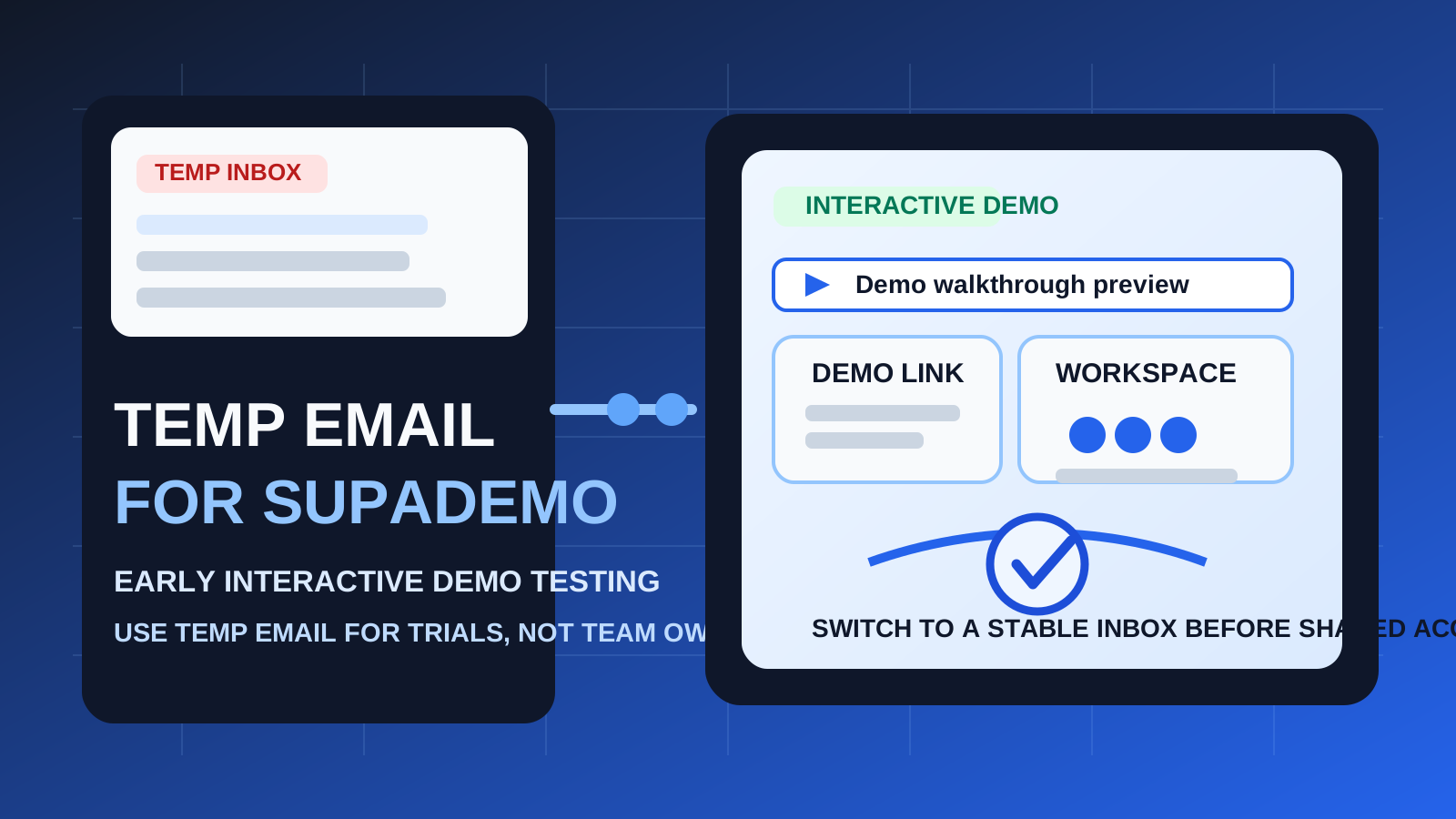
A temp email for Supademo is fine for low-stakes signups, first-pass product evaluation, and early interactive demo testing.
It becomes risky once shared workspaces, customer-facing demo links, team access, billing, or account recovery start to depend on that inbox.
If you test a lot of SaaS products, your inbox fills up fast. A single trial can trigger verification emails, onboarding sequences, feature announcements, webinar invitations, and sales follow-ups that continue long after you have already decided whether the tool is useful. That is why many people reach for a disposable inbox during the first evaluation stage. It gives you enough access to verify the account and explore the product without immediately tying another long marketing sequence to your permanent email address.
That logic fits Supademo especially well. Someone might want to see how quickly they can create an interactive demo, inspect the editing flow, try a share link, or compare the experience against adjacent tools before committing to a long-term setup. In that stage, a temp email for Supademo is a practical option. But once the account starts holding real demo assets, shared workspaces, or links that customers or teammates may actually depend on, the throwaway inbox stops being a smart shortcut and starts becoming the weakest part of the setup.
So the real question is not whether disposable email is always good or always bad. The useful distinction is much simpler: is this a short evaluation, or is this becoming a real workspace? If it is still a short evaluation, a tool like Anonibox can help you keep your main inbox cleaner while you test. If the account is already turning into something operational, stable ownership matters more than inbox convenience.
When a temp email for Supademo makes sense
There are several situations where using a temporary inbox is completely reasonable.
- Quick product comparison: you are reviewing Supademo alongside adjacent tools such as Stonly, UserGuiding, Appcues, Chameleon, Pendo, or Whatfix and want to keep each trial isolated.
- Low-stakes verification: you only need the confirmation email, initial login, and a short window to inspect the editor and workflow.
- Solo experimentation: you are testing by yourself and nobody else depends on the account yet.
- Inbox hygiene: you do not want trial-stage promotional email mixing with the inbox you use for customers, coworkers, and everyday work.
This is the stage where temporary email helps most. You still get the first-run messages you need, but you avoid turning every curiosity click into a long-term vendor relationship. If your plan is to spend one focused session answering “Is this tool worth deeper evaluation?” then a disposable inbox can be a tidy and sensible choice.
Where a disposable inbox starts becoming risky
Supademo is not just a form gate in front of a PDF download. It is the kind of product people may use to create real assets, share walkthroughs, and collaborate with other people. That changes the risk profile quickly.
1. Shared workspaces need continuity
A temporary inbox may be fine when you are the only person exploring the tool. It is much less fine once the account becomes a shared workspace or a team-owned environment. If teammates might need access later, stable ownership matters far more than short-term inbox cleanup.
2. Customer-facing demo links can outlive the trial mindset
One of the easiest mistakes is starting with a casual evaluation account and then leaving real links, demos, or public-facing assets inside it. What felt disposable on day one can quietly become part of a real sales, onboarding, support, or enablement workflow.
3. Team invites and permissions become awkward
As soon as another person joins the workspace, the account email stops being a private detail. Invitation flows, permissions, ownership questions, and later administration all become easier when the account is attached to an address someone actually controls long term.
4. Billing and recovery are long-tail problems
The biggest issue is often delayed. Everything may feel fine until you need to reset a password, approve a security change, confirm ownership, or recover access months later. A disposable inbox is convenient right up until the moment the platform expects you to still have it.
A simple rule that avoids most mistakes
Use a temp email for Supademo if you are still evaluating. Do not use one if you already expect the account to become part of a real workflow.
That guideline sounds almost too simple, but it solves most of the confusion. Temporary inboxes are good for short trials, clean comparisons, and inbox protection. Permanent inboxes are better for anything involving ongoing ownership, shared access, or recovery responsibility. Trouble starts when people keep treating an account like a throwaway after their actual behavior shows that it now matters.
How to use a temp email for Supademo without creating a future mess
1. Decide what stage you are actually in
Before signup, ask yourself what this account is for. Are you only trying to understand the product, or are you already imagining it as part of a real enablement, onboarding, or demo workflow? If the goal is pure evaluation, temporary email is reasonable. If there is a strong chance the account will become important, starting with a stable inbox usually saves time.
2. Save the few messages that matter
During trial-stage testing, you usually only need a small handful of emails:
- the initial verification message
- the first login or setup link
- any onboarding instructions you want to compare later
- details you may need if you decide to recreate the account properly
Do not assume you will remember everything or still have access to the inbox later. If something feels important, capture it while the trial is still active.
3. Test the core workflow deliberately
The whole point of using a disposable address is to reduce noise so you can judge the tool quickly. Use that clean evaluation window well. For example, you might inspect:
- how quickly you can get from signup to a first usable demo
- whether the editing flow feels intuitive or cumbersome
- how cleanly the product supports sharing and presentation
- whether the workspace structure feels right for a solo tester or a future team
- whether the tool solves the actual problem you were trying to solve
This is where a temp email for Supademo is genuinely useful. It lets you move quickly, keep distractions down, and focus on the product rather than the marketing around the product.
4. Switch before anything real depends on the account
The safest time to move from a temporary inbox to a permanent one is before the workspace matters, not after. Make the switch before you start inviting teammates, sharing important links, storing production-ready demo assets, or treating the account as something you expect to revisit later.
When a permanent inbox is the better choice
Start with a stable email address if any of the following are already true:
- you expect to keep using the account after the initial trial
- you plan to invite teammates or share administrative access
- the demos may become customer-facing or publicly shared
- you want a dependable account recovery path later
- billing, ownership, or workspace continuity could matter in the next few weeks
Once any of those conditions apply, the convenience of a throwaway inbox is usually smaller than the hassle it creates later. In other words, the more real the workspace becomes, the less appropriate disposable email becomes.
Realistic examples
Example 1: one afternoon of tool comparison
You are comparing a few onboarding and demo tools and only want a first impression. In that case, a temp email for Supademo is a reasonable choice. You can verify the account, inspect the workflow, test one demo, and avoid weeks of follow-up email from a platform you may never adopt.
Example 2: solo founder testing a short walkthrough
If you are building a one-off interactive demo to see whether the product fits your style, a disposable inbox can still work. The important part is remembering that the account should stay disposable too unless you deliberately upgrade it into something permanent.
Example 3: sales enablement or onboarding team setup
This is where the temp approach usually stops making sense. If multiple people may rely on the workspace, or if the links and assets may become part of a customer-facing flow, begin with a stable address and skip the future migration headache.
Common mistakes to avoid
- Using a throwaway inbox for a non-throwaway account: if the workspace holds anything you would be annoyed to lose, the email should probably not be disposable.
- Waiting too long to switch: once the tool proves useful, move to a stable inbox early instead of hoping you will remember later.
- Forgetting who else may depend on the account: your personal convenience is not the only factor once teammates, clients, or customers interact with the workspace.
- Thinking only about marketing spam: inbox hygiene matters, but so do ownership, permissions, and recovery.
- Letting a test workspace become production by accident: this is the most common avoidable problem.
A cleaner workflow for evaluating Supademo
- Use a temporary inbox for first-pass testing only.
- Verify the account and review the first onboarding messages.
- Create one focused test demo and inspect the core workflow.
- Decide quickly whether the tool is disposable to you or strategically useful.
- If it is useful, recreate or update the account with a permanent email before shared access and recovery matter.
That process gives you the privacy and inbox control advantages of temporary email without pretending a throwaway inbox is the right long-term answer for every product stage.
Final takeaway
A temp email for Supademo is useful when you want to try the product, compare it with adjacent demo and onboarding tools, and keep low-stakes signup clutter out of your main inbox.
It becomes a poor long-term choice once the account starts holding real demos, shared workspaces, team access, billing responsibility, or account recovery importance. Use temporary email for the trial phase, then switch to a stable address before the workspace becomes something people actually rely on.