A temp email for Mixmax is reasonable for low-stakes evaluation, quick signup testing, and keeping early vendor follow-up out of your main inbox.
It becomes a bad long-term choice once you connect a real mailbox, depend on outreach workflows, save team assets, or need reliable account recovery.
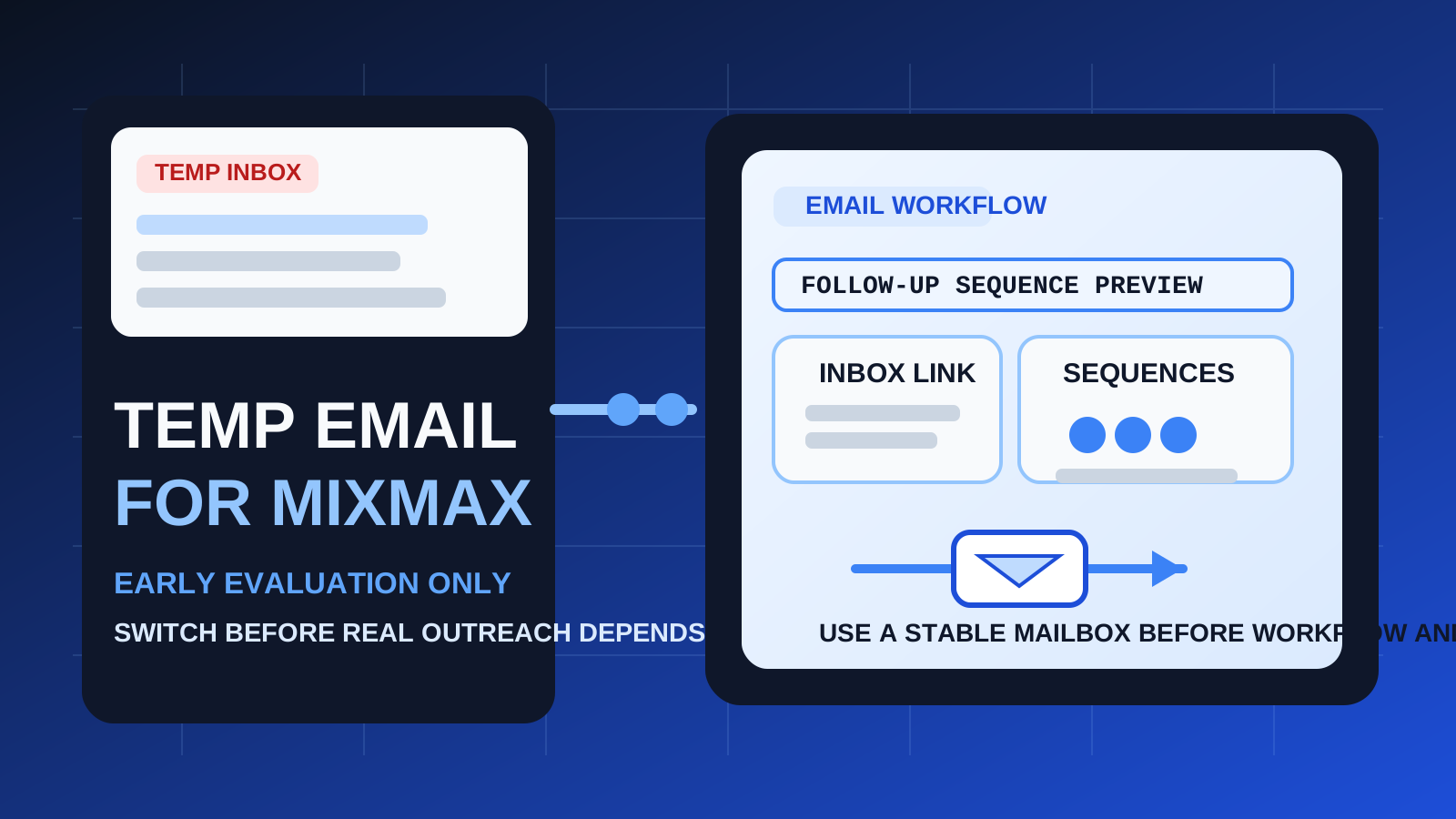
If you evaluate sales tools often, you already know how fast your inbox fills up. A single product trial can lead to welcome emails, setup prompts, webinar invites, feature announcements, sales follow-ups, and “just checking in” sequences that keep arriving long after you decided the tool was not for you. That is exactly why some people consider using a disposable inbox during the first round of testing.
Mixmax fits that decision point well. You may want to see how the product feels, how the onboarding works, and whether it deserves a deeper look before attaching your everyday email to another sales stack. In that limited stage, a temporary inbox can be useful. But the closer your evaluation gets to real outreach, connected mailboxes, or shared team workflow, the less sense a throwaway address makes.
The short version is simple: use a temp email for Mixmax only while the account itself is still disposable. If you are moving toward real use, switch to an address you actually intend to keep.
When a temp email for Mixmax makes sense
There are a few situations where using a temporary inbox is practical rather than reckless.
- First-pass product evaluation: you want to see whether Mixmax even belongs on your shortlist before giving it permanent access to your normal inbox.
- Inbox hygiene during tool comparisons: you are reviewing several platforms in the same category and do not want each one adding months of follow-up email to the address you use every day.
- Low-stakes trial access: you only need to receive the verification email, confirm the account, and inspect the early product experience.
- Separating research from real adoption: you want a clean line between “I am exploring this” and “I am actually using this.”
This is the same logic many buyers use when comparing tools such as Outreach, Salesloft, Reply.io, or Mailshake. During early evaluation, a temporary inbox creates distance between curiosity and commitment. You can look around without automatically volunteering your long-term mailbox for every nurture flow on the internet.
Where a disposable inbox starts becoming risky
Mixmax is not just another newsletter signup. It is the kind of tool people explore because they may eventually rely on it for live communication, follow-up, and repeat workflow. That changes the risk profile quickly.
1. Connected inboxes raise the stakes immediately
As soon as a tool is tied to a real mailbox, the account stops being casual. Even if your first intention was “just test it,” the account can become part of how you send, organize, or track communication. A temporary inbox is the wrong foundation for anything that may connect to real client, prospect, or recruiting conversations.
2. Shared sequences and templates are not throwaway assets
Once you save follow-up logic, message drafts, or reusable assets, you are no longer dealing with a disposable experiment. You are creating materials you may want later. That means the identity behind the account matters more than the convenience of a throwaway signup.
3. Team continuity matters more than signup convenience
If another person may touch the account, review settings, or rely on the same workflow later, the email address attached to that account should be stable. Temporary inboxes are helpful for solo experiments. They are weak infrastructure for shared work.
4. Account recovery is the most obvious failure point
The problem with a disposable inbox is rarely the first ten minutes. It shows up later when you want to log back in, reset a password, confirm a change, or prove you still control the account. If the address is gone, the whole setup becomes harder to trust.
A practical rule: disposable for research, permanent for real outreach
If your goal is to inspect Mixmax, compare it against alternatives, and decide whether it is worth more time, a temp inbox is fine. If your goal is to connect real email, build durable workflow, or run actual outreach, start with a permanent address instead.
That distinction prevents most mistakes. People get into trouble when they treat the account as temporary at signup but permanent in behavior. If you are acting like the account matters, your email choice should match that reality.
How to use a temp email for Mixmax without creating future problems
1. Decide whether you are testing the tool or adopting the tool
Be honest with yourself before you sign up. If you only want to evaluate the interface, skim onboarding, or check whether the product fits your workflow at all, a temporary inbox is reasonable. If you already suspect there is a strong chance you will keep using it, skip the disposable step and begin with a permanent address.
2. Save the messages that actually matter
During early evaluation, you usually only need a few emails:
- the verification email
- the welcome or onboarding message
- any setup links worth comparing later
- plan or trial details you may want in your notes
Temporary email is useful because it stays lightweight. But that also means you should not treat it like durable storage. Capture anything important while it is in front of you.
3. Keep the test narrow and deliberate
The safest way to use a disposable inbox is to evaluate on purpose. Do not open an account, get distracted, and accidentally let a “quick look” drift into a semi-real setup. Instead, ask a few focused questions:
- Does the onboarding explain the product clearly?
- Does the workflow feel simpler or more useful than the alternatives you are already considering?
- Would you actually want this tied to your main mailbox later?
- Is the product valuable enough to justify deeper setup with a stable email?
That kind of disciplined test is where temporary email shines. It helps you filter tools fast without turning your permanent inbox into the default destination for every trial you touched once.
4. Switch before anything important depends on the account
If the trial goes well, move early. Do not wait until the account contains useful workflow, important settings, or shared dependencies. The easiest time to switch to a stable inbox is before the account becomes operationally important.
When you should start with a permanent email instead
Use a long-term inbox from the beginning if any of these are true:
- you expect to connect a real mailbox quickly
- you plan to use the tool for live outreach rather than casual exploration
- you want dependable access later without recovery headaches
- you may share templates, workflows, or settings with a team
- you are evaluating for a real business process instead of a curiosity check
In those cases, the privacy benefit of a throwaway address is usually smaller than the control you give up later.
Examples that make the decision easier
Example 1: you are comparing several sales tools in one afternoon
This is a good disposable-email scenario. You want quick access, a cleaner inbox, and a low-friction way to decide whether Mixmax deserves another hour of your time. A temporary inbox works well here because the account itself may never matter again.
Example 2: you are a solo user exploring workflow ideas
If you are simply checking whether the product feels right, a temp inbox can still be sensible. The key is keeping the experiment small and not treating the account like permanent infrastructure.
Example 3: you are preparing to use the tool for real communication
This is where the disposable approach usually stops making sense. If the tool may influence actual prospecting, client communication, or hiring outreach, start with a real address. The account will matter, so the identity behind it should matter too.
Common mistakes to avoid
- Using a throwaway inbox for a non-throwaway workflow: the biggest error is acting like the account is temporary only on paper.
- Waiting too long to switch: if the product proves useful, migrate early instead of telling yourself you will fix it later.
- Forgetting about recovery: the initial verification email is not the only message that matters.
- Treating inbox clutter as the only issue: privacy matters, but long-term control matters too.
- Mixing real communication with experimental accounts: once actual relationships or business process are involved, disposable identity stops being a clever optimization.
Where Anonibox fits naturally
If you want to keep your main inbox out of early-stage product research, a temporary inbox from Anonibox can be a practical buffer. It lets you verify signups, review onboarding, and separate exploratory activity from the address you use for real work. That is a healthy boundary during evaluation.
Just do not confuse a clean evaluation tactic with a permanent account strategy. Temporary email helps at the front edge of the process. Stable email wins when continuity, ownership, and recovery matter.
Final takeaway
A temp email for Mixmax is useful when you want a quick, low-stakes evaluation and do not yet want another tool attached to your main inbox.
It is the wrong long-term choice once you connect a real mailbox, build reusable workflow, or need dependable account recovery. Use temporary email to test the waters, then switch to a permanent address before the account becomes something you actually depend on.