A temp email for Klenty can make sense for early outreach evaluation and keeping vendor follow-up out of your main inbox, but it becomes risky once you connect real mailboxes, build live cadences, or depend on account recovery.
Use a disposable address only for short-lived product testing; if the account starts touching real sending workflows, shared assets, or long-term settings, switch to a permanent inbox you control.
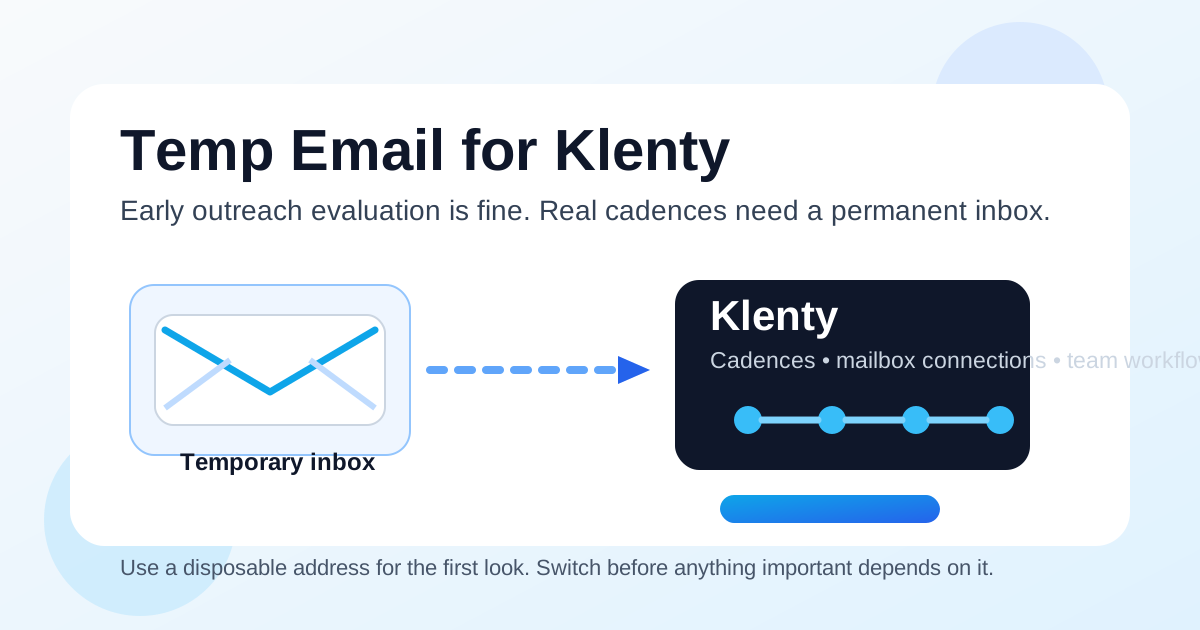
That distinction matters because Klenty sits in a category where the signup itself may feel disposable, but the workflow rarely stays that way for long. A quick trial can turn into imported contacts, connected inboxes, saved cadences, shared templates, analytics, and team handoffs faster than most people expect. If you treat the email identity as temporary while the account behavior becomes permanent, you create friction later when you need to log back in, reset access, or explain who owns what.
So the practical answer is not “never use a temp inbox” and not “always use one.” It is more specific: temporary email is fine for first-pass evaluation, comparison shopping, and low-stakes onboarding. It is a bad foundation for any Klenty setup that will touch real outbound work, team collaboration, or deliverability-sensitive processes.
When a temp email for Klenty actually makes sense
There are a few situations where using a disposable inbox is reasonable rather than reckless.
- You are comparing sales engagement tools quickly. If you want to look at Klenty next to alternatives like Salesloft, Outreach, Mailshake, or Mixmax, a temp inbox can keep your real mailbox from collecting weeks of nurture email.
- You only need to inspect the onboarding experience. Sometimes you just want to verify the account, click through the early setup, and decide whether the product belongs on your shortlist.
- You want inbox hygiene during vendor research. Outreach software vendors tend to send product tips, webinar invites, follow-ups, and “still evaluating?” messages. A temporary address keeps that noise separated from your day-to-day work.
- You are doing low-stakes solo evaluation. If no team member depends on the account and no real mailbox is being connected, the risk is much lower.
This is exactly the kind of scenario where Anonibox is useful: you can receive the verification email, confirm the account, take notes, and decide whether the tool deserves more commitment before giving it a long-term identity.
Why Klenty becomes a bad fit for disposable email pretty quickly
Klenty is not just a read-only trial product. People use it because they expect to test or run real outbound workflow. That changes the risk profile fast.
1. Connected inboxes raise the stakes immediately
The moment a platform touches a real mailbox, the account stops being casual. Even if the initial signup used a throwaway inbox, your evaluation may quickly involve a genuine sending identity, reply handling, scheduling, or meeting flow. If the login email itself is disposable, you are building on shaky ground from the start.
2. Shared cadences and templates are not throwaway assets
Once you create sequences, save messaging, organize lists, or share workflow with teammates, the account has operational value. You may want those assets later, and you may need a stable owner behind them. A temp inbox is fine for a peek. It is weak infrastructure for anything you would be annoyed to lose.
3. Account recovery is the obvious future failure point
Most temporary inboxes work well for ten minutes and poorly for ten days. If you come back after a break, need a password reset, or have to confirm a security change, a disposable address may no longer exist. That is an avoidable mess.
4. Team continuity matters more than signup convenience
Sales engagement tools often move from one evaluator to a broader team conversation. A solo test account can become a team reference point before anyone notices. If that happens, the email identity behind the account should be something your team actually controls.
5. Deliverability and credibility are long-term concerns
Even if the temp inbox is not the mailbox you plan to send from, using disposable identity too deep into the process can encourage sloppy setup. Outreach platforms work best when ownership, mailbox strategy, and sending responsibility are clear. A serious rollout deserves a serious account foundation.
The safest way to use a temp email for Klenty
If you still want the privacy benefit of a throwaway inbox during evaluation, use it deliberately instead of casually.
Start with a narrow goal
Know what you are trying to learn before you sign up. Good evaluation questions include:
- Is the onboarding clear or confusing?
- Does the workflow feel simpler than the alternatives?
- Are the cadence and personalization options relevant to your use case?
- Does the platform seem worth deeper setup with a permanent address?
If you cannot answer those questions in an hour or two, the issue is probably the product fit, not your inbox choice.
Save only the messages that matter
During early testing, you usually need just a few emails:
- the account verification message
- the welcome or getting-started email
- any trial limit or plan details you may want to compare later
- important setup links or documentation worth keeping in your notes
Do not treat a temp inbox like durable storage. Capture what matters and move on.
Keep the account disposable in behavior too
This is the part people skip. If you want the email identity to be temporary, the account itself should stay temporary. That means no real production workflow, no critical saved assets, no important team ownership, and no assumption that you will come back next month and pick up exactly where you left off.
Switch early if the trial becomes promising
If Klenty starts looking like a real contender, migrate before the account becomes important. The best time to switch to a permanent email is while the setup is still light. Waiting until shared workflow depends on the account just makes the move more annoying.
When you should skip temp email and start with a permanent address
Start with a normal long-term inbox from day one if any of these are true:
- You already know there is a strong chance your team will adopt the tool.
- You plan to connect a real mailbox during the first evaluation round.
- You expect to build cadences, templates, or reporting you may keep.
- You will invite teammates, managers, or revops colleagues into the workspace.
- You need reliable access for later troubleshooting or account recovery.
In those cases, the privacy benefit of a throwaway inbox is small compared with the future inconvenience. A permanent address is the cleaner choice.
Common mistakes people make with disposable inboxes during outreach-tool trials
The most common mistakes are not dramatic. They are ordinary little shortcuts that create cleanup work later.
- Mistake 1: treating an evaluation account like a real account. If you are already doing real setup, stop pretending the login can stay disposable.
- Mistake 2: forgetting that vendor email is not the only thing at stake. People focus on avoiding follow-up messages, but the bigger issue is future control over the account itself.
- Mistake 3: waiting too long to switch. The longer you keep the temp inbox attached, the more state accumulates around it.
- Mistake 4: assuming “I can always fix it later.” Sometimes you can. Sometimes the forgotten temp inbox is exactly what blocks the fix.
A practical decision checklist
Before you sign up, ask yourself these five questions:
- Am I just evaluating Klenty, or am I already moving toward real usage?
- Will this account stay solo and low-stakes, or could it become shared?
- Do I expect to connect a live mailbox soon?
- Would losing access to this account next week be annoying?
- Am I using temporary email to protect privacy, or just to avoid making a decision?
If your answers point toward short-lived research, a temp inbox is fine. If they point toward real workflow, stable ownership, or live outreach, use a permanent inbox instead.
What a balanced workflow looks like
A sensible workflow for privacy-conscious evaluation looks like this:
- Use a temporary inbox for first-pass product screening.
- Verify the account and review the onboarding flow.
- Take notes on what matters: cadence design, usability, integrations, reporting, and team fit.
- Decide whether the tool deserves deeper setup.
- If yes, create or move to a permanent account before connecting anything important.
This gives you the best of both worlds. You avoid unnecessary long-term inbox clutter during research, but you do not sabotage yourself later by letting a disposable login become the hidden owner of a real workflow.
Final answer: should you use a temp email for Klenty?
Yes, but only for early evaluation. A temp email for Klenty is useful when you want to inspect the product, receive the verification email, and keep trial follow-up out of your everyday inbox. It stops being a smart choice once the account starts touching real mailboxes, saved cadences, shared assets, or account recovery that you may care about later.
If the account matters, the email behind it should matter too. Use temporary email for curiosity, and switch to a permanent address before the tool becomes part of real outreach work.