A temp email for Yesware can be useful for a quick evaluation, signup verification, and keeping your main inbox out of another outreach-tool follow-up sequence.
It becomes a poor long-term choice once connected inboxes, tracked emails, shared templates, or account recovery start depending on that address.
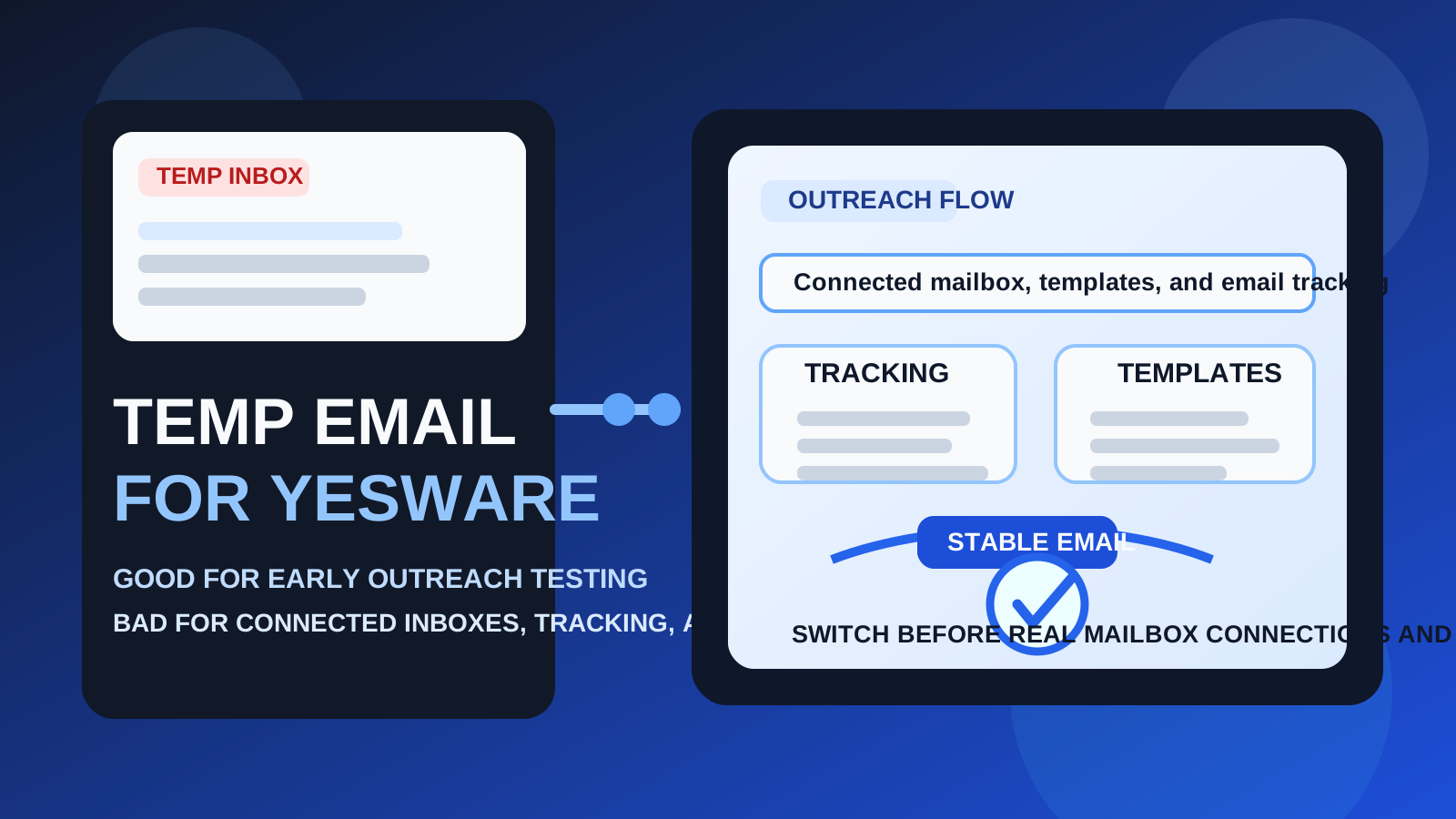
That is the practical answer. If you only want to see how Yesware feels before committing a real work address, a temporary inbox can be a smart filter. It lets you verify the signup, inspect the dashboard, and see whether the tool deserves more attention without handing your permanent inbox to yet another sales-tech trial too early.
But Yesware sits close to real email activity. Even at the evaluation stage, you are often thinking about inbox connections, templates, reply tracking, reminders, and the broader question of whether the tool fits a real outreach workflow. That is where disposable email stops being a harmless convenience and starts becoming fragile infrastructure.
If you are comparing several tools in this category, such as QuickMail, Klenty, Mixmax, Reply.io, Woodpecker, or Saleshandy, using a temporary inbox for the first pass can help you stay organized. A tool like Anonibox is useful for separating “worth a quick look” from “worth connecting to a real mailbox.”
Why people look for a temp email for Yesware
Most people searching this are not trying to game the system. They are usually trying to reduce inbox clutter and protect their privacy during early software evaluation. Outreach and sales-engagement tools can generate more follow-up than people expect. A simple trial can lead to welcome emails, feature tips, webinar invites, sales prompts, upgrade nudges, and multiple reminders to book a demo.
A temporary inbox gives you a clean boundary. You can receive the first verification message, review onboarding instructions, and decide whether the platform feels relevant before your permanent email gets added to another ongoing nurture sequence.
That is especially useful when:
- you are comparing several outreach platforms in a short period
- you only want to inspect the setup flow and basic interface first
- you are not ready to connect your real mailbox yet
- you want trial noise separated from everyday work communication
When a temporary inbox makes sense for Yesware
A temp email for Yesware usually makes sense when the account itself is still temporary. Good examples include:
- Quick product screening: you want to see the signup flow, interface, and first-run experience before deciding whether a deeper evaluation is worth your time.
- Vendor comparison: you are reviewing multiple outreach tools and want each test isolated in its own inbox.
- Low-stakes curiosity: you are exploring features at a high level, not setting up a lasting workflow.
- Inbox protection: you want the first wave of product marketing and follow-up emails somewhere other than your daily work mailbox.
In those cases, a disposable inbox does its job well. It gets you through the door and contains the noise while you decide whether the product deserves a more serious test.
Where the temp-email approach starts breaking down
The weakness appears when the account shifts from “trial curiosity” to “possible real workflow.” That shift often happens fast with outreach tools because the value of the product depends on real mailboxes, real contacts, and repeat use.
Connected inboxes raise the stakes immediately
Once you start thinking about connecting a genuine mailbox, the account is no longer just a disposable shell. Ownership matters. Recovery matters. If the signup email disappears later, that can create unnecessary friction at exactly the moment you want a clean evaluation.
Tracking and template workflows are not one-and-done tasks
Email tracking, templates, reminders, and related outreach workflows only become useful when you come back to them repeatedly. If the account might matter next week, next month, or to another teammate, a throwaway address stops being a smart shortcut.
Team access changes the risk profile
Even if you begin as a solo evaluator, tools in this category often move into shared use. A manager may want to see your findings. A teammate may want access. Someone else may become the real owner. Disposable inboxes are weak foundations for that kind of handoff.
Account recovery is easy to ignore until you need it
Temporary addresses feel fine when everything works. They feel much less clever when you need a reset link, a login confirmation, or proof of ownership later. Recovery is one of the biggest reasons to switch away from disposable email before a trial becomes operational.
A simple rule that works
Use a temp email for Yesware only while the evaluation itself is temporary. The moment you think the account may matter for real outreach, connected inbox testing, or repeat access, move to a stable address you control long term.
That rule keeps the privacy benefits without creating avoidable account-management problems later.
How to test Yesware responsibly with a temp email
1. Decide what kind of test you are actually running
Before signing up, be honest about the goal. Are you just checking whether the product looks promising? Or are you already planning a deeper evaluation with real email activity? If it is the first case, a temp inbox is fine. If it is the second, you may be better off starting with a stable address from the beginning.
2. Save the important early messages
During the disposable-email phase, keep the messages that matter:
- the verification email
- initial onboarding instructions
- any setup guidance that helps you compare tools fairly
- anything explaining connection requirements, pricing gates, or usage limits
Do not assume the inbox will always be available later. If the evaluation is useful, preserve the key details while access is easy.
3. Focus on evaluation questions that matter
Instead of drifting around the interface, use the trial to answer practical questions:
- Does the onboarding explain the product clearly?
- Would this tool fit your actual outreach process, or just look good in a demo?
- How much setup is required before it becomes valuable?
- Would you trust it enough to connect a real inbox later?
- Is it strong enough to justify a deeper comparison against alternatives?
This is where a temporary inbox is most useful. It protects your privacy while you make a basic go-or-no-go decision.
4. Switch before the account becomes important
If the product survives the first screen, do not wait too long to move to a stable email. The right time to switch is before account ownership, repeated access, or mailbox connection becomes important, not after a recovery problem reminds you.
When you should skip temp email entirely
There are situations where using a disposable address for Yesware is more hassle than help. Start with a permanent inbox if:
- you already expect to connect a real work mailbox
- the test is part of a real sales-ops or rev-ops review
- teammates may need access early
- you want dependable account recovery from day one
- the tool already looks like a serious shortlist candidate
In those cases, the privacy gain from a throwaway inbox is usually smaller than the inconvenience of rebuilding the account foundation later.
Three realistic scenarios
Scenario 1: first-pass comparison
You are comparing Yesware with other outreach tools and only want to inspect the interface, setup steps, and general fit. A temporary inbox is reasonable here. You verify the signup, review the dashboard, and decide whether the tool deserves a real test.
Scenario 2: solo evaluator who may go deeper
You are exploring on your own and are not sure whether you will continue. A temp inbox still works, but only if you are willing to switch quickly once the trial stops being casual. The mistake is leaving the account on disposable scaffolding after it becomes genuinely useful.
Scenario 3: team-based outreach evaluation
If multiple people are involved from the start, temporary email is usually the wrong foundation. Shared ownership, real mailbox connections, and repeat access are all signs that the account should begin on stable contact details.
Common mistakes to avoid
- Using a temp email for a non-temp workflow: the account starts as a quick test, then quietly becomes important.
- Waiting too long to switch: people keep postponing the move to a permanent address until recovery or ownership suddenly matters.
- Thinking only about spam: follow-up email is annoying, but the bigger risk is losing control of a useful account.
- Ignoring mailbox connection plans: if a real inbox connection is likely, the signup identity matters more than it first appears.
- Forgetting the team context: what seems fine for one evaluator can become messy when others need access.
A practical checklist before you sign up
- Am I just screening the tool, or am I planning a serious evaluation?
- Will I probably connect a real inbox later?
- Could teammates need access?
- Do I care about easy recovery if I return to the account later?
- Am I mainly trying to avoid inbox clutter during the first pass?
If the last question is your main reason, a temporary inbox is probably fine. If the earlier questions lean toward long-term use, start with a stable email instead.
Final takeaway
A temp email for Yesware is a smart option for early evaluation, signup verification, and keeping outreach-tool trial noise out of your main inbox.
It is the wrong long-term choice once connected inboxes, tracking workflows, shared usage, or account recovery depend on that address. Use disposable email for the research phase, then switch to a stable address before the account becomes part of real work.
That way, you get the privacy benefit without building a potentially useful outreach account on top of something you never meant to keep.