Usually no. A burner email can help at the edge of a job search, but it is a weak primary inbox for real job referrals because referrals often turn into delayed, multi-step follow-up you cannot afford to miss.
If you want privacy without losing opportunities, use a stable separate inbox or a controlled alias instead of a truly disposable address.
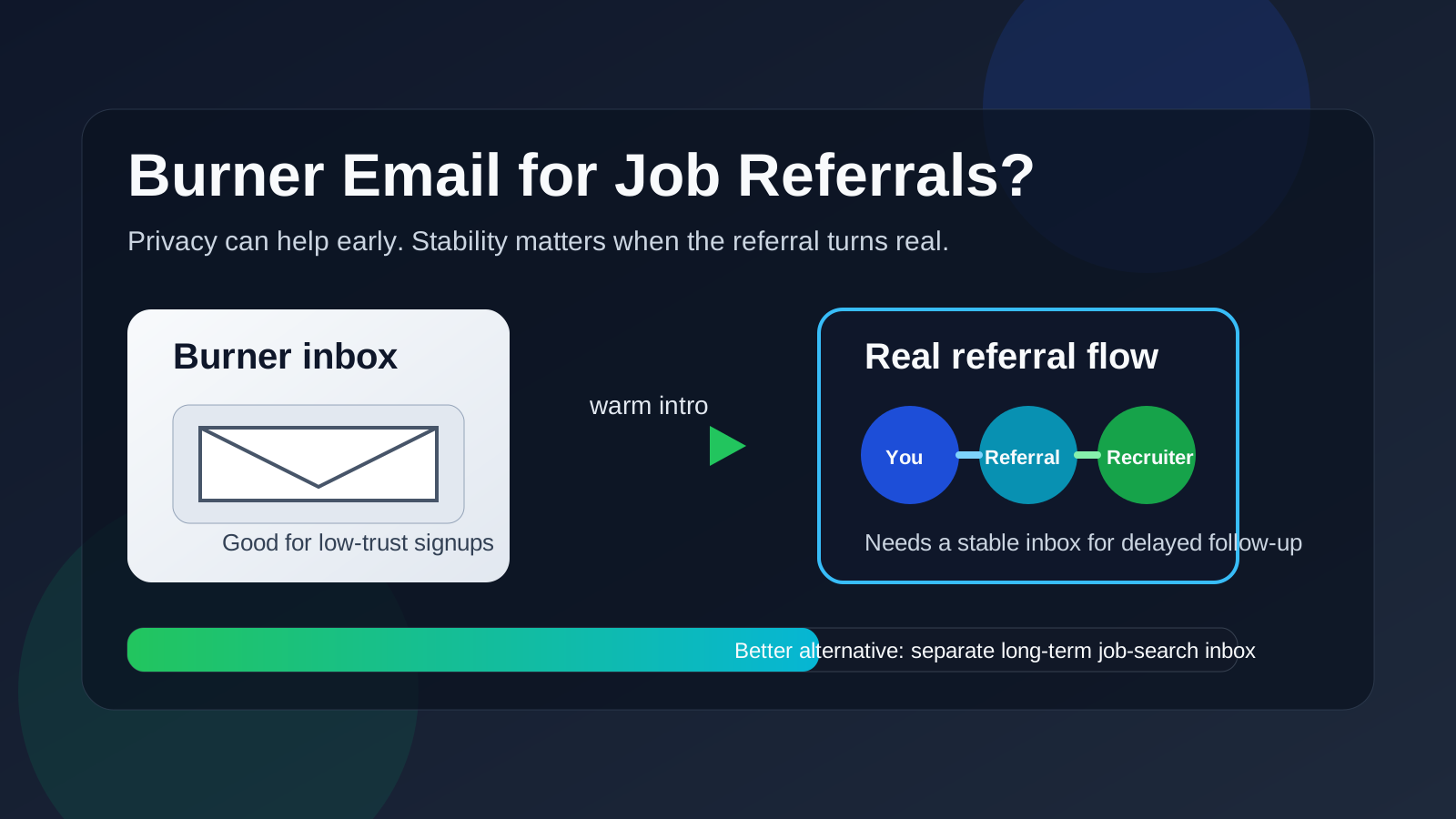
That is the short answer behind the question should you use a burner email for job referrals, but the useful answer depends on what you mean by burner email and where you are in the referral process.
A lot of job seekers use the phrase burner email loosely. Sometimes they mean a true temporary inbox that may expire soon. Sometimes they mean a second Gmail or Outlook account used only for job hunting. Sometimes they mean an alias that forwards into a real mailbox. Those are very different setups, and they do not carry the same risk.
For job referrals, the biggest issue is not whether the email feels private. The biggest issue is whether it stays reliable long enough for a warm introduction to turn into recruiter outreach, an application link, an interview request, or a delayed follow-up weeks later. Referrals are rarely as immediate and linear as people expect.
Short answer: a true burner email is usually the wrong tool for a real referral
A genuine burner inbox is most useful when you expect low trust, low stakes, or short-lived communication. That makes it handy for testing career communities, gated job-search resources, or signup flows that may turn into spam. It is much less useful once a real person is trying to help you get in front of a company.
A referral creates a longer communication chain. The employee may forward your details internally. A recruiter may reply days later. A hiring manager may ask for your resume after the original intro. An applicant tracking system may send the formal application link after someone has already vouched for you. If your burner inbox is hard to monitor, easy to abandon, or likely to expire, you are adding friction at exactly the wrong stage.
Why referrals are different from ordinary job-board signups
People often treat referrals like a quick one-time handoff: someone introduces you, you reply, and that is that. In reality, referrals often have an uneven timeline.
- An employee may promise to refer you this week but only submit the referral next week.
- A recruiter may respond only after a role gets approved, reopened, or reprioritized.
- A company may send you an application link that becomes your official record after the warm intro.
- A hiring manager may circle back later if another role looks like a better fit.
- A referral thread may go quiet, then restart when interview scheduling begins.
That is why referral-stage email needs continuity. You are not just receiving one verification code. You are maintaining a professional thread that may matter later than you expect.
What counts as a burner email in practice?
Before deciding whether to use one, separate these three common setups:
1. A true disposable inbox
This is the classic throwaway email: fast, isolated, and easy to abandon. It is good for low-trust signups and spam control. It is risky for any process that depends on long-term follow-up.
2. A separate long-term job-search inbox
This is a second account you keep specifically for applications, recruiter messages, referrals, and scheduling. It is private in the sense that it is not your main inbox, but it is still stable and monitored. For most people, this is the safest middle ground.
3. An alias that forwards to a real mailbox
An alias can work very well if you control the forwarding and regularly check the destination inbox. It gives you separation and filtering without forcing the other person to rely on a mailbox you might lose.
So if by burner email you mean a true throwaway inbox, the answer for referrals is usually no. If you mean a durable secondary job-search account, then you are really talking about a separate inbox, which is often a good idea.
When a burner-style email can still help around referrals
There are situations where a disposable address still makes sense near the edges of a referral workflow.
Testing a networking platform before you trust it
If a new job-search forum, alumni platform, or referral marketplace wants your email before showing anything useful, a temporary inbox can be a sensible first filter. You can verify access, see how noisy the platform is, and decide whether it deserves a real inbox later.
Downloading gated career resources
Some referral-adjacent sites are really just lead-generation funnels for guides, templates, or webinars. If all you want is the PDF or replay, a burner inbox may be enough.
Screening a low-trust recruiter community
If a so-called referral service looks sloppy, vague, or aggressive, using a temporary inbox first can protect your main address while you evaluate whether there is anything legitimate behind the signup wall.
This is where a tool like Anonibox fits naturally. It is useful when you want to reduce spam exposure during low-trust exploration. The problem starts when people keep using that same disposable address after the conversation becomes real and time-sensitive.
When using a burner email for job referrals becomes risky
You may miss delayed follow-up
The biggest referral risk is not the first message. It is the reply that arrives later than expected. If you have moved on from the inbox, missed the notification, or no longer remember to check it, you can look unresponsive even when the real issue was your setup.
You can weaken trust signals
Referrals work partly because they reduce uncertainty. Someone inside the company is helping validate you. If the address you reply from looks obviously temporary or unstable, it can make the interaction feel less professional than it should.
You create thread-management problems
Sometimes a referral leads to multiple contacts: the referring employee, a recruiter, and maybe an automated system. Keeping those threads organized is easier when everything lands in a durable inbox you actually use.
You make future recovery harder
If you need to find an old recruiter email, reference the original intro, or restart the conversation later, a disposable inbox can work against you. Referral value sometimes compounds over time. A throwaway setup assumes the opposite.
Better alternatives than a true burner inbox
A dedicated job-search inbox
This is usually the best option. You still protect your main personal inbox, but you keep a stable mailbox specifically for applications, referrals, scheduling, and recruiter follow-up. It is private enough to be useful and reliable enough to carry a real hiring process.
A forwarding alias you control
If you want stronger filtering and compartmentalization, use an alias that forwards into a mailbox you already monitor every day. That gives you separation without fragility.
A staged handoff approach
If you start with a temporary inbox on a low-trust platform, switch to your stable referral inbox as soon as a real employee, recruiter, or hiring manager gets involved. Do not wait until interview scheduling begins. Move earlier, while the stakes are still manageable.
A practical decision framework
Ask these questions before using a burner email for referrals:
- Is this only a signup or is a real human introduction likely to happen?
- Will I still be monitoring this inbox two weeks from now?
- Would I trust this address to receive an application link or interview request?
- Does the address look stable enough for a professional conversation?
- Would a separate permanent inbox solve the same privacy problem with less risk?
If the honest answer is that you would not trust the inbox for a delayed recruiter email, it is not the right inbox for a real referral.
Example scenarios
Good use
You join an unfamiliar networking site that claims it can connect you to employee referrals. You use a temporary inbox to see whether the platform is credible before sharing anything more personal. That is a reasonable defensive step.
Bad use
A friend offers to refer you to a real company, and you give them a disposable address because you want to keep your main inbox private. Two weeks later, the recruiter sends the official link and you miss it because you stopped checking the burner inbox. That is exactly the failure mode you want to avoid.
Best middle ground
You keep a dedicated job-search inbox for real referrals and recruiter threads, while using temporary addresses only for low-trust signups, downloads, and noisy platforms. That setup gives you privacy without sacrificing continuity.
Best practices if a referral is already using a burner inbox
- Move the conversation to a stable inbox early, not after something important is missed.
- Save the recruiter and referral contact details somewhere outside the temporary inbox.
- Forward or archive key messages so you do not lose the thread.
- Check the burner inbox daily until the handoff is complete.
- Use a professional signature once the conversation becomes real.
Final answer
So, should you use a burner email for job referrals? Usually no. A true burner inbox is fine for testing low-trust platforms or grabbing one-off resources, but it is too fragile for the slower, messier follow-up that real referrals often create.
If you want privacy, the better option is a stable separate inbox or a controlled alias that you can monitor reliably from first intro to final decision. That way you keep spam away from your main inbox without risking the exact kind of message a referral is supposed to generate.