A custom domain email can be a great choice for job offers if you personally own the domain, the inbox is stable, and you will keep it active through hiring and onboarding.
Yes, a custom domain email is often fine for job offers, but it is a bad idea if the domain is tied to your current employer, a side business you may shut down, or a forwarding setup you do not fully trust.
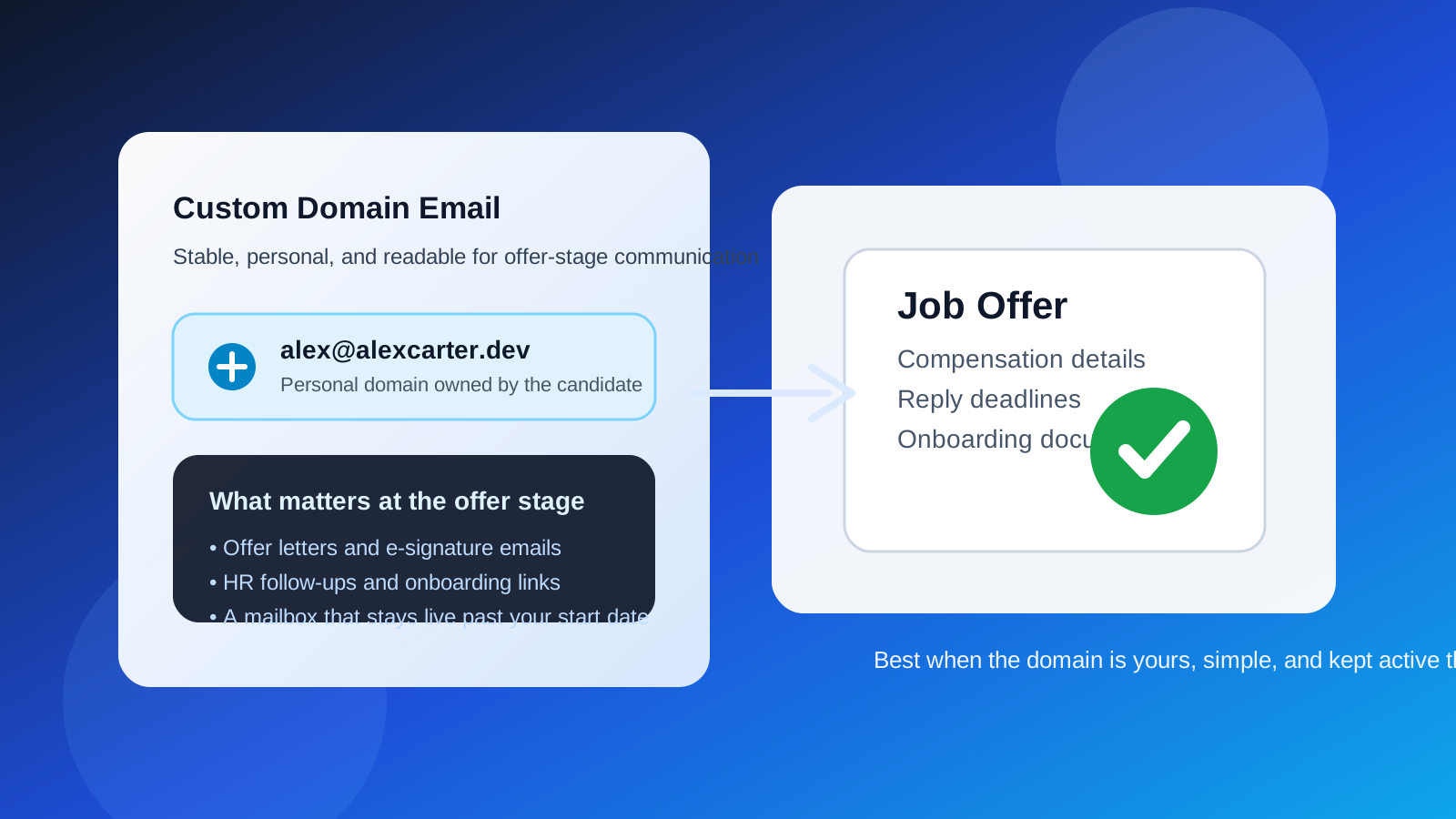
That is the real tradeoff. At the offer stage, recruiters and HR teams are no longer just sending casual follow-ups. They may send compensation details, reply deadlines, background-check instructions, e-signature requests, benefits paperwork, and onboarding links. A custom domain can look polished and give you more control over your identity, but only if the setup behaves like a boring, dependable mailbox.
Why the offer stage is different from applications and interviews
Early in a job search, many people experiment with separate inboxes, aliases, or even temporary email for low-trust signups, résumé downloads, and job boards that may create long-term spam. That can be sensible. Once a company makes an offer, the standard changes.
An offer-stage inbox has to do more than receive a verification link. It needs to handle important messages cleanly, remain available if the process stretches out, and still be there after you accept. The question is no longer just, “Does this protect my privacy?” It becomes, “Will this address hold up for offer letters, follow-up questions, and the first wave of onboarding?”
That is why a custom domain email can be either excellent or risky. It is excellent when you fully control it and keep it stable. It is risky when the domain is temporary, over-branded, confusing, or built on forwarding rules you have barely tested.
Why a custom domain email can work well for job offers
It gives you long-term control over the address
If the domain is truly yours, the address is not locked to a consumer provider brand and it is definitely not tied to your current employer. That control matters when an offer arrives during a complicated transition. You can keep using the same address through negotiation, resignation, onboarding, and even your first weeks in the new role.
It can look polished without looking disposable
A simple custom domain tied clearly to your name often looks deliberate and professional. It does not guarantee a better outcome, but it can look cleaner than an old address full of numbers or a mailbox created in a panic during your search.
It separates your job search from your everyday inbox
A personal domain can also be a good privacy tool. It lets you avoid using the same inbox for employers, bills, family messages, and every other part of your life. That separation is especially helpful once an offer triggers more sensitive administrative messages.
It can outlast provider changes
If you ever move your mailbox hosting behind the scenes, the visible address can stay the same. That continuity is one of the strongest arguments for using a personal domain instead of relying entirely on whatever email provider you happen to prefer this year.
When using a custom domain email for job offers is a strong choice
A custom domain email is usually a strong choice when most of the following are true:
- You personally own the domain and will keep it renewed well past your expected start date.
- The domain clearly belongs to you rather than to your current employer, agency, or side business.
- The address is short, readable, and easy to type correctly.
- You check the inbox frequently on both desktop and mobile.
- Replies come from the same visible address the employer originally contacted.
- You have already tested attachments, forwarding behavior, and spam-folder handling.
If that describes your setup, a custom domain can be one of the best offer-stage options available. It gives you control without looking disposable, and it avoids the awkwardness of using a current-work or school address while negotiating a move.
The main risks of using a custom domain at the offer stage
The domain looks tied to a company instead of a person
If the domain looks like a startup brand, consulting business, or employer-adjacent project, HR may not know whether they are emailing you or a business entity. That confusion is unnecessary at the exact stage where paperwork and deadlines need to be crystal clear.
The mailbox setup is more fragile than it looks
Custom domains often depend on forwarding rules, hosted mailboxes, aliases, DNS records, or reply-from configurations. Any one of those moving parts can create trouble. If an e-signature message lands in spam, a reply comes from the wrong address, or a PDF attachment quietly fails to arrive, the problem stops being theoretical very quickly.
The domain might change, expire, or get neglected
This is one of the biggest offer-stage risks. If the domain renewal date is close, you are in the middle of switching providers, or you rarely log in to the mailbox, this is the wrong moment to rely on that address. Job offers sometimes go quiet and then suddenly become urgent again. Your email needs to survive that gap.
The address is too clever, too branded, or too hard to spell
Offer-stage communication should feel low-friction. A name-based domain is usually safer than something witty, niche, or packed with hyphens. If a recruiter has to double-check whether they spelled your address correctly, the setup is already less helpful than it should be.
Custom domain email vs Gmail, Outlook, aliases, and temporary email
Versus Gmail or Outlook
Gmail and Outlook win on familiarity and simplicity. Most people know how those inboxes behave, and they tend to integrate smoothly with calendars, attachments, and HR systems. A custom domain can look more polished and give you more control, but only if your setup is at least as reliable. If it is not, the mainstream inbox is the better tool.
Versus an alias
An alias can be useful earlier in a search because it protects your underlying inbox while still allowing replies. But once an offer is real, many people are better off settling on one stable direct address. A custom domain can pair well with aliases behind the scenes, yet the visible address sent to HR should still feel durable.
Versus temporary email
This is where the line becomes clear. Temporary email can be helpful for low-trust signups, gated salary reports, sketchy job-board experiments, or situations where you mainly need a one-time verification message. A tool like Anonibox makes sense there.
Job offers are different. You do not want offer letters, deadline reminders, tax-document requests, or onboarding instructions living in an inbox that may expire or look disposable. If the offer is real, your contact method should be real too.
Best practices if you keep using a custom domain email for job offers
1. Use one plain, personal address
Keep the visible address simple. Something like your name on your domain is usually better than role-style addresses such as hello@, admin@, or careers@. The goal is to look unmistakably human.
2. Renew the domain before you need it
If renewal is coming up soon, handle it now. You do not want your offer-stage contact method depending on whether you remember a billing notification next month.
3. Test receiving and replying from multiple services
Send yourself messages from another Gmail or Outlook account. Attach a PDF. Reply back. Confirm that the sender sees the same custom-domain address and that important attachments appear normally.
4. Watch your spam folder aggressively
HR systems, background-check vendors, and e-signature platforms do not always look like normal person-to-person email. During active negotiations, check spam more often than usual so nothing important sits there unnoticed.
5. Keep mobile access working
Offer-stage email can become time-sensitive fast. Make sure you can read and answer messages on your phone, not just on a laptop you open twice a day.
6. Keep your display name consistent
Your display name does not need to match your résumé perfectly, but it should be close enough that HR immediately recognizes who they are dealing with. A custom domain should reduce confusion, not create it.
7. Have a fallback plan
If you ever notice delivery issues, switch to a mainstream inbox early instead of hoping the problem goes away. It is much better to tell a recruiter, “Please use this address going forward,” than to miss an important deadline.
When you should switch away from a custom domain before accepting an offer
You should probably move the conversation to a simpler inbox if any of these are true:
- The domain is tied to your current employer, freelance brand, or client work.
- You only use the mailbox occasionally and cannot monitor it closely.
- The setup depends on forwarding behavior you have not tested carefully.
- You are about to change mail hosts or domain settings.
- The address often gets questions because it is hard to spell or interpret.
- You do not fully trust the domain to remain active through onboarding.
In those cases, a plain stable inbox from Gmail, Outlook, Fastmail, or another mainstream provider is usually the safer choice. There is nothing unprofessional about choosing the simpler path when the simpler path is also more reliable.
Practical examples
A good example is a candidate using a simple personal domain they have owned for years. Their mailbox syncs to phone and laptop, replies come from the same address every time, and the renewal is already handled for the next two years. That is an excellent setup for job offers.
A risky example is someone using a custom domain that points to a side-business brand they may stop using soon. Maybe the inbox forwards to a different provider, sometimes replies from the wrong address, and the domain expires in a month. That setup might be fine for experiments, but it is the wrong place to receive an offer letter.
Another risky example is using a domain connected to your current employer or consulting identity. Even if the tech works, it creates unnecessary questions about ownership, privacy, and boundaries right when the hiring conversation should feel straightforward.
A quick decision checklist
- Do I personally own and fully control this domain?
- Will the domain and mailbox stay active through onboarding?
- Does the address look simple, personal, and easy to trust?
- Have I tested replies, attachments, and notifications recently?
- Would I feel comfortable having HR send sensitive routine paperwork here?
- If something broke today, do I have a clean backup address ready?
If most of those answers are yes, a custom domain email is probably a strong choice. If several answers are no, you are better off switching before the offer process gets more complicated.
Final answer
Yes, you can absolutely use a custom domain email for job offers, and in many cases it is an excellent option. The key is that the domain must be truly yours, easy to read, and reliable enough to handle offer letters, HR follow-ups, and onboarding without drama.
If the setup is fragile, over-branded, employer-tied, or likely to change soon, do not force it. Job offers reward continuity more than cleverness. Use the address that keeps communication simple, stable, and under your control.