Yes, using a separate calendar for informational interviews is often a smart idea if you want better privacy, cleaner reminders, and less chance of mixing career-networking activity into your work or shared personal schedule.
No, you do not need a separate calendar for every single coffee chat, but it becomes very useful once you are juggling multiple conversations, follow-ups, time zones, and discreet scheduling around your day job.
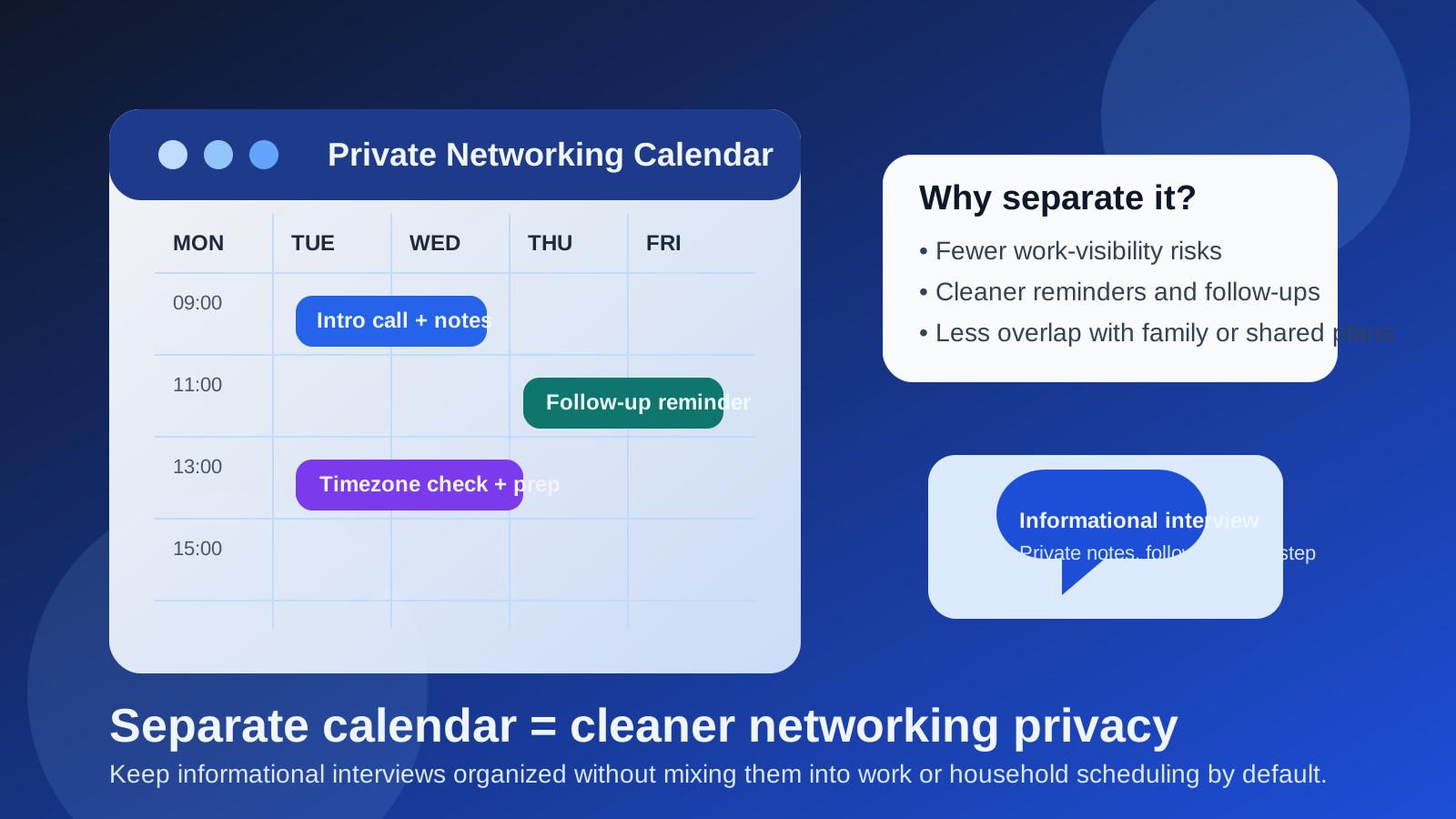
Why this question matters more than it seems
Informational interviews sound casual, but the logistics can get messy fast. You might have one conversation with an alum this week, a hiring manager’s former colleague next week, and a founder or team lead the week after that. Each one creates small but important tasks: confirm the time, check the time zone, set a reminder, collect questions, send a thank-you note, and sometimes schedule a follow-up.
If all of that goes straight into your main calendar, a few things can happen. Your work calendar may expose it to an employer-administered system. Your family calendar may show it to a spouse or shared household by default. Your personal calendar may become cluttered enough that networking tasks disappear between school pickups, recurring bills, medical appointments, and everything else. A separate calendar will not solve every privacy problem, but it gives you more control over where those signals live.
Short answer: when a separate calendar helps most
A separate calendar is usually worth it when informational interviews are part of an active, organized job-search or career-exploration process rather than a one-off conversation. It is especially helpful if:
- you are speaking with multiple people over several weeks,
- you want to keep networking activity off a work-managed calendar,
- you share your main personal calendar with family or a partner,
- you need separate reminders for prep and follow-up, or
- you already use a separate email address or alias for career outreach and want matching organization on the calendar side.
If you already use a separate inbox, alias, or an Anonibox-managed address for early outreach, a separate calendar is the natural next step. It keeps the scheduling layer just as organized as the messaging layer.
What a separate calendar actually gives you
1. Better privacy than a work calendar
This is the biggest reason many people create one. If your current employer manages your calendar account, your meeting metadata, reminders, and sometimes even accepted invites may sit inside a system you do not fully control. Even when nobody is actively watching, that is still more visibility than many people want while exploring new opportunities or building a network quietly.
A separate calendar reduces that exposure. It does not make you invisible, but it avoids creating unnecessary traces in a work-managed environment.
2. Cleaner separation from your everyday life
Informational interviews are not the same as personal errands or social plans. When they live in their own calendar, you can see your networking workload clearly: who you have contacted, when you promised to follow up, and where you still need prep time. That makes the process feel more intentional instead of scattered.
3. Better reminder control
Many people need more than one reminder for an informational interview. You may want a reminder the day before, another thirty minutes before, and a separate block to send a thank-you note later that afternoon. A dedicated calendar lets you do that without overloading your main calendar with alerts.
4. Easier time-zone handling
Networking conversations often cross cities, countries, or hybrid schedules. A separate calendar makes it easier to label those meetings clearly, check the time zone, and add prep notes without burying them under unrelated events.
When you probably do not need a separate calendar
You do not have to over-engineer this. If you only have one informational interview every few months, your main personal calendar may be enough. The same is true if you are not sharing your personal calendar with anyone, you are not using a work account, and you are comfortable with a little overlap.
In other words, a separate calendar is a useful privacy and organization tool, not a moral requirement. The right question is not “should everyone do this?” It is “does this reduce friction and exposure for the way I am actually networking right now?”
The biggest risks of keeping informational interviews on the wrong calendar
Using a work calendar
A work calendar is usually the riskiest option for privacy. Depending on the system, administrators may have varying levels of access to account data, meeting names, invite history, or retention records. Even if nobody ever checks, using a work-controlled account for off-the-record career exploration creates avoidable overlap.
Using a shared household calendar
This is less dramatic, but still important. If your partner, spouse, or family shares calendar visibility, you may not want every informational interview, recruiter intro, or follow-up reminder automatically appearing in that shared space. Some people are fine with that. Others would rather decide what to share and when.
Using an overloaded personal calendar
The risk here is not surveillance but missed execution. Informational interviews work best when you prepare well and follow up quickly. If the event gets buried among dozens of unrelated reminders, you are more likely to forget a thank-you note, skip prep time, or arrive feeling rushed.
How to set up a separate calendar for informational interviews
1. Create a dedicated calendar, not just a generic event label
Color-coding events inside your main calendar is better than nothing, but a truly separate calendar gives you cleaner control. You can toggle it on or off, adjust notifications, and keep the whole set of events grouped together.
2. Name it clearly but discreetly
You do not have to call it “job search.” A practical name like “Networking,” “Career Conversations,” or “Private Outreach” is often enough. Clear for you, low-drama if seen, and easy to filter later.
3. Pair it with the right email account
If possible, let informational-interview invites flow into the same non-work email identity you use for outreach. That could be a separate Gmail or Outlook account, an alias, or another dedicated inbox you control. The benefit is consistency: outreach, replies, invites, and reminders all stay in one lane.
4. Add a prep block and a follow-up block
Do not stop at the meeting itself. Add ten to fifteen minutes before the conversation to review the person’s background and your questions. Then add a follow-up reminder afterward so you send a thank-you note while the discussion is fresh.
5. Keep sensitive notes out of the event title
Even in a private calendar, it is smarter to keep titles simple. Use the event title for logistics and store detailed notes elsewhere if needed. For example, “Alex Chen informational interview” is better than “Need referral into stealth startup after layoff.”
A simple workflow that works well
- Use a separate or non-work email address for outreach.
- Create one dedicated calendar for networking and informational interviews.
- Add the conversation itself plus a short prep block before it.
- Add a same-day follow-up reminder for the thank-you message.
- Review the calendar once or twice a week so nothing slips.
This is enough structure for most people. You do not need a complicated system. You just need one that reduces accidental visibility and missed follow-ups.
Best practices for keeping the calendar useful
- Use one color only for networking events: that makes them visible at a glance.
- Include time zones when relevant: especially if you are speaking with people in other cities.
- Set realistic reminders: one for prep, one for the meeting, one for follow-up.
- Review weekly: informational interviews create momentum only when follow-ups happen.
- Retire old clutter: archive or hide stale events once the networking cycle passes.
Mistakes to avoid
Making it too complicated
You do not need five calendars, color systems, and custom automation for this. One dedicated calendar is usually enough.
Still using your employer account for invites
If privacy is the reason you created a separate calendar, but invites still route through a work-managed account, you only solved half the problem.
Forgetting follow-up reminders
The calendar is not just for showing up. It should help you do the high-value part after the conversation: thank the person, record what you learned, and decide whether you should stay in touch.
Putting too much sensitive detail in visible fields
Be practical. Calendar titles and notifications are not the right place for every private thought about your job search, your current employer, or your long-term plan.
Should you use your personal calendar, work calendar, or a separate one?
If those are the three choices, the usual ranking is straightforward:
- Separate calendar: best balance of privacy, control, and organization.
- Personal calendar: acceptable if it is private enough and not too cluttered.
- Work calendar: usually the weakest choice if discretion matters.
That will not be true in every single situation, but it is a good default. If you care about reducing visibility and keeping your networking process tidy, separate wins more often than not.
Final answer
So, should you use a separate calendar for informational interviews? In many cases, yes. It is one of the simplest ways to keep scheduling, reminders, and follow-up tasks organized without unnecessarily blending them into a work-managed or heavily shared calendar.
You do not need it for every casual conversation, but if networking is becoming a real process, a separate calendar is a low-effort upgrade with real privacy and organization benefits. Keep it simple, pair it with the right email account, and use it to support better preparation and faster follow-up rather than just storing meeting times.