Using your personal phone number for networking events is sometimes fine, but it should be a deliberate choice rather than your default.
If you expect light follow-up from people you just met, a separate number or email often gives you better privacy and cleaner boundaries than handing out your main personal line to everyone.
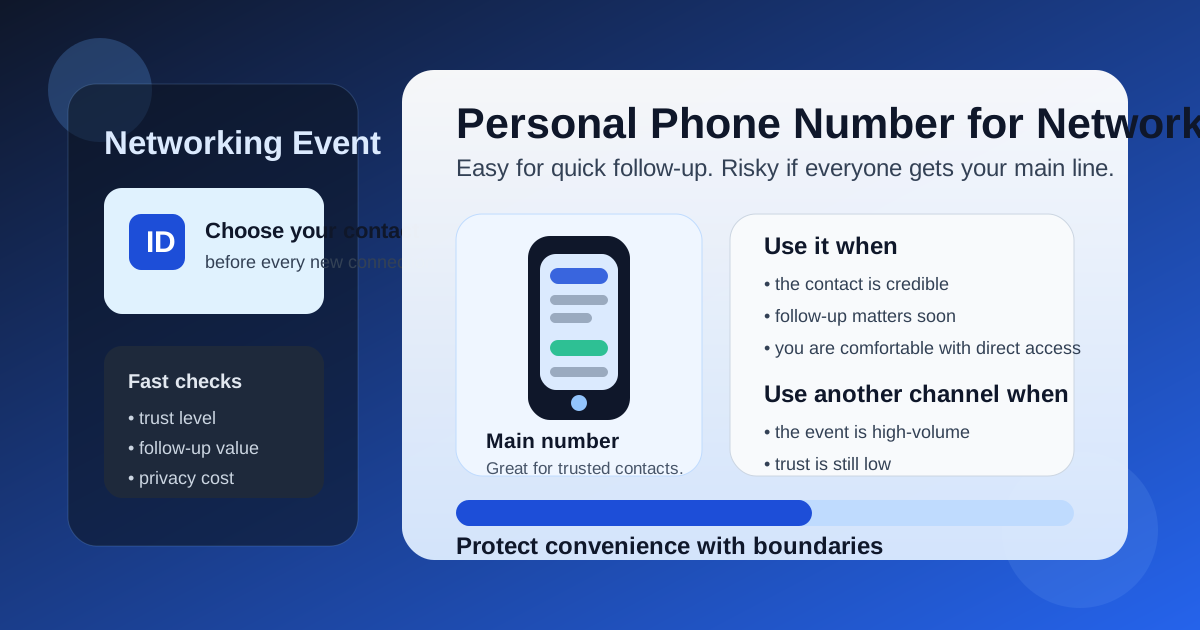
That is the practical answer behind searches for should you use your personal phone number for networking events. On the surface, sharing your number feels normal. You meet someone at a conference, meetup, alumni event, job fair, trade show, or industry mixer, and they say, “Let me text you,” or “What’s the best number to reach you?” Giving your personal number seems like the fastest way to keep the conversation moving.
But networking events create a very specific kind of contact problem. You may meet a lot of people in a short time. Some will be genuinely useful professional connections. Some will be polite one-time conversations. Some may become recruiter follow-up, vendor outreach, event spam, or random check-ins that never turn into anything real. Once your main number is out there, it is hard to pull it back.
That does not mean your personal phone number is off-limits. It means you should think about whether the convenience is worth the long-term access you are giving away. In some settings, yes. In others, not really.
Short answer: yes sometimes, but not as the automatic default
If you are talking to a trusted contact, a former colleague, a warm introduction, or someone with a clear reason to follow up, your personal phone number may be perfectly appropriate. There is nothing inherently unprofessional about using it.
The issue is scale and trust. Networking events usually create low-trust, early-stage interactions. You may be speaking to people before you know whether they will ever matter again. In that environment, your personal number is often more access than the relationship actually needs.
That is why the best answer is not “always use it” or “never use it.” The best answer is to match the channel to the level of trust and the kind of follow-up you actually want.
Why people share their personal number so easily at events
There are a few understandable reasons this happens.
- It feels fast: swapping numbers is easy and familiar.
- It feels more direct: a text seems more immediate than email or LinkedIn.
- People do it socially: at in-person events, number-sharing can happen almost automatically.
- You may not have another system ready: if you do not use a separate networking email or number, your personal phone becomes the default.
None of that is irrational. The problem is that what feels easy in the moment can create clutter, awkwardness, or privacy loss later.
What you risk when you use your personal phone number
1. You give broad access to your main line
Your personal number is usually tied to the rest of your life. Family messages, banking alerts, two-factor codes, close friends, healthcare reminders, deliveries, and personal conversations all run through the same channel. Once event contacts start using that number too, your professional networking can spill directly into your day-to-day life.
2. You may collect low-value follow-up
After networking events, not every message is useful. Some are vague check-ins. Some are mass follow-ups. Some are sales-oriented. Some are only half-serious. If those all land on your main number, the noise follows you more directly than it would in a separate inbox or secondary line.
3. It can make boundaries harder to manage
Texts feel personal. Calls feel personal. If a new contact starts messaging at odd hours or becomes overly casual too quickly, it is harder to maintain distance when they already have your main number.
4. It can increase spam over time
Not every event organizer or attendee handles contact data carefully. Even without bad intent, your details can spread through attendee lists, CRM notes, booth scans, or informal forwarding. A personal number is harder to rotate or retire than a dedicated networking number.
When using your personal number is reasonable
There are cases where using your personal phone number makes sense and does not need to be overthought.
- You already know the person: former coworkers, friends of friends, or trusted referrals.
- The relationship is clearly legitimate: the next step is specific and time-sensitive.
- You are comfortable with direct access: you do not mind if this person texts or calls you later.
- You are meeting only a few people, not dozens: the volume risk is lower.
- You actually prefer phone-first communication: some people genuinely do.
In those situations, using your real number can be practical and normal. If the trust level is already decent and the follow-up is likely to matter, the convenience may outweigh the downside.
When a personal number is probably the wrong choice
Large conferences and career fairs
These events create lots of light interactions. You may meet recruiters, sponsors, founders, peers, vendors, and casual contacts in a single afternoon. Most of them do not need permanent access to your main number.
Events where you are exploring options quietly
If you are networking while employed, considering a career change, or just feeling out the market, cleaner boundaries can help. Your personal number may still be usable, but it often is not the most controlled option.
Situations where you expect more noise than value
If the event is broad, crowded, or outreach-heavy, a separate communication layer is usually smarter. You can stay reachable without turning every quick chat into long-term personal access.
When the other person has not earned that level of access yet
Not every good conversation needs a phone number exchange. Sometimes LinkedIn or email is enough until the relationship becomes more real.
Better alternatives to your personal number
A separate phone number
If you do a lot of networking, this is often the cleanest solution. A separate number gives you real reachability without mixing every new contact into your private life.
LinkedIn Messages
For light first follow-up, LinkedIn is often enough. It keeps the interaction professional and lets both people reconnect without opening a direct personal channel immediately.
A dedicated networking email
Email is slower than texting, but it is easier to organize, search, and manage over time. It also gives people a way to follow up without creating the expectation of instant replies.
If you want a cleaner boundary on the email side, a service like Anonibox can help you separate event-related outreach from your main inbox. That is usually more sustainable than using a disposable address for serious person-to-person networking, but it can still reduce clutter and exposure.
A burner number for high-volume events
At conferences or busy hiring events, a burner number can make sense as a screening layer. It lets you stay open to follow-up without treating every new contact like a long-term trusted connection.
How to decide in the moment
When someone asks for your number at an event, run through a quick mental filter:
- Do I actually want this person to text or call me directly?
- Is this a trusted contact or just an early-stage connection?
- Would LinkedIn or email handle this just as well?
- Am I at a high-volume event where my details may spread widely?
- If this person keeps contacting me later, will I be glad they have my main number?
If the answer to that last question is uncertain, your personal number is probably not the best first option.
Best practices if you do use your personal number
Be selective
You do not need to hand it out to everyone you meet. Save it for people where the connection is specific, credible, and likely to matter.
Keep your voicemail professional
If recruiters, hiring managers, founders, or industry contacts might call, your voicemail should sound clear and normal. It does not need to be fancy, just usable.
Move weak contacts to weaker channels
If someone only needs a quick reconnect, offer LinkedIn instead. If they want to send details, offer email. Not every contact needs your most direct line.
Watch for boundary creep
If a new contact becomes overly casual, spammy, or intrusive, that is a useful signal. One downside of using your personal number is that you feel that friction sooner and more directly.
Do not overshare just because it is “just texting”
Even if someone seems legitimate, avoid sending sensitive personal information casually by text. A number exchange does not create instant trust.
Common mistakes
- Using your personal number as the default for everyone: easy in the moment, messy later.
- Assuming direct contact is always better: sometimes a lighter channel is more appropriate.
- Ignoring event context: a small alumni coffee chat is different from a giant convention hall.
- Not having a backup workflow: if you care about privacy, set up a separate number or email before you need it.
- Confusing politeness with obligation: you can be friendly without giving every new contact your main number.
Personal number vs. separate number vs. LinkedIn vs. email
Each channel solves a different problem.
- Personal number: best for trusted, higher-value, or time-sensitive follow-up.
- Separate number: best when you want direct contact without full personal exposure.
- LinkedIn Messages: best for light, professional first follow-up after a brief interaction.
- Email: best for searchable, structured follow-up and resource sharing.
The mistake is not choosing the personal number. The mistake is using it when another channel would give you the same benefit with fewer downsides.
Final answer
Yes, you can use your personal phone number for networking events, but it usually should not be your automatic default. It works best when the contact is trusted, the follow-up is clearly worthwhile, and you are comfortable giving that person direct access to your main line.
For many networking situations, especially large events or early-stage professional conversations, a separate number, LinkedIn, or a dedicated email creates better boundaries with almost no real downside. If you want to stay reachable without turning every event conversation into permanent access to your personal phone, a more layered approach is usually the smarter move.