Yes, you can use Hide My Email for networking events, but it works best for low-friction introductions, registrations, and follow-up filtering rather than every long-term professional relationship. If you expect ongoing back-and-forth, account recovery needs, or important recruiter follow-up, a stable separate inbox is usually the safer choice.
That is because Hide My Email sits in the middle: it gives you more privacy than handing out your main personal address, but it is not the same thing as running a dedicated networking mailbox. It forwards messages instead of creating a fully separate inbox, which can be very convenient at conferences, alumni mixers, job fairs, and industry meetups, but it can also create continuity problems if you later disable an alias or lose track of where specific follow-ups are landing.
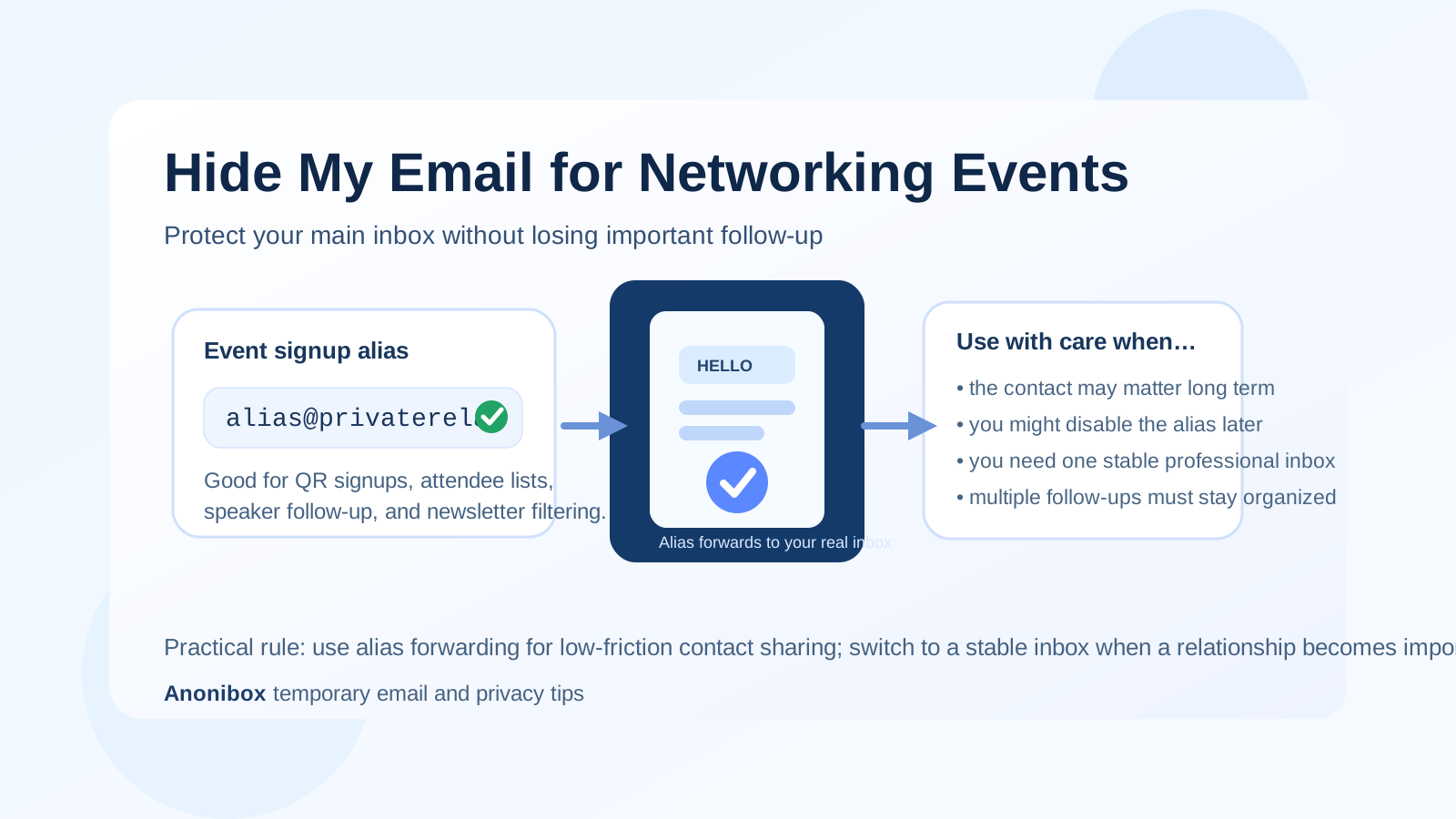
Why people consider Hide My Email for networking events
Networking events are one of the easiest places for your email address to spread further than you intended. You might share it with an event organizer, scan a sponsor QR code, join an attendee list, request slides from a speaker, enter a giveaway, subscribe to a newsletter, or exchange contact details with several people in one evening. Not all of those contacts deserve permanent access to your main inbox.
That is why a lot of privacy-conscious attendees look for a middle-ground option. They still want real replies, calendar follow-up, and useful introductions, but they do not want every event registration and booth conversation tied to their primary personal account forever.
Hide My Email can fit that middle ground well because it lets you share an alias instead of exposing your actual address directly. Messages still reach you, but the other side does not receive your core inbox address at the moment of contact.
When Hide My Email works well at networking events
Hide My Email tends to work best when the interaction is real but still early-stage. Good examples include:
- Event registrations: you need the confirmation email, ticket details, or venue reminders, but you do not want long-term marketing noise.
- Speaker resources: you are requesting slides, notes, or a post-event resource pack.
- Vendor booths: you want a product sheet or trial link without immediately exposing your primary inbox.
- Attendee directories: you want to stay reachable without making your default address part of a public or semi-public list.
- Initial contact sharing: you are open to follow-up, but you are not yet sure whether the relationship will matter beyond one exchange.
In those situations, alias forwarding is often a practical compromise. You stay reachable, but you keep more control over how much of your real contact identity you hand out up front.
Where Hide My Email can create friction
The bigger question is not whether Hide My Email can receive messages. It can. The real question is whether it stays convenient once the contact becomes important.
Networking is often less like a single signup and more like a chain of follow-ups: a thank-you message after the event, a coffee chat next week, a referral request later, and maybe a job lead months after that. That is where an alias can become awkward if you are treating it like a disposable contact point instead of a relationship channel.
You should be more careful if:
- You expect long-term professional follow-up. A useful networking connection may reach out months later. If you have disabled the alias, changed your workflow, or forgotten what you used where, that opportunity can get messy.
- You want one organized networking hub. Alias forwarding still lands mail in your underlying inbox. If your goal is to separate networking from your everyday life, a dedicated mailbox may be better than a forwarding layer.
- You are building a recognizable professional identity. If you want people to remember a stable address on your business card, profile, or résumé, constant alias changes may not help.
- You may need to reply from the same address consistently. Networking gets awkward when the contact thinks they know one email identity and your later follow-up comes from a different address or system.
So the issue is not that Hide My Email is “bad.” It is that it is best for controlled exposure, not necessarily for every relationship you hope to grow over time.
Hide My Email vs a separate inbox vs temporary email
If you are trying to choose the right privacy tool, it helps to compare the options honestly.
Hide My Email
This is useful when you want a real, working address that forwards to you without exposing your main inbox immediately. It is convenient for signups, lightweight follow-up, and one-to-one contact sharing when you still want the option to limit exposure later.
A separate networking inbox
This is often the best choice if networking is becoming a serious, ongoing part of your job search or career growth. A separate inbox gives you cleaner organization, stable identity, and less risk of losing track of which alias went where. If you attend events regularly, this setup is often easier to manage over time.
Temporary or disposable email
This is the most aggressive privacy option, but it is not ideal for relationships that might matter later. A temporary inbox is better for low-trust registrations, downloads, or one-off forms than for real professional contacts. If you just want to test whether an event signup will trigger a flood of promo mail, a disposable option like Anonibox can be useful. But if you genuinely want someone to follow up with you next week or next month, a stable alias or separate inbox is usually the smarter move.
Should job seekers use Hide My Email for networking events?
For many job seekers, the answer is yes, selectively. Networking events sit in a weird middle zone between marketing and real opportunity. Some contacts go nowhere. Others become referrals, recruiter conversations, mentor relationships, or interviews later.
That makes Hide My Email appealing because it lets you stay reachable without instantly giving every organizer, sponsor, and booth rep your default personal address. But it also means you should have a plan for escalation. If a contact becomes important, move the relationship into a stable communication setup before the thread becomes too valuable to risk.
A simple rule works well:
- Use a privacy layer for event registration and early contact.
- Use a stable inbox for high-value follow-up.
That protects your inbox without accidentally making yourself harder to reach when the good opportunities show up.
Best practices if you use Hide My Email at an event
1. Decide your goal before you share it
Are you trying to avoid long-term marketing spam, protect your identity during first contact, or create a general networking workflow? If your main goal is organization rather than simple privacy, a separate inbox may serve you better.
2. Use it for low-to-medium trust interactions first
It is a strong fit for speaker handouts, sponsor resources, attendee signups, and early conversations where you are open to contact but not ready to expose your main inbox everywhere.
3. Upgrade important contacts to a stable address
If a recruiter, alum, hiring manager, or useful industry connection starts becoming part of a real conversation, do not wait forever. Move that relationship to the email setup you actually want to maintain.
4. Keep notes on who got which address
This matters more than people expect. After a busy conference, it is easy to forget whether you gave someone your main address, an alias, or a disposable inbox. A simple note in your phone or calendar can save confusion later.
5. Do not confuse privacy with invisibility
Hide My Email reduces direct exposure of your core address, but it does not magically eliminate all unwanted contact or make every interaction safe. You still need normal judgment about links, attachments, and whether a person or company is worth engaging further.
Signs you should skip Hide My Email and use a separate inbox instead
- You attend networking events often and want one consistent contact identity.
- You are actively job searching and expect event conversations to turn into real interviews.
- You want to search, label, archive, and organize all networking threads in one place.
- You are worried that forwarding-based aliases will become hard to track over time.
- You want a professional address you can confidently place on event badges, speaker bios, or follow-up messages.
At that point, the best answer is usually not “give everyone your main personal address.” It is “set up a dedicated professional inbox and keep your channels intentional.”
A quick decision checklist
Before you use Hide My Email for a networking event, ask:
- Is this mainly a registration or a real relationship channel?
- Would I care if this person emailed me again in six months?
- Do I want this message stream mixed into my main inbox?
- Would a stable separate networking inbox fit better than alias forwarding?
- Am I choosing this for privacy, organization, or both?
If the interaction is low-stakes or early-stage, Hide My Email is often a solid choice. If the relationship may matter long term, stable contact details usually win.
Final answer
Yes, you can use Hide My Email for networking events, and it is often a smart privacy move for registrations, first contact, and light follow-up. But it is not automatically the best long-term networking setup. If you want strong organization, consistent identity, and reliable professional follow-up, a separate inbox usually beats a forwarding alias.
The best approach is simple: use privacy tools to limit unnecessary exposure, then switch to a stable contact channel when a real opportunity starts forming. That way you protect your inbox without making yourself harder to reach when the right conversation finally arrives.