Usually no for direct alumni outreach and yes only for low-stakes alumni signups. A burner email for alumni networking can protect your main inbox, but a stable address is usually better once you want mentoring, referrals, or real follow-up.
If the goal is a real relationship with alumni, trust and continuity matter more than short-term inbox shielding. The smarter move is often to use a burner address only at the intake stage, then switch to a dependable inbox you control for any conversation you actually want to keep.
Why this question comes up in alumni networking
Alumni networking sits in an awkward middle ground between community participation and professional relationship building. You might register for a reunion career panel, browse a school directory, unlock a mentor platform, join an alumni Slack or newsletter, or RSVP to a local chapter event. Those systems can produce a lot of email fast, and not all of it is valuable. Event reminders, fundraising appeals, volunteer asks, school news, and generic networking promotions can keep landing long after your original reason for signing up is over.
That is exactly why burner email sounds attractive. It feels like a clean boundary. You get the confirmation message or access link without handing your long-term personal inbox to every alumni system and mailing list connected to your school.
The catch is that alumni networking is not only about access. It is often about relationships that develop slowly. A graduate two years ahead of you may reply after a busy week. A senior alum may send advice a month later. Someone you met at an alumni panel may remember you when a team opens a role later in the season. A burner email can reduce clutter, but it can also weaken the long tail that makes alumni outreach worth doing.
Short answer: use a burner email for systems, not for people
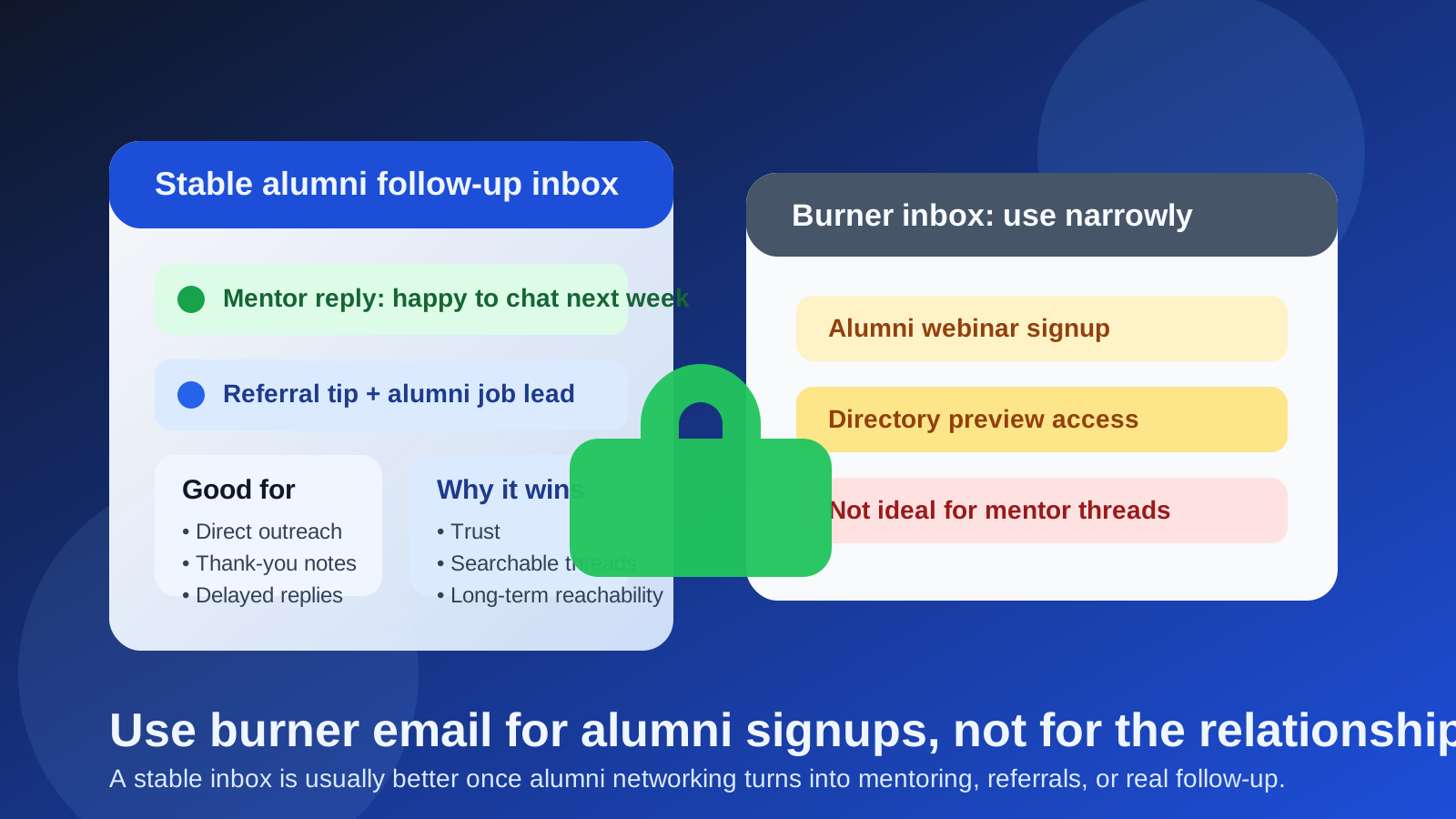
That is the cleanest rule. If you are dealing with a form, a directory preview, a webinar registration, or an alumni resource you are still evaluating, a burner email can make sense. If you are writing to an individual alum, asking for a conversation, following up after advice, or hoping for a referral, a burner email is usually the wrong default.
The reason is simple: people are more forgiving of a throwaway address when the interaction is transactional. They are less forgiving when the interaction is personal, professional, and based on trust.
When a burner email can actually help
1. Alumni directory or platform exploration
Some alumni communities require signup before you can see whether the directory, job board, or mentor platform is even useful. If you are only trying to preview what is inside, a burner email can protect your main inbox while you decide whether the platform deserves ongoing attention.
2. One-off event registrations
If you are signing up for a single webinar, panel, or local alumni mixer and you mostly need the confirmation email, using a burner address can be reasonable. The same is true for low-stakes event downloads like slide decks or recordings that may trigger future promotional mail you do not really want.
3. Newsletter-heavy alumni ecosystems
Some alumni groups are generous with email. You sign up for one event and suddenly receive school updates, donation campaigns, mentoring promos, chapter announcements, and quarterly career newsletters. A burner address can act like a buffer while you decide which channels are worth keeping.
4. Early-stage curiosity
Maybe you are not fully committed to outreach yet. You are testing whether your alumni network is active, whether the events are any good, or whether the school platform is better than LinkedIn. In that exploratory phase, a burner email can help contain noise.
Where a burner email starts to hurt you
Direct outreach to alumni
If you are emailing a person rather than a system, a burner address can make the interaction feel temporary. That does not mean every alum will judge you harshly. It does mean the address may signal that you are harder to trust, harder to reach later, or not expecting a real conversation. None of those signals help.
Mentorship and advice requests
Good alumni conversations are often not immediate. Someone may agree to talk next week, send you resources later, or offer a second conversation once they have more time. A burner email creates unnecessary fragility in exactly the kind of exchange that benefits from consistency.
Referral or introduction requests
If an alum offers to refer you, forward your résumé, or introduce you to someone else, you want a contact method that looks stable and stays available. A burner inbox is not ideal when the opportunity depends on delayed follow-up and smooth handoffs.
Long-gap replies
Alumni networking rarely moves on a perfect schedule. People travel, volunteer their time, forget for a week, and then come back. If your burner address expires, gets buried, or stops forwarding, you can miss the exact reply that made the original outreach worthwhile.
Why alumni networking is different from general networking events
A crowded networking event often produces lots of low-value contacts and promotional follow-up, so a burner or temporary address can be easier to justify there. Alumni networking is usually more identity-driven. You are reaching out through a shared school, class, club, or program connection. That shared context makes the interaction more personal. It also makes continuity more valuable.
When someone helps you because you share an alma mater, the relationship can develop in layers: one short reply, then a coffee chat, then a résumé comment, then a future introduction. A burner address works against that compounding effect. It solves the spam problem while creating a trust and reliability problem.
Burner email vs temporary email vs separate long-term email
Burner email
A burner email is best when you want some separation from your main inbox but may still keep the address alive for a while. It is more flexible than a truly disposable inbox, but still not ideal for high-value alumni relationships unless you plan to monitor it consistently.
Temporary email
A temporary inbox is best for pure one-off access. If you only need a confirmation link or quick preview of an alumni platform, it can do the job. A tool like Anonibox fits naturally here. It can help you inspect low-trust or low-priority signups without feeding your main inbox into every mailing list. But it is rarely the right destination for a real mentor or referral conversation.
Separate long-term email
For most people, this is the strongest default for serious alumni networking. A dedicated networking or job-search inbox gives you separation from your everyday email while still looking stable, searchable, and professional. It protects your main inbox without making you hard to reach later.
The best practical setup for most people
If privacy matters but you still want reliable follow-up, the most balanced workflow is usually this:
- Use a burner or temporary address only for exploratory alumni signups, directory previews, or one-off event registrations.
- Once you identify a person, event, or group that is actually useful, move to a stable inbox you control.
- Use that stable inbox for direct outreach, thank-you notes, mentor follow-up, referrals, and longer conversations.
- Keep everything searchable so you can find the thread again when someone resurfaces weeks later.
This setup protects your main inbox without pretending every interaction deserves the same level of access. It also matches the real shape of alumni networking: lots of low-value inputs around the edges, then a small number of conversations that matter much more.
How to use a burner email carefully if you still want one
Keep it professional enough to share
If the address looks random, unserious, or obviously throwaway, it can undermine the point. Even for lower-stakes alumni interactions, readability matters.
Do not abandon it immediately
If you use a burner email at all, keep it alive long enough to catch delayed event updates or follow-up that still matters. The failure mode is not the idea of separation. It is setting up a contact lane and then forgetting to watch it.
Switch early when the contact becomes valuable
The best moment to move off a burner address is before the conversation becomes important, not after you already missed a message. If you know you want to talk with someone, use the stable inbox before the real back-and-forth begins.
Save useful information right away
If the burner inbox receives event details, platform access, or a message you may need later, do not leave it trapped there. Save the details while you still remember why they mattered.
Mistakes to avoid
Using a burner for thank-you notes
That is usually the wrong layer. Thank-you notes are part of relationship building, not spam filtering.
Assuming privacy and professionalism always point to the same tool
They do not. A burner email may feel safer, but a stable separate inbox often creates a better professional impression while still protecting your main personal address.
Making yourself difficult to reach
The whole point of alumni networking is future access. If your setup makes future access harder, it is working against the goal.
Overengineering the system
You do not need five inboxes and a complicated alias map. One stable networking inbox plus an occasional burner or temporary inbox for low-trust signups is usually enough.
Final answer
So, should you use a burner email for alumni networking? Usually not for direct outreach, mentoring, or referrals. It is more useful as a screening layer for alumni systems, event registrations, and newsletter-heavy signups than as the main address for conversations you hope will continue.
If you want the best balance between privacy and real follow-up, use a burner address only for the low-stakes edges of alumni networking and keep a stable inbox for the people you genuinely want to hear from again. That approach gives you cleaner inbox control without sacrificing the trust and continuity alumni networking depends on.