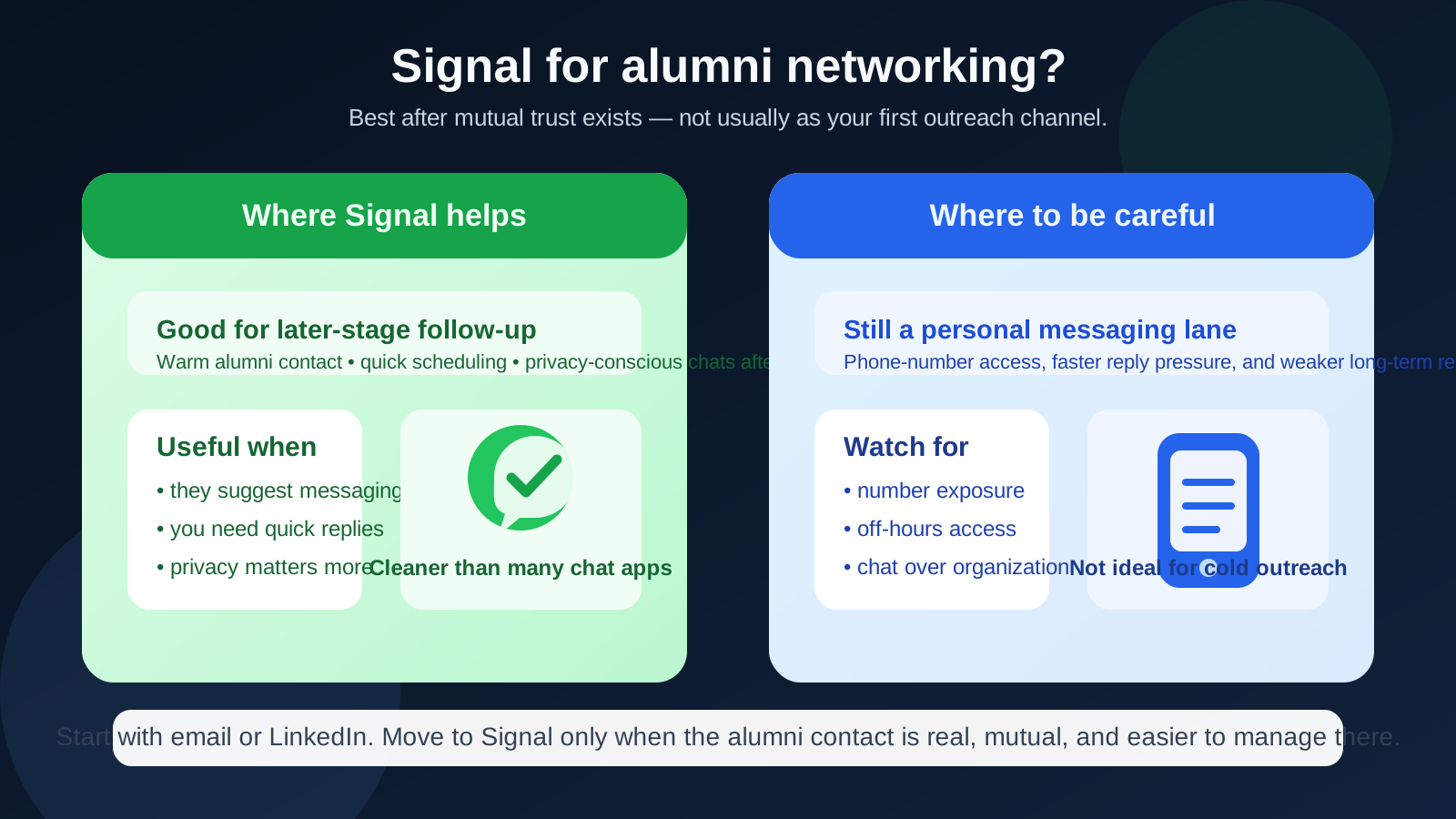
Yes, sometimes — but usually not as your default first-contact channel. Signal can be a good alumni networking option once both sides already trust each other and want a more private, faster conversation.
For first outreach, email or LinkedIn is still usually better because Signal is a direct personal messaging lane, often tied to your phone life, and less ideal for searchable long-term follow-up.
Why this question comes up
Alumni networking often sits in an awkward space between professional outreach and personal conversation. It is not quite as formal as applying to a job through a company portal, but it is also not as disposable as signing up for a webinar or a one-time event. A single message to someone from your school can turn into a coffee chat, a referral, an introduction, or a relationship you revisit months later.
That is why the channel matters. Signal appeals to privacy-conscious people because it feels more intentional than many mainstream chat apps. It usually carries less social noise than a big platform full of random communities, and it can feel more respectful of personal boundaries than texting people from your main number in a completely unstructured way. But even with that privacy reputation, it is still a direct messaging channel, which means the risks are different from email.
Short answer: Signal can work, but timing matters
If you are asking whether Signal is acceptable at all, the answer is yes. It is not inherently strange or unprofessional. In some circles, especially among privacy-minded people, it can even feel more thoughtful than moving immediately to a mainstream messaging app.
But the better question is not “Is Signal allowed?” It is “At what stage of the relationship does Signal make sense?” For most alumni networking, the answer is later rather than earlier. It works best after there is already context, some trust, and a clear reason to move to quicker private messaging.
- Good fit: a warm alum you already connected with, a fast scheduling exchange, a follow-up after an event, or an ongoing conversation where privacy matters.
- Poor fit: cold outreach, long advice requests from a stranger, or situations where you want a more formal, searchable, and lower-exposure communication channel.
What Signal does well for alumni networking
1. It can feel more private than mainstream messaging apps
One reason people consider Signal is simple: they do not want every professional or semi-professional conversation to happen in the same places as family group chats, social media messages, or noisy messaging ecosystems. Signal can feel cleaner and more deliberate. That matters when you are trying to keep networking from spilling into every other part of your digital life.
2. It is useful for warm follow-up
Once an alum has already said, “Feel free to message me,” Signal can be a good option for quick coordination. It works well for confirming a time, sharing a short update, or asking one focused follow-up question after a conversation has already started elsewhere.
3. It reduces some of the clutter and performative pressure of bigger platforms
Email is still best for first contact in many cases, but it can also create long, slow threads. Some social and messaging platforms add profile noise, algorithmic distractions, or public visibility you do not want. Signal is comparatively simple. That simplicity can be useful once both people already know why they are talking.
4. It can suit privacy-minded alumni
Some alumni, especially in technical, policy, activist, security, or privacy-conscious communities, may actively prefer Signal over other chat apps. In those cases, meeting them on the channel they already trust can make the conversation easier.
Where Signal falls short
It is still a personal messaging lane
This is the biggest issue. Even if Signal feels more private than other apps, it is still closer to your personal communications life than email usually is. That means you may be giving a new contact faster, more direct access than you actually want. Alumni networking works better when you can choose your level of exposure gradually. Signal can collapse that distance too early.
It is weaker for long-term recordkeeping
Alumni conversations often matter later, not just now. Someone may reply in a week, introduce you to someone in a month, or mention an opening next quarter. Email is still better for searchable, archivable context. Messaging threads are easy to use in the moment and easy to under-organize later.
It can create reply-speed pressure
Chat apps feel more immediate than email. Even when nobody explicitly expects an instant response, the medium itself nudges the conversation toward faster pacing. That can be helpful for logistics, but it is not always helpful for thoughtful networking, where slower and more deliberate exchanges are often better.
Not everyone uses it
This matters more than people admit. If an alum does not already use Signal regularly, asking them to move there introduces friction for no strong reason. In networking, lower friction usually wins. Email and LinkedIn remain the default for a reason: almost everyone already uses them.
When Signal is a strong choice
Signal makes the most sense in these situations:
- The alum suggests it first. That is the clearest green light. If they already prefer Signal, you are not forcing the channel.
- You already had first contact elsewhere. Maybe you connected through email, LinkedIn, a campus event, or a mutual introduction.
- You need fast practical coordination. For example, confirming a meeting location, sending a quick reschedule note, or following up after a live event.
- The relationship is already warm enough that a more direct lane feels natural. Once the conversation becomes real, convenience matters more.
In those cases, Signal can be better than a mainstream chat app because it feels focused rather than noisy. The point is not that Signal is bad. The point is that it is usually stronger as a second-stage tool than a first-stage one.
When email or LinkedIn is still better
For most first outreach, email or LinkedIn remains the more practical choice.
- Email is easier to search, easier to organize, and easier to treat as a professional record.
- LinkedIn is useful when you need the context of profile identity, shared school background, current role, and mutual connections.
Those benefits matter during first contact because alumni networking is still partly about trust. A new alum can evaluate your context more comfortably in email or LinkedIn than in a direct chat request on a private messaging app.
A simple workflow usually works best:
- Start on email or LinkedIn.
- Explain the alumni connection clearly.
- Ask one focused question or suggest one concrete next step.
- Move to Signal only if it becomes useful and mutual.
If you want more separation during the early stage, a separate networking email workflow can help. That is where a tool like Anonibox fits naturally: not as a way to hide who you are, but as a way to keep event signups, lower-trust alumni directories, and early outreach clutter from taking over your main inbox before you know which contacts actually matter.
Best practices if you decide to use Signal
1. Do not make it your cold-outreach default
If you have never spoken to the alum before, opening on Signal is usually too personal. Start somewhere with more context and less intrusion.
2. Let the other person opt in
The safest approach is to move to Signal only when they suggest it or clearly agree to it. That keeps the power balance more comfortable and respects the fact that messaging channels feel more intimate than inboxes.
3. Be careful about what your number and profile reveal
Even when the app itself feels privacy-conscious, you should still think about what a new contact can infer from your setup. A professional boundary problem does not require a data breach. Sometimes it is just a case of sharing a more personal communication path sooner than you meant to.
4. Use it for short exchanges, not your entire networking system
Signal is great for quick follow-up and coordination. It is worse as the only place where important career notes live. If someone shares referral details, a job lead, or thoughtful advice, save that information somewhere more durable.
5. Move the important bits back into a searchable record
If the conversation turns into something valuable, send a recap email, keep notes, or store the key information somewhere you can find again later. Messaging apps are efficient in the moment and messy over time.
Red flags to watch for
As with any direct messaging tool, be cautious if someone:
- pushes you to move off email or LinkedIn immediately without context,
- stays vague about who they are,
- acts more like a recruiter scammer or spammer than a real alum,
- asks for sensitive personal information in chat, or
- uses urgency to stop you from verifying their identity.
Those are not Signal-specific problems, but direct messaging can make them feel more urgent and personal than they really are.
A practical rule of thumb
If you would not hand this person your preferred personal messaging lane during the first five minutes of an alumni mixer, do not rush to hand it over digitally either. Build context first. Then choose the closer channel if it genuinely helps.
That usually leads to a clean system:
- First contact: email or LinkedIn.
- Warm follow-up: Signal can work well.
- Long-term continuity: keep important details in a channel or note system you can reliably search later.
Final answer
Yes, you can use Signal for alumni networking, and in the right context it can be a thoughtful, privacy-conscious choice. But it is usually best after trust already exists, not as the default way to contact an alum for the first time.
If privacy matters and you want cleaner boundaries, start with email or LinkedIn, use a separate inbox strategy when helpful, and move to Signal only when the relationship is real enough that a more direct messaging channel makes sense. That gives you the privacy benefits without making yourself harder to trust, harder to organize, or easier to reach than you intended.