Yes, you can use Google Voice for internship applications if you want a separate number for recruiter calls and texts. It is often a smart middle ground when you want to stay reachable without handing your main personal number to every internship form, job board, or recruiter too early.
That said, it works best when you treat it like a real professional contact channel, not a throwaway number you forget to check. If you use it, you still need a clear voicemail, reliable notifications, and a plan for when to switch to a more permanent number later in the hiring process.
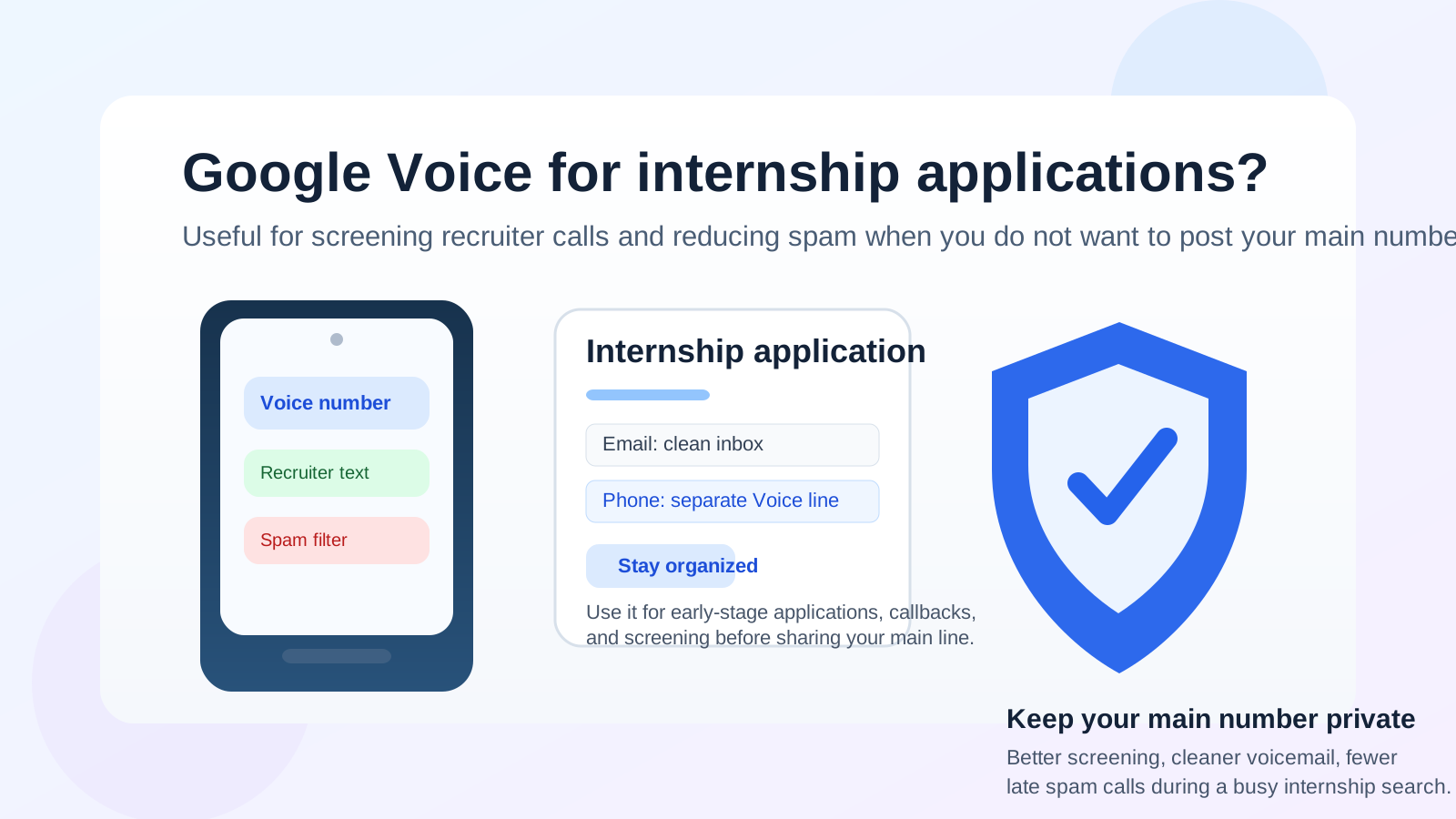
Short answer: yes, often — if you use it professionally
For many students and early-career applicants, Google Voice can be a practical way to separate internship-search communication from personal life. It gives you one place to handle recruiter callbacks, text-message screening, and voicemail without exposing your everyday number everywhere.
The key is to think of it as a separate professional line, not as a disposable trick. Employers still expect real responsiveness. If you miss callbacks, ignore texts, or forget to monitor the number, the privacy benefit will not matter much because you will create application friction for yourself.
Why internship applicants consider Google Voice in the first place
Internship searches can get noisy quickly. Students often apply to many openings in a short time, sometimes across company portals, university career sites, third-party job boards, startup forms, and recruiter outreach channels. That can lead to:
- spam calls from low-quality listings or lead resellers
- text messages at inconvenient hours
- difficulty telling recruiters apart from unknown callers
- a personal number staying on lists long after the search ends
A separate number helps you contain that noise. Instead of giving every application direct access to your primary line, you create a layer between your personal life and your search.
When Google Voice is a good fit for internship applications
Google Voice is usually most helpful in the early and middle stages of an internship search, especially when you are applying broadly and want better control over incoming contact.
It makes sense when:
- you are submitting applications to many companies at once
- you expect recruiter texts or screening calls
- you want a number that is easier to mute, organize, or retire later
- you do not want apartment hunting, classes, family calls, and recruiter traffic all hitting the same line
- you want to keep internship-related voicemails separate from personal voicemails
In those cases, a Voice number can be cleaner than using your main number everywhere and more stable than relying on a truly disposable phone solution.
What are the main benefits?
1. Better privacy
Your personal mobile number is a long-term identifier. Once it ends up in multiple forms, databases, or recruiter tools, it can be hard to pull back. A separate Voice number reduces how widely your main number spreads during the search.
2. Cleaner call screening
If internship calls come through a dedicated number, you know what an incoming notification probably relates to. That makes it easier to answer important calls, return legitimate voicemails, and ignore irrelevant noise.
3. Easier voicemail management
A professional voicemail on a separate internship-search line is often simpler than reworking the greeting on your personal number. You can keep the message short, clear, and job-search ready.
4. Better boundaries
Many applicants do not want every recruiter, staffing agency, or questionable listing to have permanent access to their everyday number. A separate line gives you more control once the internship season is over.
5. Cleaner organization with a separate inbox strategy
Phone privacy works even better when it matches your email strategy. If you are also using a dedicated application inbox, or a temporary inbox for very early-stage signups where appropriate, you can keep your entire search more organized. That is one reason tools like Anonibox can fit naturally into the same workflow: the goal is not secrecy theater, but reducing clutter and limiting unnecessary long-term exposure.
What are the downsides or limitations?
Google Voice is useful, but it is not automatically the right choice for every applicant or every internship.
1. You still need to monitor it closely
If notifications are off, your app is unreliable, or you forget to check texts and voicemail, you can miss real recruiter follow-up. A separate number only helps if you manage it seriously.
2. Some employers prefer one stable long-term contact path
Internship applications sometimes move quickly from application to interview to offer paperwork. If a role becomes serious, you may decide to keep using the separate number or switch to your primary number for long-term consistency. What matters is staying reachable.
3. It is not a substitute for judgment
A different number will not protect you from bad decisions. If a listing is shady, the company is unclear, or the recruiter is pushing suspicious links and urgent requests, the real problem is the opportunity itself, not the number you used.
4. Availability and workflow can vary
Not every applicant lives in a region where the same tools are available or equally convenient. Before relying on any separate-number setup, make sure it actually works well for how you take calls and texts day to day.
When a separate Voice number is smarter than your main number
A separate number is especially useful when you are:
- uploading your resume to multiple job boards
- testing a broad list of internship listings before you know which ones are high quality
- applying to startups or third-party recruiter funnels you have not fully vetted yet
- concerned about spam calls and text scams
- trying to keep professional contact separate from school, family, and social communication
If that describes your situation, Google Voice can be a sensible balance between privacy and professionalism.
When your main number may still be the better choice
There are also times when your regular number is perfectly fine:
- you are applying directly to a small number of trusted companies
- you already use your primary number in a professional way
- you are in the final stages and want one consistent channel for urgent scheduling
- you do not want another app or inbox to monitor
Privacy is useful, but not if it creates enough friction that you miss interview coordination or seem hard to reach.
How to use Google Voice well for internship applications
Set up a professional voicemail greeting
Use your name, speak clearly, and keep it brief. A recruiter should immediately know they reached the right person.
Turn notifications on and test them
Before you put the number on applications, send yourself a test call and text. Make sure your notifications, voicemail access, and any forwarding behavior work the way you expect.
Check messages every day
Internship timelines can move faster than students expect. A recruiter may move on if they do not hear back quickly.
Keep your contact details consistent
If you use a separate number, use it consistently across the applications where you want that separation. Randomly mixing numbers can create confusion when someone tries to match your resume, portal profile, and email thread.
Do not treat it like a disposable identity
This is important. A professional separate number is different from a short-lived throwaway contact method. If you use it on applications, assume it may need to stay active through screening, interviews, and follow-up.
How it compares with other options
Main personal number
This is simplest, but it exposes your long-term number the most widely.
Burner number
A burner-style approach may sound private, but it can become a problem if the number expires, gets abandoned, or is not suitable for a longer hiring timeline.
Separate second line
A true second mobile line can be excellent if you already have one, but it may be more effort or cost than you need for a temporary internship search.
Google Voice
Google Voice often lands in the middle: more stable and professional than a disposable number, more privacy-friendly than your everyday personal line, and easier to segment than using one number for everything.
Red flags to watch for, no matter what number you use
- texts pushing you to move immediately to WhatsApp, Telegram, or another channel without context
- requests for money, equipment payments, or gift cards
- urgent demands for personal documents before a credible interview process
- messages with vague company names, poor grammar, or suspicious links
- requests for verification codes or login details
A separate number can reduce exposure, but it does not make a scam safe. You still need to verify who you are talking to.
A practical decision rule
If you are applying broadly, expect a lot of outreach, and want better control over privacy and spam, then yes — Google Voice can be a good choice for internship applications. If you are applying to only a few trusted employers and prefer one simple contact path, your main number may be enough.
The best answer is not about ideology. It is about whether the extra layer helps you stay organized, reachable, and protected without making your application process harder.
Final takeaway
Google Voice can work well for internship applications when you use it as a real professional contact channel. It gives you call screening, cleaner boundaries, and a way to protect your main number from unnecessary spread during a busy search.
Just remember the trade-off: privacy only helps if reliability stays high. If you keep the number active, monitor it closely, and switch contact details thoughtfully when an opportunity becomes serious, a separate Voice number can be one of the simplest ways to make internship recruiting less noisy and more manageable.