Yes, you can use a temp email for Kickstarter if you are only browsing campaigns, testing the signup flow, or keeping low-commitment creator emails out of your main inbox.
It is a bad choice for real pledges you may need to manage later, because updates, receipts, creator messages, surveys, and account recovery can all become important long after the signup moment.
Kickstarter is exactly the kind of platform that makes people think about temporary email. You may want to explore projects, follow a creator, or check how the platform works without inviting months of marketing-style reminders, launch announcements, and campaign updates into the same inbox you use for work, banking, and everyday life. That instinct is reasonable. The tricky part is that Kickstarter can move from casual browsing to real money and real follow-up much faster than people expect.
If you only want a little distance while you explore, a temporary address can help. If you plan to back a project, comment publicly, or depend on the account later, you need a more durable setup. The right answer is not “always use temp mail” or “never use temp mail.” It is knowing which stage of the process you are in and choosing the level of email permanence that matches it.
Why people want a temp email for Kickstarter
Most people are not trying to hide from Kickstarter. They are trying to keep their inbox under control. Crowdfunding platforms can produce a lot of legitimate email: account confirmations, campaign announcements, launch reminders, project updates, receipts, backer messages, and occasional promotional nudges. None of that is automatically bad, but it can become noisy if you are browsing lots of projects, following multiple creators, or using one signup to test whether the platform is worth engaging with at all.
A temp inbox creates a buffer between your curiosity and your long-term inbox. That can be useful when you want to:
- Look around without giving every new platform your main email address immediately
- Test signup and verification before deciding whether you care enough to stay
- Separate creator-platform experiments from personal or work email
- Keep one-off newsletter and launch traffic from piling up in your permanent inbox
- Reduce the number of services that can connect your main email to your browsing habits
When a temp email can work well
1. You are only browsing campaigns
If you mainly want to view projects, follow the platform casually, or see what is being launched in a niche you care about, a temp email can be a reasonable low-risk choice. In that situation, you are protecting your main inbox from yet another stream of updates without putting anything essential on the line.
2. You are testing the platform before committing
Sometimes you just want to see how signup, notifications, and discovery work before deciding whether the account deserves a permanent place in your digital life. A temporary inbox is useful for this early stage because you get the confirmation email you need, but you do not commit your primary address to a platform you might never use seriously.
3. You are comparing multiple creator or community platforms
People who test Kickstarter alongside Patreon, Gumroad, Ko-fi, Whop, or newsletter and membership tools often prefer to keep those experiments segmented. A temp inbox can make that first pass much cleaner. You can see which service feels useful before switching any serious account to a long-term address.
Where a temp email becomes a bad idea
You place a real pledge
The moment money or long-term follow-up enters the picture, the risks change. A real pledge can lead to receipts, campaign status updates, shipping or fulfillment surveys, schedule changes, and support conversations months later. If you used an inbox that expires or becomes hard to monitor, you may miss something you actually care about.
You want reliable creator communication
Even when a platform interaction starts casually, it can become more important later. Maybe you backed a niche product, maybe you need to confirm a detail, or maybe the creator sends an important update after delays or changes. Temporary email is weak whenever the relationship may continue longer than the inbox itself.
You care about account recovery
Account recovery is the biggest reason temporary email backfires. If you cannot reach the address later, password resets and account access become much harder. That is tolerable for a throwaway test account. It is not tolerable for an account tied to payment history, saved projects, or backer activity you actually want to keep.
You need clean records
Receipts and transaction history are not glamorous, but they matter. If you ever need to verify a charge, confirm what you backed, or understand which account received what communication, a stable email address makes life easier.
The better strategy: temp email for exploration, stable email for commitment
For most people, the best approach is a staged one.
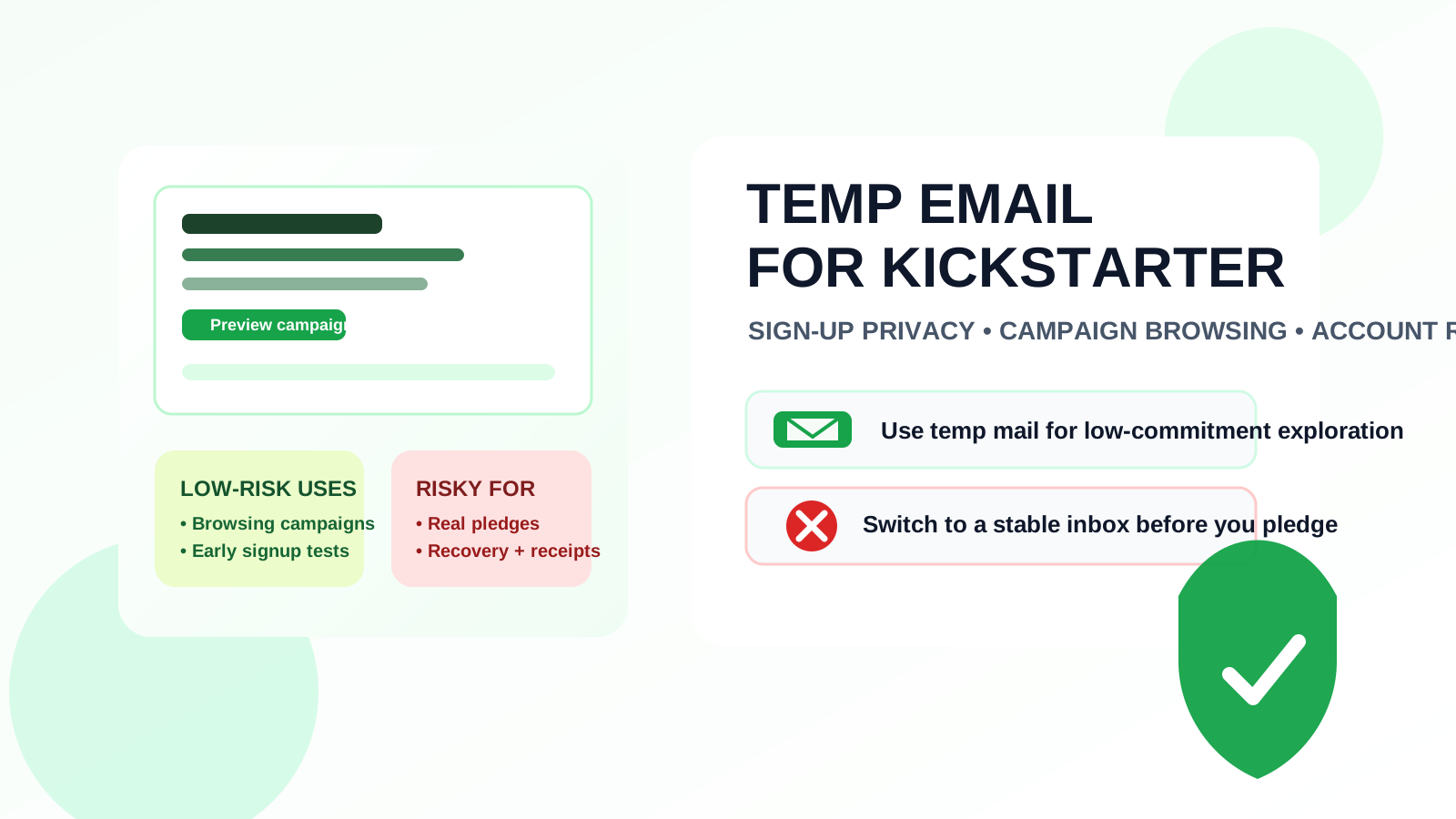
- Use temp mail for low-commitment exploration. This is where a tool like Anonibox makes sense. You get the verification email and can poke around without handing over your everyday address right away.
- Switch to a real monitored inbox before doing anything you care about. If you plan to pledge, comment, save projects seriously, or rely on the account later, move to a long-term email address you control.
- Prefer a dedicated permanent secondary inbox over a disposable one for real backing. If privacy still matters, use a separate long-term email rather than a truly temporary inbox. That gives you inbox separation without breaking recovery and follow-up.
This is the same logic smart users apply across a lot of signups. Temporary email is excellent at filtering early noise. It is weak at supporting long-lived relationships, payments, and recovery.
Temp email vs separate email: which is better for Kickstarter?
If you only want to reduce spam, a separate permanent inbox is usually the safer long-term option. It still keeps Kickstarter and creator-platform traffic away from your main address, but it does not disappear when you need it later.
That means there are really two privacy-friendly choices, depending on intent:
- Temporary inbox: best for quick testing, browsing, and low-value signups
- Separate permanent inbox: best for real backing, receipts, creator messages, and recovery
People often reach for temp mail when what they actually need is separation, not disappearance. If you expect the account to matter in three months, six months, or a year, separation beats disposability.
Practical situations where temp mail is reasonable
- You want to see whether Kickstarter is useful to you before adopting it
- You are browsing projects in a category that tends to generate lots of updates
- You are testing how quickly verification arrives and whether the platform is worth your attention
- You are signing up to compare creator ecosystems and do not want every test account tied to your main inbox
Practical situations where you should not use it
- You plan to back projects with money
- You want to track shipping or fulfillment information later
- You expect important creator updates over time
- You would be annoyed if password recovery became difficult
- You care about keeping reliable purchase and receipt records
A simple decision checklist
Before using temp mail on Kickstarter, ask yourself:
- Am I only exploring, or am I likely to pledge real money?
- Would I care if I lost access to this inbox in a few days or weeks?
- Do I need to keep receipts, messages, or project updates later?
- Am I trying to avoid spam, or do I actually need long-term account separation?
If the honest answer is “I just want to look around,” temp mail is probably fine. If the answer is “I may support a project and want to keep up with it,” move to a stable email early.
How to use temp mail more safely if you insist on trying it
If you still want the privacy benefit of temporary email, a few habits reduce the downside:
- Use it only for browsing or low-commitment signup, not for meaningful purchases
- Save any verification or reference details you may need during the same session
- Do not assume you will still have access later unless the inbox is genuinely persistent
- Switch the account to a stable address before you make a pledge or depend on the account
- Treat temp mail as a filter for early-stage noise, not as a full account-management solution
Bottom line
A temp email for Kickstarter can be smart when your goal is simple sign-up privacy, casual campaign browsing, or early platform testing.
It becomes risky once real pledges, updates, receipts, creator communication, and account recovery matter. If you expect the account to have lasting value, use a separate long-term inbox instead of a disposable one. That gives you privacy without cutting yourself off from the messages you may actually need later.