Yes — a temp email for Milanote can make sense if you only want to test the app, browse templates, or build a throwaway board without tying the account to your main inbox.
It stops making sense once the board matters, other people are invited, or you may need password resets, billing emails, or long-term access later.
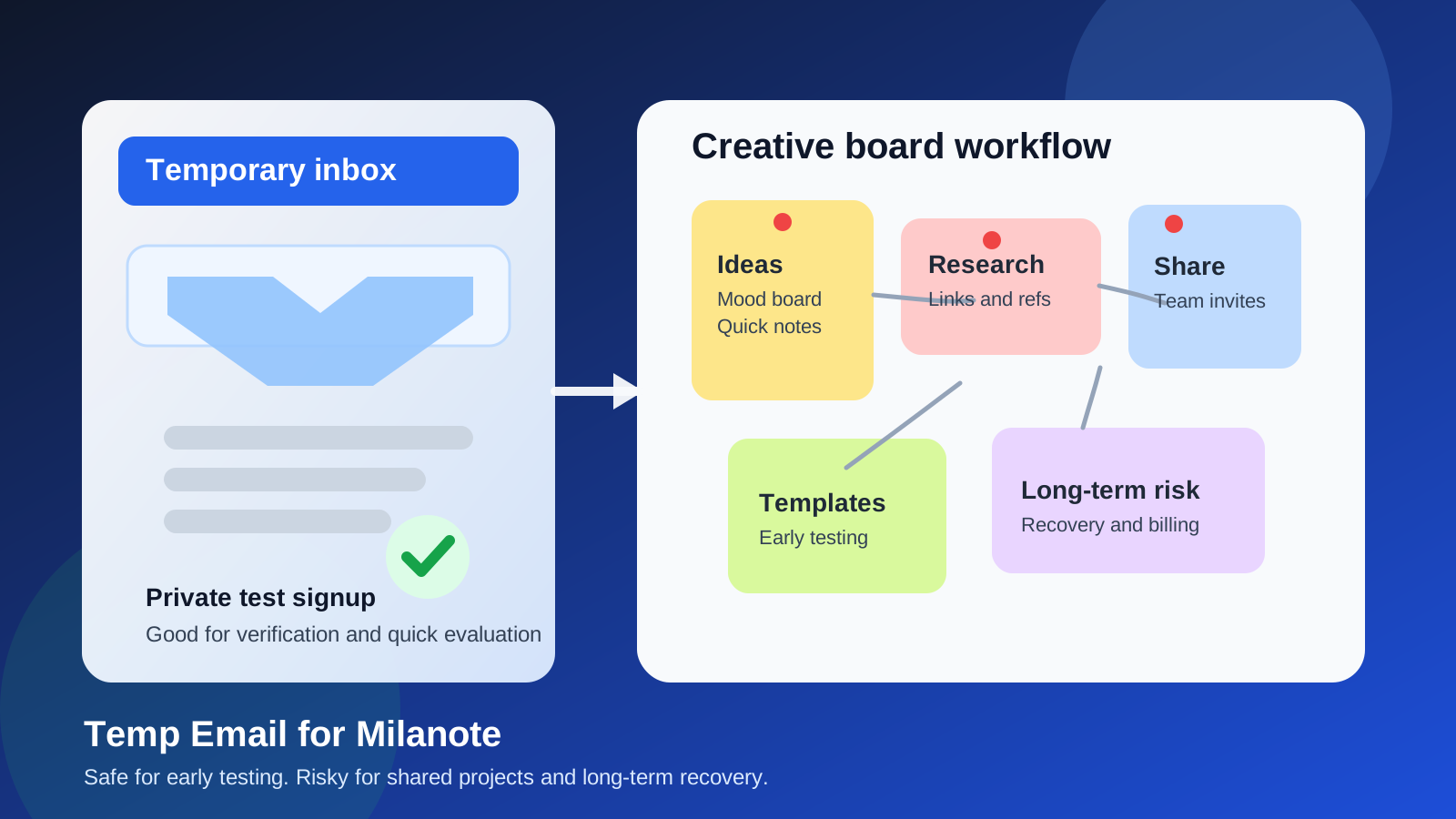
Milanote is the kind of tool people start using casually and then suddenly rely on for real work. One day it is a mood board for ideas, a class project, or a quick creative test. A week later it may hold client references, shared boards, comments, research links, asset organization, or a project structure you do not want to lose. That is why the email choice matters more than it looks at signup.
If your goal is simple inbox privacy during early testing, a temporary address can be a smart first step. If your goal is ongoing collaboration or keeping a board alive over time, you should switch to a stable address quickly. Anonibox fits best in that early low-stakes phase: verify the account, inspect how Milanote works, and keep your primary inbox out of one-off product marketing until you know the tool is worth keeping.
When a temp email helps with Milanote
A disposable address is most useful when you are still deciding whether Milanote belongs in your workflow at all. In that phase, you want fast access and low inbox clutter, not long-term account durability.
- Testing the interface: You want to see how cards, columns, notes, links, and visual organization feel before committing.
- Checking template quality: You want to browse project, brand, writing, design, or planning templates without joining a long email sequence.
- Comparing tools: You are evaluating Milanote against FigJam, Whimsical, Padlet, Notion, Coda, or another workspace tool.
- Personal brainstorming: You want a low-risk account for a private idea board, reading list, mood board, or rough planning experiment.
- Short-lived exploration: You only need the account for a workshop, a one-time class exercise, or a quick prototype.
Those are all reasonable use cases for a temp inbox. You get the verification email, you can open the product, and you keep your permanent inbox out of a tool you may abandon after twenty minutes.
Where a disposable address starts to break down
Milanote becomes much more email-dependent once the account turns into a real workspace instead of a test account.
Shared boards and collaboration
If you invite teammates, classmates, editors, clients, or collaborators, the account stops being disposable in practice. Shared work creates ongoing notification and ownership needs. If the email address vanishes or becomes inaccessible, you may lose track of invites, comments, permission changes, and recovery options.
Client handoffs and portfolio work
Creative tools often start as private experiments and then become part of actual delivery. A design direction board, content map, research board, brand reference wall, or storyboard can turn into a working asset. At that point, treating the account like a throwaway is usually a mistake.
Password resets and account recovery
This is the biggest practical risk. A temp email is fine only while you still control the inbox long enough to verify the account and finish the test. If you forget the password later, get logged out, change devices, or return to the board after a break, recovery can become annoying or impossible.
Paid plans and billing messages
If you upgrade, you should move to a permanent address first. Billing confirmations, subscription changes, renewal notices, receipts, and account-related support messages do not belong on a disposable inbox.
Important notifications you did not expect to matter
Many people underestimate how fast a tool becomes sticky. A board you made “just to test” can turn into a genuine planning system. If you are using Milanote for course notes, research collection, content production, design reviews, or creative direction, losing easy access to account emails is a needless self-own.
A practical way to use a temp email for Milanote safely
If you want the privacy benefit without the usual downside, use a simple staged workflow.
1. Use the temp inbox only for the trial phase
Create the temporary address before signup. Verify the account, open Milanote, and evaluate the parts you actually care about: board structure, visual layout, drag-and-drop speed, template usefulness, mobile experience, and share settings.
2. Keep the first test self-contained
Do not start by inviting a real team. Do not attach the account to live client work. Do not assume you will “clean it up later.” Treat the first board like a sandbox.
3. Decide quickly whether the account deserves permanence
After the first serious session, ask a blunt question: Am I actually going to keep using this? If the answer is yes, change the email address to one you control long-term. Do that before the board becomes important.
4. Move to a stable inbox before collaboration starts
The right moment to switch is not after problems appear. It is before you invite someone, before you pay, before you save a lot of work, and before you rely on notifications.
5. Use segmentation, not chaos
If you do not want Milanote in your main inbox, the better long-term move is usually a separate permanent address or alias dedicated to work apps, creative tools, or signups. That gives you inbox separation without sacrificing recovery.
Good use cases for a temp email on Milanote
- Trying Milanote for one afternoon before choosing a planning tool
- Opening a single private mood board for inspiration gathering
- Testing template layouts for writing, design, research, or content planning
- Checking whether the visual workflow fits your thinking style
- Evaluating the product before sharing your permanent address with another SaaS vendor
Bad use cases for a temp email on Milanote
- Running active client or team projects
- Managing shared boards with comments and invites
- Saving portfolio, research, or academic work you may need months later
- Upgrading to a paid plan without changing the email first
- Using the account as a long-term home for creative planning
How Milanote differs from simpler sign-up sites
A temp email is safest on sites where the account is basically just a gate to one download, one trial, or one temporary session. Milanote is more persistent than that. It stores structure, context, and visual thinking. Even if the content itself is not highly sensitive, the account can become operationally important because it sits in the middle of your process.
That is why the right question is not only “Will a disposable address work at signup?” The better question is “Will this account still matter in two weeks?” If the answer might be yes, plan for that early.
Better alternatives if you want privacy without future headaches
If you already suspect Milanote could become part of your real workflow, a separate long-term address is usually smarter than a purely temporary one.
- Use a dedicated creative-tools inbox: Keeps product emails out of your personal account while preserving recovery.
- Use an alias you control: Good for segmentation if you want to track which tools are emailing you.
- Use Anonibox only for early evaluation: Helpful when you want to verify the signup, inspect the product, and avoid adding another vendor to your main inbox too soon.
This is the balanced approach: temporary privacy at the top of the funnel, permanent contact details once the tool earns a place in your stack.
Quick checklist before you sign up
- Am I only testing Milanote, or do I expect to keep using it?
- Will this account hold work I care about later?
- Will I invite other people?
- Could I need password recovery, billing emails, or support later?
- Would a separate permanent inbox be better than a fully disposable one?
If your honest answer is “this is just a quick test,” a temp email is fine. If your answer is “this could become a real workspace,” switch early and avoid future friction.
Final answer
A temp email for Milanote is useful for early board testing, template browsing, and keeping one more SaaS signup out of your main inbox. It is not a great long-term choice for shared projects, client work, paid plans, or anything you may need to recover later.
Use a disposable inbox for the evaluation stage. Once Milanote becomes real, move the account to a stable address you control. That gives you the privacy benefit up front without turning future access into a mess.