Usually no — not as the main address for real graduate school applications. A burner email can help with privacy during early research, mailing-list signups, and low-stakes inquiry forms, but admissions timelines are usually too long and too important to trust to an inbox you might abandon or lose.
If you want both privacy and reliability, a separate long-term application inbox or a stable email alias is usually the safer choice. Use a burner only when you know exactly what stage you are in and you are confident the address will stay available for every message that matters.
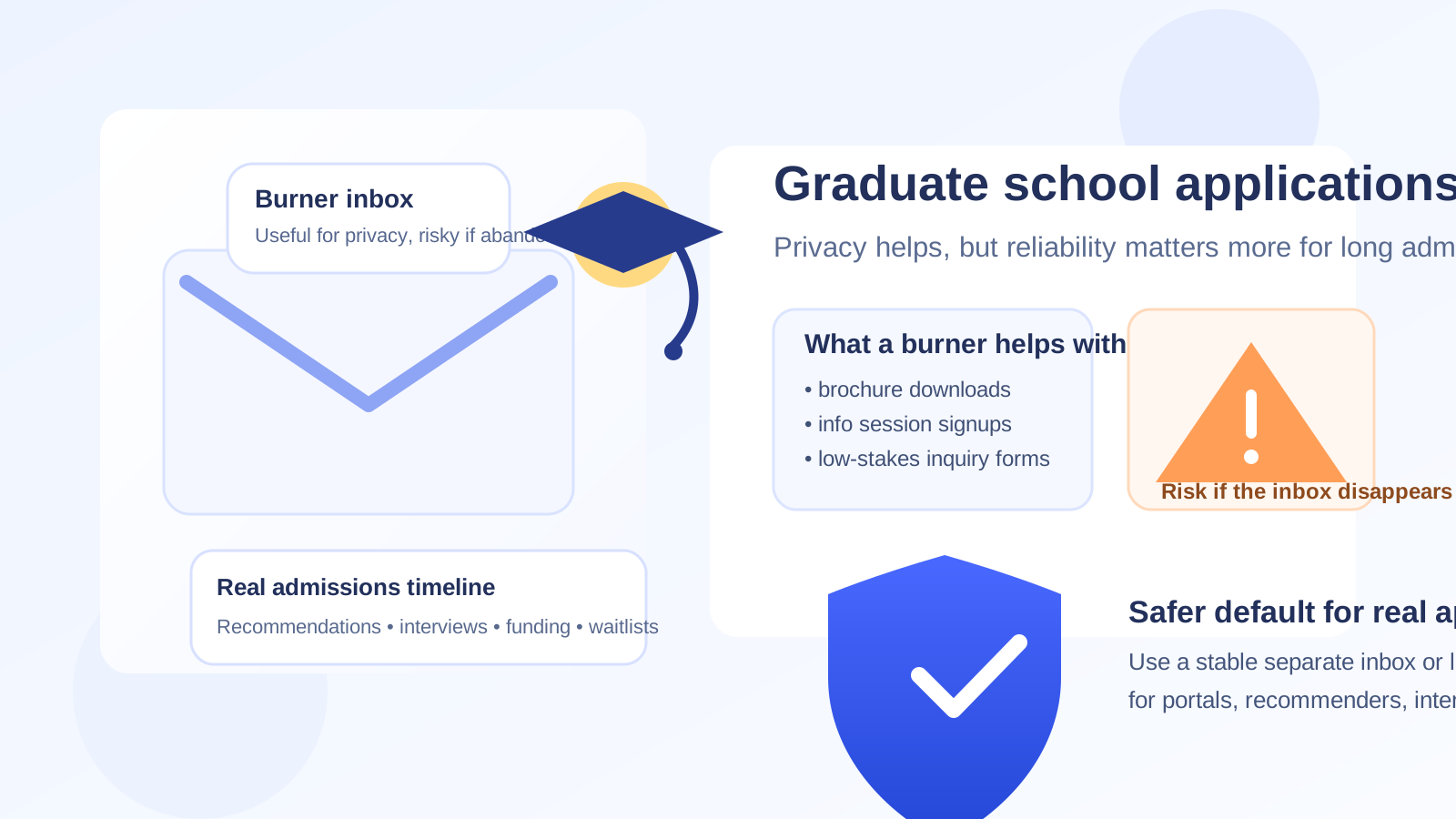
The reason this matters is simple: graduate school applications are not one-and-done signups. Even a single program can send application portal links, missing-document notices, fee-waiver instructions, recommendation reminders, interview scheduling emails, funding updates, waitlist messages, and final decisions over a period of weeks or months. If your inbox disappears halfway through, the privacy benefit stops feeling clever very quickly.
So the real question is not whether a burner email can technically receive admissions mail. It can. The real question is whether it is the right tool for the stage you are in. In most cases, the answer is that burner email works best for early exploration, not for the full admissions process.
What people mean by “burner email” in this context
People use the term burner email a little loosely. Sometimes they mean a truly temporary inbox that may expire quickly. Other times they mean a secondary account created for one purpose, used for a while, and then discarded later.
That distinction matters for graduate school. A truly short-lived inbox is usually too risky for live applications. A secondary but stable burner account can be more workable, but only if you plan to keep it active through the entire admissions cycle and check it consistently.
In practice, many applicants are not really deciding between “burner email” and “no privacy.” They are deciding between three options:
- a temporary or disposable inbox that is easy to abandon
- a dedicated long-term email account created specifically for applications
- an email alias that forwards into an inbox they already trust
For real applications, the second and third options are usually safer than the first.
When a burner email can make sense
A burner email can be useful at the low-stakes edge of the graduate school process, especially when you want privacy before you know which schools you will pursue seriously.
Examples include:
- downloading a brochure or program guide
- registering for an information session or open house
- joining a department mailing list
- contacting a program for a basic question before you are ready to apply
- testing whether a school starts aggressive marketing follow-up after inquiry
In those situations, a burner email can help you avoid long-term promotional clutter in your main inbox. If you use Anonibox or a similar temporary inbox for one-off forms, that can be a reasonable privacy habit during the research phase. You get the confirmation email you need without giving every school or lead-generation form permanent access to your primary address.
The key is knowing that this is an early-stage privacy tactic. It is not automatically the right inbox for the actual application account.
Why burner email becomes risky once you start applying
Once you move from casual interest to a real application, the communication stakes go up fast.
1. Graduate school timelines are long
Graduate admissions often stretch across an entire season. You may submit forms in one month, follow up on recommendations in another, interview later, then wait for decisions, funding, and enrollment paperwork after that. A burner inbox that feels fine today may be neglected or inaccessible by the time an important message arrives.
2. Schools may send irregular but crucial messages
Some of the most important emails are not daily reminders. They are one-off messages about a missing transcript, a faculty interview, a portal issue, or an offer deadline. Those are exactly the emails you cannot afford to miss because you stopped checking a secondary inbox.
3. You may apply to multiple programs at once
When several schools are involved, organization matters more than ever. A burner account can help if it is stable and well managed, but a casually created throwaway inbox often becomes messy or forgotten. That is the opposite of what you want during admissions season.
4. Recommendation and identity workflows depend on continuity
Recommendation systems, password resets, and applicant portals work better when your contact details remain steady. Switching addresses mid-process can create confusion for you, for recommenders, and sometimes for the admissions office itself.
Could a stable burner account still work?
Yes, sometimes. If by “burner email” you really mean a separate email account that you control, plan to keep for the whole cycle, and check daily, then it can function much like a dedicated application inbox. In that case, the problem is not the label. The problem is whether the inbox is stable enough to trust.
That is why the best practical advice is to ignore the trendy label and focus on the properties that matter:
- Will this inbox still exist months from now?
- Will I remember to monitor it every day?
- Can I recover access if I forget the password?
- Will it look professional if a professor, coordinator, or admissions office sees it?
If the answer to those questions is yes, then your so-called burner may be perfectly usable. If the answer is no, it is the wrong inbox for a real application.
Burner email vs. separate inbox vs. alias
For graduate school, these options are not equal.
Burner email
Best for privacy in early research and one-off signups. Risky if it is temporary, poorly monitored, or likely to be abandoned.
Separate long-term inbox
Usually the safest default. It gives you privacy and organization, but it is still durable enough for deadlines, interviews, aid notices, and later enrollment communication.
Email alias
Often the neatest option if you already have a trustworthy primary inbox. An alias lets you protect your real address while keeping all important mail in one place, provided the alias stays active through the full cycle.
If you are applying seriously, separate inboxes and stable aliases generally beat disposable or semi-disposable burners.
Best practices if you do use a burner email anywhere in the process
If you still want to use a burner address for some part of graduate school planning, a few habits make it much safer.
- Limit it to low-stakes steps: use it for brochures, mailing lists, or general inquiry forms rather than the final application itself.
- Promote serious schools to a stable inbox: once a program becomes real, switch to an address you intend to keep.
- Check every linked inbox daily: privacy is not worth much if it causes missed deadlines.
- Save key emails outside the inbox: export or archive application confirmations, portal links, and interview details.
- Keep your naming professional: even a secondary address should look normal and credible.
Red flags that mean a burner email is the wrong choice
- You are already submitting the real application.
- You are waiting on recommendation requests or transcript confirmations.
- You may receive interview invitations on short notice.
- You are applying for scholarships, assistantships, or funding tied to the same program.
- You know you tend to forget secondary inboxes.
- You would be annoyed or confused if you had to explain the address later.
When several of those are true, using a burner is usually false economy. You gain a little privacy but take on more risk than the situation deserves.
A simple decision checklist
Before using a burner email for anything graduate-school related, ask yourself:
- Is this just early research, or am I entering the real admissions funnel?
- Will I need this inbox months from now?
- Could a missed email cost me an interview, funding opportunity, or admission offer?
- Would a separate permanent inbox or alias solve the privacy problem more safely?
If you are still in the browsing phase, a burner can be fine. If you are moving into actual applications, deadlines, and official communications, switch to something durable before it becomes a problem.
Final answer
A burner email can be useful for graduate school research, but it is usually not the best main address for graduate school applications. The admissions process is too long, too deadline-driven, and too dependent on reliable follow-up to trust to an inbox you might stop monitoring or lose access to.
If you want privacy, use a burner for low-stakes inquiry forms and marketing signups, then move serious schools to a stable separate inbox or an alias you control. That gives you the privacy benefit without gambling with recommendations, interviews, financial aid messages, or final decisions.
In short: use burner email as a filter, not as the foundation of your graduate school application strategy.