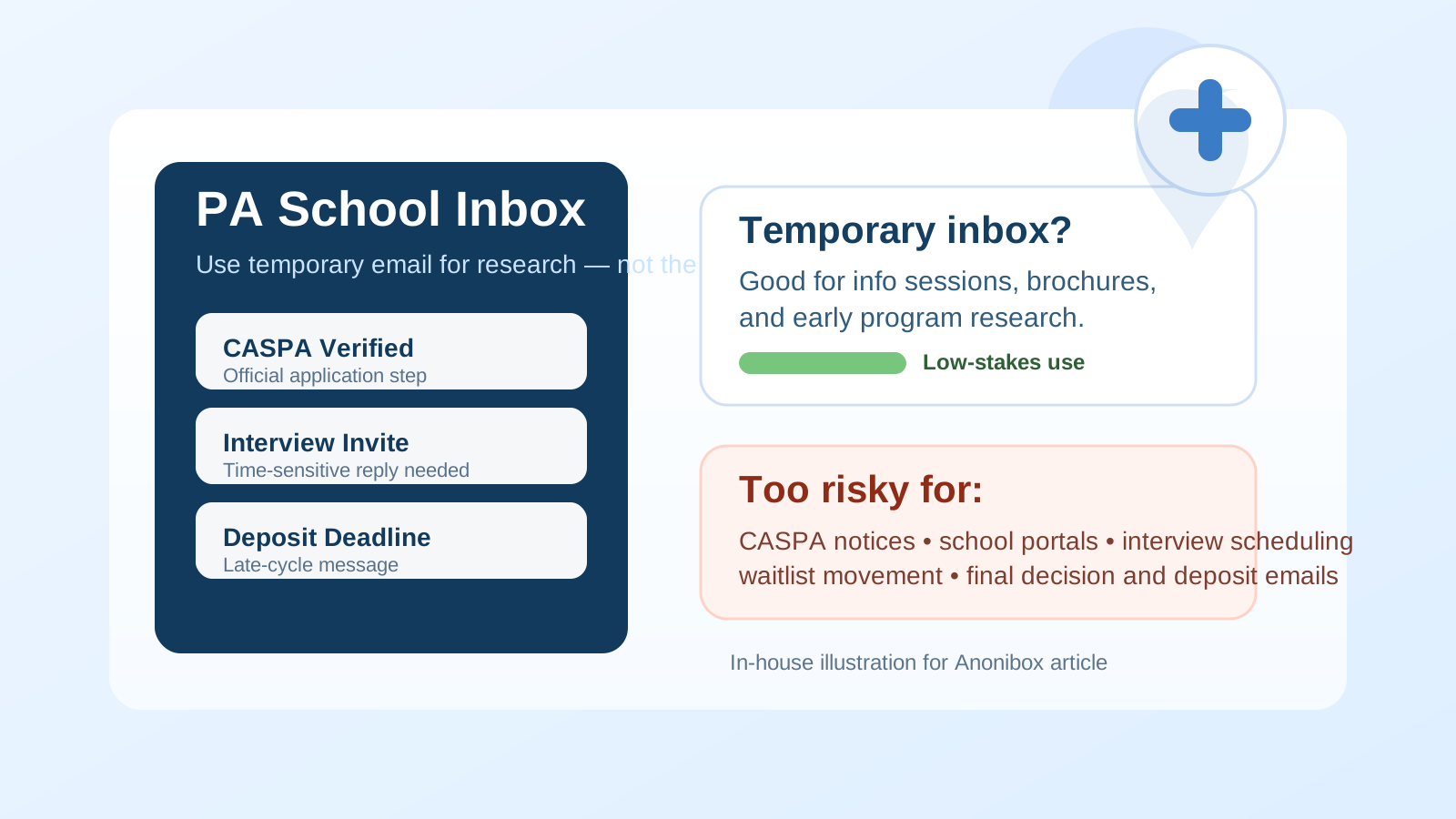
Usually no — a temporary email is fine for low-stakes physician assistant program research, but it is usually too risky to use as your main inbox for real PA school applications.
CASPA notices, supplemental application steps, interview invitations, waitlist movement, and deposit deadlines can arrive weeks or months later, so a stable inbox is safer than a short-lived address.
Why this question matters for PA school applicants
Physician assistant admissions are not a one-day signup flow. You may research programs for weeks, submit through CASPA, complete school-specific supplementals, answer follow-up questions, schedule interviews, and then wait through a long decision cycle. That is a lot of email, and some of it is genuinely time-sensitive.
Because of that, the usual privacy advice around temporary inboxes needs more nuance here. A disposable inbox can be helpful when you are just browsing, downloading a guide, or joining an information session without giving out your main address too early. But once you move into real applications, the cost of missing even one message can be much higher than the privacy benefit.
Short answer: use a temporary email only for research, not for core admissions communication
If you want the simplest answer, here it is: a temporary email can be useful at the very beginning of the process, but it is usually the wrong tool for your actual physician assistant school applications.
That does not mean you have to use your oldest personal inbox for everything. It means you should separate discovery from decision-critical communication. Research traffic can go to a disposable address. Real application traffic should go to an inbox you control for the full admissions cycle.
When a temporary email can make sense
There are a few situations where using a temporary inbox is perfectly reasonable.
1. Browsing programs before you are ready to apply
If a school wants an email just to access a brochure, a webinar replay, or an information packet, a temporary address can help you avoid turning your main inbox into a marketing list before you have even built your shortlist.
2. Signing up for low-stakes webinars or virtual events
Some admissions events are useful, but they also generate follow-up campaigns, reminders, and invitations you may not want forever. A temporary inbox can be a clean way to join the event and decide later whether the program is worth deeper attention.
3. Early comparisons between many programs
If you are exploring dozens of schools, a disposable address can keep the first wave of automated outreach away from your personal inbox while you narrow the list.
In those situations, the risk is manageable because you are still in research mode. Missing one promotional follow-up is not ideal, but it probably will not derail your admissions cycle.
Why a temporary email is risky for actual PA school applications
1. The admissions timeline is long
CASPA-related confirmations, school-specific portal invites, supplemental forms, interview scheduling, prerequisite clarification, and waitlist updates may not all happen in the same week. Some messages arrive much later than you expect. A temporary inbox is built for short-term access, not for a process that can stretch across months.
2. Interview invitations may need fast replies
Some programs move quickly once they are ready to invite candidates. If an interview email lands in an inbox you no longer check, or an address that has expired, you may lose a slot before you even know it was offered.
3. Supplemental applications and portals create continuity problems
Many programs use a mix of centralized and school-specific systems. You may apply through CASPA but then receive separate instructions from each school. If those messages are split across disappearing or poorly monitored inboxes, staying organized gets much harder.
4. Waitlist and seat-deposit messages can arrive late in the cycle
The danger is not only at the beginning. Applicants sometimes focus on submission and interviews, but late-cycle messages matter too. A seat offer, deposit deadline, or final administrative request may arrive long after you first created the address.
5. Replying from a disposable inbox can look inconsistent
Some temporary email tools are fine for receiving messages but awkward for replying in a professional, thread-consistent way. That is not a good mismatch for admissions communication, where clarity and reliability matter more than clever privacy hacks.
Temporary email vs separate inbox vs email alias
These options solve different problems, and it helps to treat them differently.
Temporary email
Best for early research, low-stakes downloads, event registrations, and situations where you want short-term privacy without long-term commitment.
Separate inbox
Usually the best choice for actual PA school applications. It keeps your admissions traffic organized and private enough without risking lost access later.
Email alias
A good middle ground if it forwards reliably and you can reply cleanly. It gives you some privacy while still routing messages into a real inbox you already monitor.
For most physician assistant applicants, the safest setup is simple: use a separate stable inbox or a dependable alias for real applications, and keep temporary inboxes limited to early exploration.
Where Anonibox fits naturally
Anonibox makes the most sense at the top of the funnel. If you are comparing programs, downloading admissions guides, joining info sessions, or checking which schools start aggressive follow-up after one form fill, a temporary inbox can help you stay private and keep your everyday email cleaner.
But once you are entering CASPA, submitting supplemental applications, or waiting on interview and decision traffic, it is smarter to switch to a durable address you can monitor every day. In other words, Anonibox is useful for research hygiene, not as the backbone of a long admissions cycle.
A practical workflow that actually works
Step 1: Use a temporary inbox for broad program research
Use a disposable address when you are still exploring and do not want every school or third-party vendor to have your permanent contact details right away.
Step 2: Narrow your list
Once you know which programs you are seriously considering, stop thinking like a casual browser and start thinking like an applicant with deadlines.
Step 3: Create a dedicated long-term application address
Before you submit anything official, create one professional inbox or one dependable alias that you can keep active through the full cycle.
Step 4: Use that stable address everywhere important
Use the same durable address for CASPA, school portals, supplemental forms, interview scheduling, scholarship or aid paperwork, and follow-up communication unless a school tells you otherwise.
Step 5: Check it consistently
At minimum, check it daily during the cycle. Around interviews, decision dates, or known deadlines, check more often. Reliability matters more than elegance here.
Signs you should not use a temporary email for a given step
- The form is part of a real application, not just a mailing-list signup.
- You will need the address again weeks or months later.
- The school may send time-sensitive instructions or scheduling options.
- You may need to reply from the same address and keep the thread clean.
- The account will be tied to a portal, password reset, or ongoing status updates.
If any of those are true, the temporary inbox is probably the wrong tool.
Common mistakes applicants make
Using one throwaway inbox for everything
This feels simple at first, but it creates chaos. Messages from multiple schools blur together, and you still have the durability problem.
Forgetting when the inbox was created
Temporary email is attractive because it reduces clutter, but that same short-term design is exactly what makes it dangerous later. Applicants often underestimate how long the cycle really lasts.
Switching addresses mid-cycle
Changing contact details after forms and portals are already active is messy. Some updates flow through correctly; others do not. Decide on your durable application address before official submissions start.
Assuming all important messages will also appear elsewhere
Sometimes they will. Sometimes they will not. It is safer to assume the inbox you provide is the inbox the school expects you to monitor.
What if privacy is your biggest concern?
If your main concern is privacy, that is reasonable. You do not have to expose your oldest personal inbox to every school interaction. But privacy does not require fragility. A separate professional inbox gives you much of the same privacy benefit while staying reliable enough for a real admissions process.
If you want even more separation, an alias can work too, as long as it forwards instantly and lets you reply clearly. The key point is that privacy-conscious does not have to mean disposable.
A quick checklist before you choose your email setup
- Am I only researching, or am I taking an official application step?
- Will I need this address again months from now?
- Could missing one message materially hurt my chances?
- Will I need to reply professionally from the same address?
- Would a stable separate inbox solve the problem better than a temporary one?
If your answers point toward long timelines and real consequences, use a durable inbox.
Final answer
A temporary email for physician assistant school applications is useful only in a narrow part of the process: early research, guide downloads, webinar signups, and other low-stakes exploration. For actual applications, it is usually too risky.
PA school admissions depend on continuity. CASPA updates, supplemental steps, interview invites, waitlist movement, and final deadlines can arrive long after your first contact. A separate stable inbox or reliable alias protects your privacy without creating that risk. Use the disposable address to explore, then switch to a durable one before anything important is on the line.