Usually no—not as your main contact method. A burner email can protect your privacy during the earliest stage of informational-interview outreach, but a stable separate inbox or alias is usually the better choice once a real person may reply.
If your goal is to avoid spam, test a low-trust platform, or keep your main inbox out of an unfamiliar networking tool, a burner address can help. If your goal is to build a real professional relationship, though, a disposable inbox is often too fragile.
Why this question matters
Informational interviews are not the same as one-click job applications. You are usually reaching out to a real person: an alum, a former coworker, a recruiter, a hiring manager, or someone whose career path you want to understand better. That conversation may begin casually, but it can turn into a valuable thread with follow-up questions, scheduling messages, introductions, and sometimes even referrals.
That is why the email choice matters. A burner inbox gives you distance and privacy, but informational interviews depend on continuity. People often reply later than you expect. They may offer to reconnect next week, send a calendar link after a busy period, or introduce you to someone else after thinking it over. If your inbox is temporary, messy, or easy to abandon, you can lose the exact kind of opportunity you were trying to create.
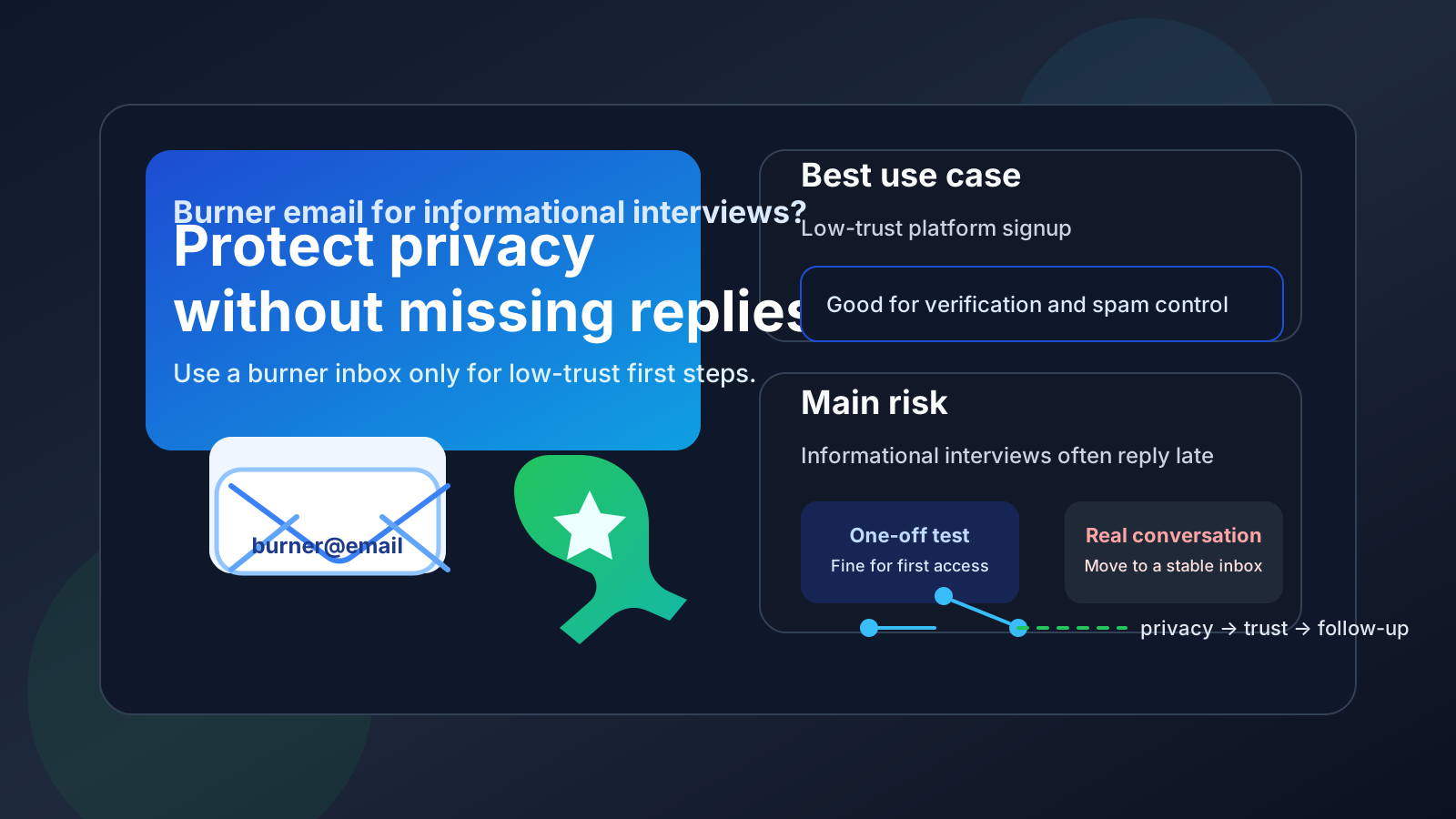
Short answer: good for low-trust first steps, weak for real follow-up
If by burner email you mean a truly disposable or short-lived inbox, it is usually not the best address for an actual informational interview. It can be useful for early-stage privacy protection, but it is a poor long-term home for a conversation you care about.
If by burner email you really mean a second permanent account used only for networking and job search, that is a different story. A dedicated separate inbox can be a smart move. The problem is not separation itself. The problem is using something so disposable that you miss replies, lose context, or look unreliable once the conversation becomes real.
When a burner email can make sense
There are a few situations where using a burner-style inbox around informational interviews is reasonable.
1. You are testing an unfamiliar networking platform
Some alumni communities, event portals, mentoring directories, and networking apps require signup before you can even see whether the platform is useful. If you do not trust the platform yet, using a temporary inbox for that first registration can protect your main email from future marketing clutter.
2. You want to limit exposure while exploring quietly
Maybe you are considering a career change while still employed. Maybe you are reaching out in a niche community and want to keep your everyday inbox separate until you know which conversations are worth pursuing. A burner inbox can help you create that first layer of distance.
3. You only need a one-time verification step
Some platforms gate messaging behind confirmation emails, welcome links, or account activation. If all you need is to get through the door and evaluate whether the tool is legitimate, a disposable inbox may be enough for that narrow purpose.
That is where a service like Anonibox fits naturally: quick access, low-friction verification, and less risk of dragging your primary inbox into a system you may never use again.
Why a burner email often fails for informational interviews
Replies do not arrive on your schedule
Informational interviews are usually driven by goodwill, not urgency. Busy professionals answer when they have time. That may be tonight, next week, or after a conference, deadline, or product launch. A disposable inbox works best when the message arrives immediately. Informational interviews often do not work that way.
You may need more than one message
A good conversation rarely ends with one reply. You may get a scheduling question, a request for your resume, an offer to connect you with someone else, or a follow-up note months later. A burner inbox is a weak place to manage that kind of thread.
Context matters
Networking conversations build on memory. If you lose the original thread, you may forget what you asked, how the person responded, or what they offered. That makes your own follow-up less thoughtful and less effective.
Trust signals are subtle but real
Most people will not inspect your domain in detail, but clearly disposable addresses can still create friction. Informational interviews rely on professionalism and reciprocity. You do not want your contact method to suggest that you may disappear after one exchange.
Burner email vs. separate email: they are not the same thing
A lot of people use the phrase burner email loosely, but there are meaningful differences:
- True burner inbox: fast, temporary, disposable, good for low-trust signups, bad for long follow-up.
- Separate long-term inbox: a second Gmail, Outlook, or other account you control and monitor regularly.
- Email alias: a forwarding address or alias that protects your main inbox while still landing in a stable mailbox.
If your real goal is privacy without chaos, the second and third options are usually better for informational interviews than a true throwaway inbox.
Best use cases for a burner inbox around networking
- Signing up for a new career community before deciding whether it is worth keeping
- Testing whether an event organizer sends useful follow-up or just marketing blasts
- Protecting your main inbox from directories, lead forms, or networking tools with unclear reputation
- Checking a message flow before moving promising contacts into a permanent inbox
Notice the pattern: these are screening use cases, not relationship-management use cases.
When you should switch away from a burner email immediately
Use a more stable inbox as soon as any of the following becomes true:
- A real person replies with interest
- You are discussing times, meeting links, or calendar invites
- The person offers to introduce you to someone else
- You want to preserve the thread for future follow-up
- The contact may become a mentor, referrer, or hiring lead
Once the conversation matters, durability matters too.
A practical decision checklist
Before using a burner email for informational interviews, ask yourself:
- Am I trying to protect myself from a low-trust platform or run a real networking relationship through a disposable inbox?
- Would I be frustrated if the reply arrived ten days from now and I missed it?
- Do I need message history, attachments, or scheduling reliability?
- Would a separate permanent inbox solve the same privacy problem with less downside?
- Does this address look stable enough for a professional exchange?
If those questions point toward continuity, a burner inbox is the wrong tool.
Examples
Good use
You find a networking site for alumni mentors, but it looks heavily marketing-driven and asks for signup before showing anything useful. You use a burner inbox to inspect the platform, verify access, and decide whether it is worth deeper engagement. That is a sensible privacy filter.
Bad use
You send a thoughtful outreach note to someone in your target field and use a disposable inbox because you do not want extra email in your main account. Two weeks later they reply, offer a fifteen-minute chat, and you never see it because you stopped checking that inbox. That is exactly the failure you want to avoid.
Best middle ground
You use Anonibox or another temporary inbox only for low-trust platform signups, then move real conversations into a dedicated networking inbox or alias you actually monitor every day. That gives you privacy without giving up follow-up control.
Best practices if you use a burner email anyway
- Limit it to the first checkpoint. Use it for verification or platform access, not as the permanent home of a promising conversation.
- Move valuable threads fast. If someone responds, shift the exchange to a stable inbox before logistics begin.
- Save important details immediately. Copy meeting ideas, contact names, and next steps somewhere safe.
- Use a professional display name. Even if the inbox is temporary, your sender identity should not look random or careless.
- Do not split every conversation across new throwaways. Too much compartmentalization creates confusion for you as well as privacy.
Better alternatives than a true burner email
If you want privacy and cleaner organization, these options usually work better:
- A separate networking inbox: keeps your main mailbox clean while staying dependable for replies.
- An email alias: shields your main address but still routes messages into a stable destination.
- A custom-domain or professional secondary inbox: useful if you want long-term control and a more polished identity.
For most people, the best setup is simple: use temporary email for low-trust testing, then use a stable account for real conversations.
Final answer
So, should you use a burner email for informational interviews? Usually no. It can be helpful as a protective first layer when you are signing up for unfamiliar networking tools, verifying access, or keeping your main inbox off low-trust platforms.
But informational interviews are built on trust, follow-up, and delayed replies. Once a real person might answer, a burner inbox becomes more risky than helpful. If you want privacy without missing opportunities, use a separate long-term inbox or a stable alias instead, and keep burner email for the earliest, lowest-commitment stage.