Yes — usually. An email alias can work very well for informational interviews if it forwards reliably to an inbox you actually monitor and lets you reply cleanly without confusing the other person.
For most people, an alias is a better fit than a burner or temporary inbox because informational interviews often turn into real follow-up, introductions, scheduling, and relationship-building. The key is using an alias that gives you privacy without making you harder to reach.
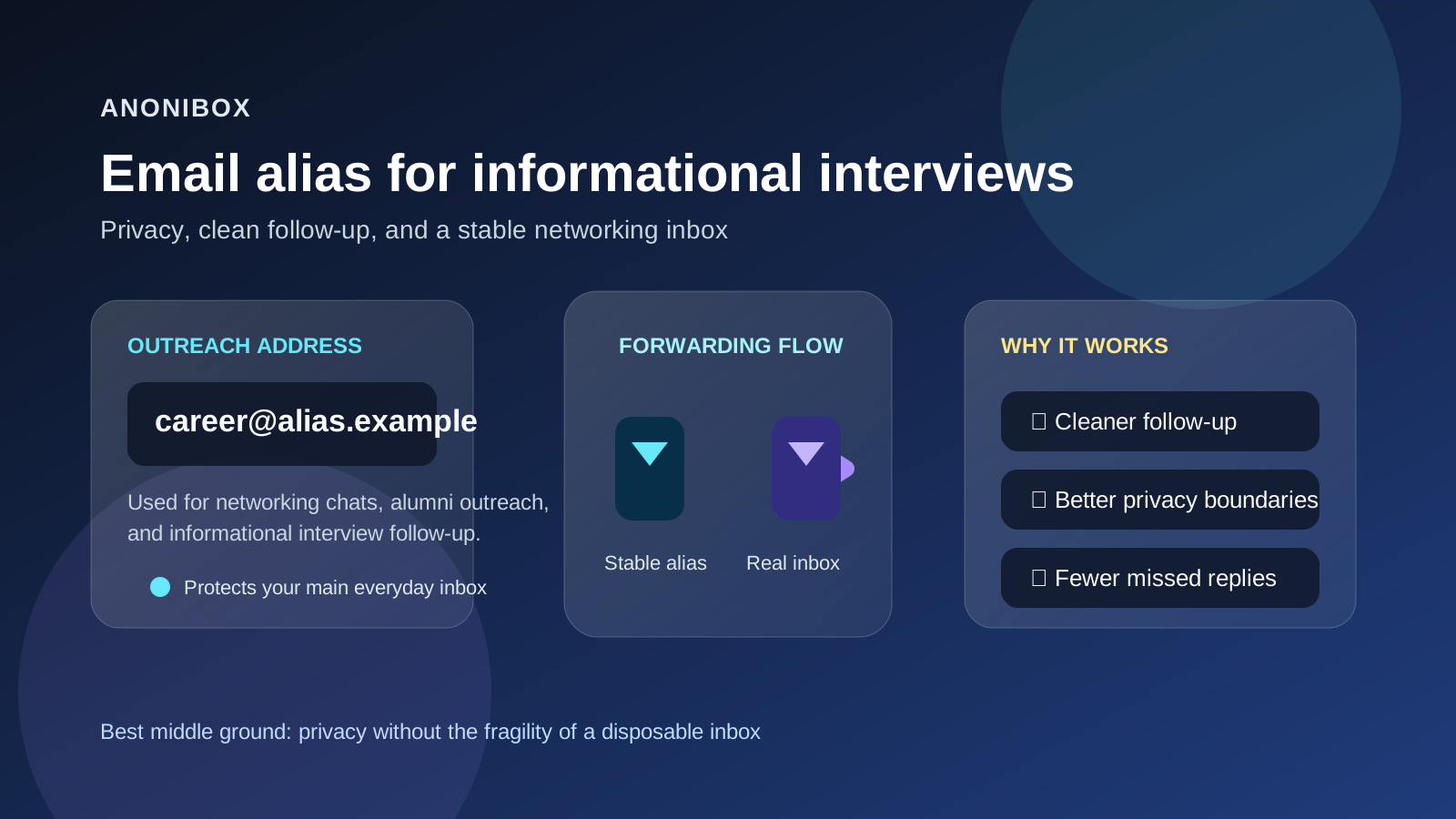
Why this question matters
Informational interviews are different from anonymous signups or one-click applications. You are usually reaching out to a real person: an alum, a former coworker, a hiring manager, a recruiter, a founder, or someone whose career path you want to understand better. Even when the first message is casual, the conversation can become more important than you expected.
A helpful reply might arrive the same day, but it might also come next week after a busy launch, conference, or hiring sprint. That person may offer to introduce you to someone else, suggest a better contact, send a scheduling link, or circle back later with an opening. Because of that, your email setup needs to balance two goals at once: protect your privacy and preserve continuity.
That is exactly where an email alias can help. It gives you separation from your main everyday inbox, but it does not have to be as fragile as a temporary or disposable address.
What an email alias actually means here
An email alias is not always a completely separate mailbox. In many setups, it is simply another address that forwards into your main inbox or routes into a dedicated folder you already check. Depending on your provider, that could be:
- a second address on the same account
- a forwarding alias from a privacy-focused email service
- a role-style address you control for networking or job-search communication
- a masked address that still lands in a stable inbox you own
The important detail is not the branding of the tool. The important detail is whether the address is stable, monitored, and easy to reply from. If it does those three things, it can work well for informational interviews.
Why an alias is often a smart choice for informational interviews
1. It protects your main inbox without looking disposable
Many people want a little distance when they are networking, especially if they are still employed, exploring a career change quietly, or signing up for alumni directories and event platforms they do not fully trust yet. An alias lets you avoid scattering your primary personal address across too many systems.
At the same time, an alias usually feels more stable than a throwaway inbox. That matters because informational interviews depend on trust. You do not need to impress anyone with your email provider, but you also do not want your contact method to look like it may vanish before the conversation develops.
2. It keeps networking conversations organized
Informational interview outreach often starts small and becomes messy later. You might send one note, then get a reply, then receive a calendar link, then get referred to another person, then follow up a month later. If all of that lands in the same inbox as receipts, newsletters, travel notices, personal mail, and app alerts, it gets harder to manage.
An alias can make those messages easier to track. Even if the mail ultimately lands in your main inbox, it can still be filtered into a folder or label for career networking. That makes it easier to find old threads, remember context, and follow through professionally.
3. It gives you more control later
Not every networking platform or contact source deserves lifetime access to your everyday address. If an event list starts sending too much marketing, a directory gets noisy, or an old recruiting thread keeps resurfacing months later, an alias gives you options. You can filter it, mute it, rotate it, or retire it without having to rebuild your entire email life.
4. It supports real follow-up better than a temporary inbox
This is the big one. Informational interviews often move slowly. People reply when they have time. They may offer to reconnect later, send a thoughtful answer days after your message, or introduce you to someone else after checking first. A stable alias supports that kind of delayed follow-up much better than a short-lived inbox.
When an alias is better than a burner or temporary email
A lot of people lump aliases, burner inboxes, and temporary email addresses together, but they are not the same tool.
- Temporary email: best for quick verification, low-trust signups, or one-off access where long-term follow-up is unlikely.
- Burner email: sometimes means temporary, sometimes means a secondary account; the problem is that the label is vague.
- Email alias: usually better for ongoing conversation because it protects your privacy while still pointing to a stable inbox.
If you are only testing a networking platform, event portal, or community signup flow, a temporary address from a tool like Anonibox can make sense for that first low-stakes step. But once you are talking to a real person whose reply may matter, an alias is usually the better move. It keeps the privacy benefit while reducing the risk that you miss an opportunity because your contact method was too disposable.
Where an email alias can go wrong
An alias is not automatically good just because it sounds more sophisticated than a throwaway inbox. The setup still has to work in practice.
Forwarding failures
If the alias does not forward reliably, you can miss the one message that mattered. That is especially risky when someone sends a calendar invite, an introduction, or a short “happy to chat next week” note that does not get repeated.
Reply-from confusion
Some alias tools forward messages into your real inbox but default replies to the underlying address unless you configure them carefully. That creates messy threads. The other person wrote to one address and suddenly gets a reply from another. Sometimes that is harmless. Sometimes it looks sloppy or breaks filtering on your side.
Calendar and invite weirdness
Informational interviews often move from email into scheduling tools. If your alias setup handles plain messages well but mangles invites, RSVPs, or updates, that is a real usability problem. Test this before you rely on it for live conversations.
Overcomplication
You do not need a privacy maze just to ask for career advice. If your setup is so layered that you are constantly checking forwarding rules, separate dashboards, hidden folders, and reply settings, the system is working against you.
Best practices if you use an alias for informational interviews
Choose stability over novelty
Use an alias you can keep for as long as the conversation might matter. Informational interviews sometimes produce value months later, not just in the first week.
Test the full workflow before sending outreach
Send yourself a message, reply to it, and if possible test a calendar invite too. Make sure the alias receives mail promptly, replies come from the right address, and nothing gets buried in Spam or Promotions.
Keep the alias professional and readable
A simple address is easier for people to trust and reuse. Something clean and human is better than a random string that looks machine-generated. You do not need a fancy custom domain, but you do want the address to feel intentional.
Monitor it like it matters
If you use an alias for real networking, check it consistently. The best privacy setup still fails if you treat it like a junk drawer. Informational interviews reward thoughtful follow-up, and thoughtful follow-up starts with seeing the reply in time.
Keep notes alongside the thread
An alias helps with organization, but memory still matters. Save a note about who the person is, how you found them, what you asked, and what they offered. That makes later follow-up warmer and more specific.
When you should not use an alias
There are situations where an alias is probably not the best fit.
- You cannot reply from it cleanly.
- You rarely check the inbox it forwards into.
- You are using an obviously disposable address that may undermine continuity.
- You are about to move into a more formal process and want everything under your long-term primary contact identity.
Also, if a conversation has already become an active recruiting relationship with repeat follow-up, interview coordination, or offer-stage logistics, you may decide it is simpler to move to your main stable inbox rather than keep the alias in the middle forever. The right answer depends on how much privacy separation you still need.
A practical setup that works for most people
- Create one clean alias dedicated to career networking or informational interviews.
- Route it into an inbox you already check every day.
- Set up a label or folder so networking mail stays easy to scan.
- Test sending, receiving, replying, and invites before any real outreach.
- Use that alias for alumni outreach, career chats, and low-volume professional networking.
- If the relationship becomes more formal or long-running, decide whether to keep the alias or transition to your main professional inbox.
That setup gives you privacy without unnecessary fragility. It is simple enough to maintain, but still separate enough to reduce clutter and exposure.
What matters most: reliability, not purity
People sometimes overfocus on whether an alias is the “most private” possible option. For informational interviews, the better question is whether it helps you stay reachable while still protecting your boundaries. A perfectly private setup that drops replies is worse than a slightly less private setup that you can manage confidently.
Your contact method should support the real goal: starting thoughtful conversations, making a good impression, and preserving the opportunity to continue the relationship later. If the alias helps you do that, it is doing its job.
Final answer
Yes, an email alias is usually a smart choice for informational interviews. It gives you more privacy and organization than handing out your main everyday address everywhere, while still being more dependable than a temporary or disposable inbox.
Just make sure the alias forwards reliably, lets you reply from the same address cleanly, and lands in an inbox you genuinely monitor. If you want privacy without missing the follow-up that turns a casual chat into a real connection, an alias is often the best middle ground.