Yes, text messages can work for informational interviews, but only for quick logistics like confirming a time or saying you are running late.
They are usually a weak main channel for the real conversation because they expose your phone number, feel more personal than email or LinkedIn, and make it harder to keep a professional record of what matters.
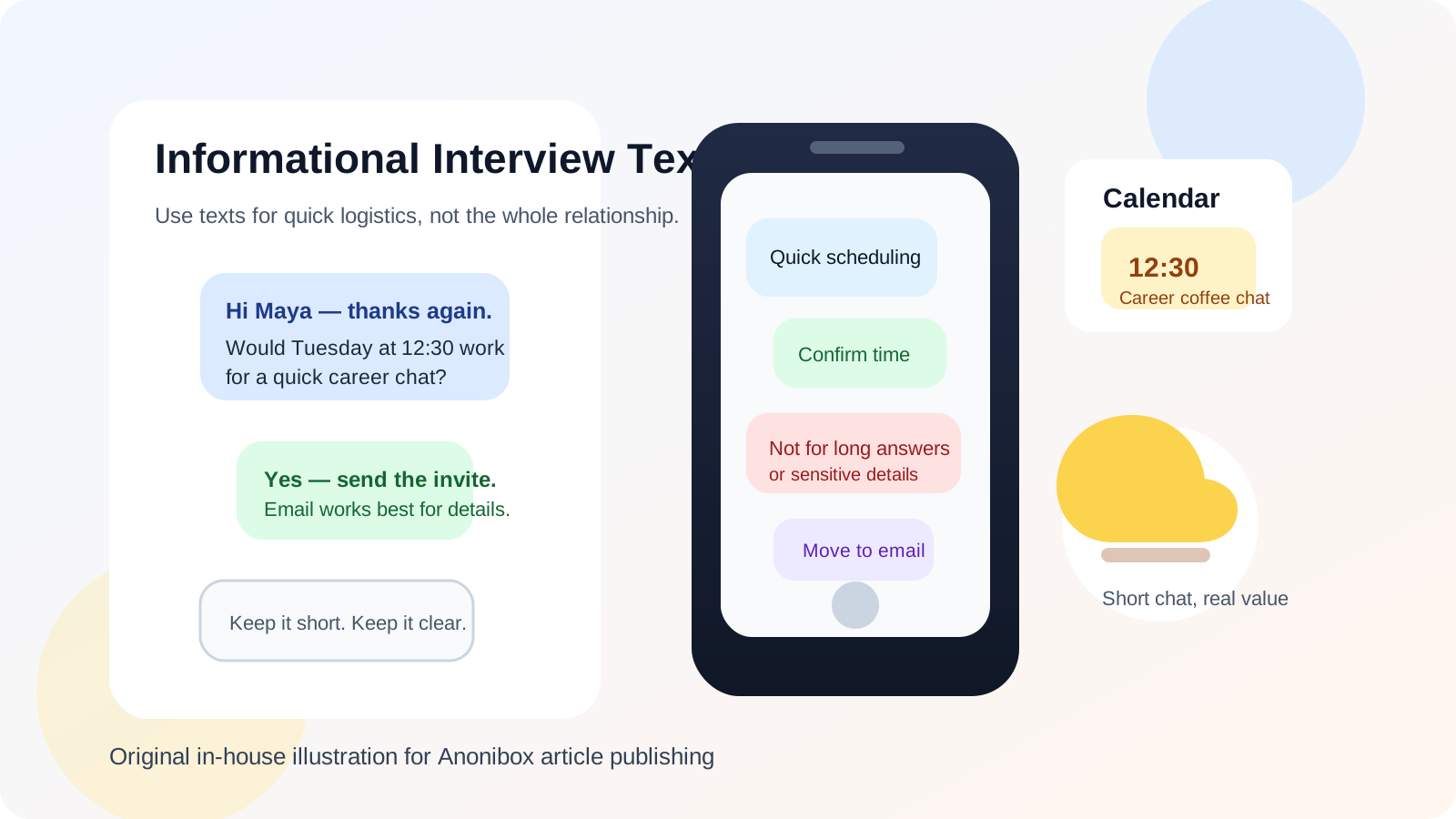
That is the practical answer behind searches for should you use text messages for informational interviews. Informational interviews sit in an odd middle ground. They are not formal job interviews, but they are not casual friend chats either. You are asking someone for time, perspective, and goodwill. The channel you choose shapes the tone before the conversation even begins.
Texting feels fast and familiar, which is why people consider it. Maybe you already exchanged numbers after connecting on LinkedIn. Maybe a mutual contact introduced you by text. Maybe the other person suggested, “Just text me next week and we’ll find a time.” In those cases, texting can be fine. The problem starts when people treat text messages as the default channel for everything from the initial ask to follow-up questions to detailed career advice.
For most job seekers, the best rule is simple: use text messages as a support channel, not the entire informational interview workflow. Keep the actual relationship-building grounded in a more professional, easier-to-manage place when possible.
Why people even consider texting for informational interviews
There are good reasons this question comes up. Informational interviews are usually light, human conversations rather than tightly managed hiring steps. Because of that, they often start through whatever channel feels easiest in the moment.
- A friend introduces you to someone and shares their number.
- An alum says texting is easier than email.
- A professional contact responds faster by phone than through LinkedIn.
- You only need to confirm a coffee chat, a Zoom time, or a quick reschedule.
In those cases, a text can reduce friction. It can feel more natural than drafting a formal email just to ask, “Does Thursday at noon still work?” That convenience is real. The question is whether the convenience is worth the trade-offs.
When text messages make sense
Text messages are usually reasonable for the small, logistical parts of an informational interview.
1. Confirming a time
If the conversation is already scheduled and you just need to confirm, texting is efficient. A short message is often easier for both people than reopening a long email thread.
2. Handling day-of updates
Running five minutes late, stuck in traffic, or switching from in-person to virtual because something changed? Texting is perfect for that. It is immediate and low effort.
3. Following a warm introduction
If a mutual connection already introduced you and the other person clearly invited texting, you do not need to force the conversation into a different channel just to look more formal than necessary.
4. Sending a quick “thank you, I’ll email details” note
A text can also work as a handoff message. For example: “Thanks again — I just sent a short email with the calendar invite.” That keeps the text thread light while moving the real details somewhere easier to track.
Notice the pattern: the best uses are short, practical, and low-risk.
When text messages are the wrong main channel
Texting becomes less helpful when the conversation starts carrying anything you may want to revisit, verify, or keep organized over time.
- Asking for the entire informational interview by text from the first cold outreach
- Explaining your full background in a long paragraph thread
- Sending meeting links, resumes, or detailed follow-up resources only by text
- Trying to build an ongoing networking relationship entirely inside a text chain
- Discussing sensitive job-search details that you would not want sitting casually in your everyday messages
Informational interviews are often about more than one conversation. If the exchange goes well, you may want to refer back to what was shared, send a thank-you note, follow up a month later, or keep the connection warm for future opportunities. Email usually does that job better. LinkedIn can also make more sense for the initial outreach because it provides context and keeps the first step professional.
Why texting can create privacy and boundary problems
The biggest downside is simple: a text message requires giving someone direct access to your phone number. That may be a small cost in some situations, but it is still a cost.
Your number is more personal than your email
Most people treat a phone number as a more intimate contact detail than a professional email address. It reaches you faster, follows you everywhere, and usually lands beside messages from family, friends, and everyday life.
It can blur the tone
An informational interview is supposed to be warm and human, but not boundaryless. Texting can make the interaction feel more casual than you intended. That is not always bad, but it can change expectations around response time, availability, and how personal the conversation becomes.
It is easier to lose track of context
Text threads are fine for “On my way” or “Can we move this to Friday?” They are worse for notes, links, advice, and future follow-up. Important details disappear faster in a busy messaging app than they do in a labeled inbox or calendar event.
It can attract the wrong kind of outreach
Once your number circulates, future recruiter texts, vague networking pitches, or outright scams become easier. That does not mean every text is dangerous. It means your phone number is part of your privacy surface, and you should treat it like one.
Texting also makes scammy behavior easier to hide
This matters even in the softer world of informational interviews. A real professional might text briefly. A fake recruiter or manipulative contact might also prefer text because it creates urgency and avoids scrutiny.
Be more cautious if someone:
- Pushes you into texting immediately after a vague first contact
- Will not identify themselves clearly in writing
- Uses texting to avoid giving you a company email or profile context
- Starts steering the conversation toward jobs, referrals, money, or sensitive details without clear trust
- Tries to move from text to WhatsApp, Telegram, or another channel with no good reason
An informational interview should feel grounded, respectful, and easy to verify. If texting makes the interaction feel murkier rather than simpler, that is a bad sign.
How text messages compare with better channels
LinkedIn Messages
LinkedIn is often stronger for the first outreach because the professional context is built in. The person can immediately see who you are, how you found them, and why your request makes sense.
Email is better for anything with scheduling details, meeting links, thank-you notes, or follow-up resources. It creates a cleaner record and is easier to search later.
Phone or video
The actual informational interview itself usually belongs on a call, video meeting, or in-person chat, not inside a text thread. Texting can help coordinate the conversation, but it is rarely the right place to have the conversation.
If you need to protect your inbox while still staying professional, a separate email workflow can help. Some job seekers use a dedicated search address or a tool like Anonibox for early-stage outreach, newsletters, or signups they do not want mixed into personal mail. That is often a better privacy compromise than leaning too heavily on texting.
A good rule: start professional, then get lighter only if invited
If you do not know the person yet, start with LinkedIn or email. If they respond and say texting is easier, that is different. The other person has set the tone and consented to the channel. That is much better than opening with a cold text if you somehow found their number.
In other words:
- Cold outreach: prefer LinkedIn or email
- Warm introduction: texting may be fine if clearly welcomed
- Scheduling and day-of logistics: text is often useful
- Detailed follow-up: move back to email
Best practices if you do use text messages
Keep the first message short and specific
A good professional text does not try to fit your life story into one screen. State who you are, why you are reaching out, and what small next step you want.
Do not over-text
If they do not answer, do not keep nudging every day. Informational interviews are favors, not transactions. One polite follow-up is reasonable. A drip campaign by text is not.
Move important details to email or calendar
If the conversation is happening, send a proper invite or a short confirming email. That makes the interaction easier for both sides to manage.
Avoid sensitive details
Do not put your full resume history, compensation concerns, references, or anything personal into a casual text thread unless there is a strong reason and strong trust.
Consider a separate number if privacy matters a lot
If you are networking aggressively, applying widely, and talking to many new contacts, a separate job-search number can protect your personal line. The same logic that leads people to use a separate email can apply to texting too.
A simple example of appropriate texting
Good: “Hi Jordan — this is Priya from the State U alumni group. Thanks for offering to chat. Would next Tuesday or Wednesday around lunch work for a 15-minute informational call?”
Not great: a six-message monologue explaining your entire job-search story, asking for referrals, attaching your resume, and following up again two hours later.
The first message respects the other person’s time. The second makes the interaction feel heavy before trust is built.
Final answer: should you use text messages for informational interviews?
Yes, but mostly for quick logistics and only when the channel is clearly appropriate.
Texting can be useful for confirmations, short updates, and warm introductions where the other person has already opened the door. It is usually a poor main channel for the actual relationship-building side of informational interviews because it exposes your phone number, blurs professional boundaries, and creates a weaker long-term record than email or LinkedIn.
If you want the safest default, start with LinkedIn or email, move to text only when it makes the exchange easier, and keep important details in a place you can manage professionally. That way, you stay approachable without turning your personal phone into the center of your networking life.