Yes — Mailbox.org can be a smart choice for informational interviews if you want a separate, stable inbox that feels professional and you are willing to check it consistently.
It is usually a better fit than a disposable address because informational interviews often lead to delayed replies, thank-you notes, follow-up questions, and occasional future opportunities that need a real mailbox instead of a throwaway inbox.
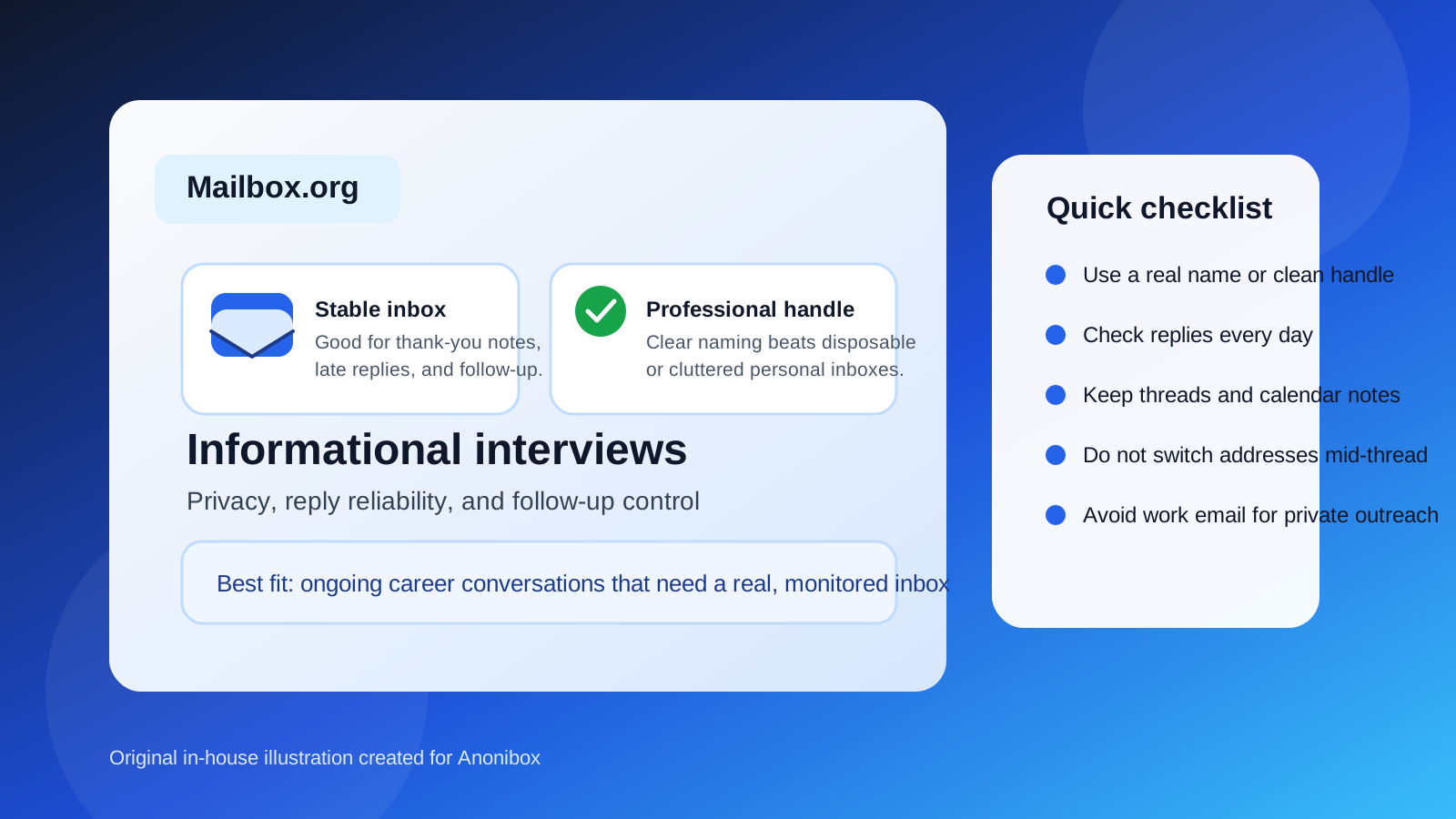
Why this question comes up
Informational interviews live in the middle ground between casual networking and formal hiring. You are not usually sending a high-volume cold application, but you are also not just chatting with a friend. You might be reaching out to an alum, a hiring manager, a former coworker, or someone doing the kind of work you hope to move into. That makes your email choice more important than it looks.
The inbox you use affects three practical things: how professional you appear, how easy you are to reply to, and how much of your personal digital life you expose while exploring career options. That is why people ask whether a privacy-focused provider like Mailbox.org makes sense here.
Short answer: Mailbox.org is usually reasonable if continuity matters more than convenience
Mailbox.org is a real email provider, not a disposable inbox. That alone makes it a better match for informational interviews than most temporary email tools. These conversations often move slowly. Someone may reply two days later, two weeks later, or after they finally clear a busy stretch at work. If your inbox disappears, gets buried, or looks too temporary, you risk missing the real value of the conversation.
If your goal is to keep job-search outreach separate from your main inbox without using your employer address, Mailbox.org can be a solid middle path. It is more stable than a burner inbox, but still gives you more separation and privacy than using the same personal address you use for shopping, newsletters, and every online account you have built over the years.
What Mailbox.org does well in this situation
1. It gives you a cleaner professional boundary
Many people do not want informational interviews landing in the same inbox as family messages, travel receipts, marketing email, and personal account alerts. A separate mailbox helps you treat career outreach like its own lane. That can make you more responsive, more organized, and less likely to miss a valuable reply.
That separation also helps emotionally. Informational interviews can feel easier when you are not mixing them with everything else in your digital life. A dedicated address can make outreach feel more deliberate and less messy.
2. It keeps privacy stronger than using a work email
Using your employer-managed inbox for private career exploration is usually a bad idea. Even when no one is actively watching your messages, you are still using an address tied to your current company, policies, devices, and professional identity. For a lot of people, that is too much exposure for networking conversations that are not part of their current job.
Mailbox.org works better when you want a real mailbox that is yours rather than one controlled by an employer. That matters if your informational interviews are part of a quiet career shift, an industry change, or a long-term exploration you would rather keep separate.
3. It is stable enough for real follow-up
A useful informational interview rarely ends with one email. You may send an initial outreach note, get a reply later, exchange a few scheduling options, send a thank-you afterward, and maybe check back months later when a relevant role opens. That rhythm rewards a stable inbox.
This is where a disposable address usually becomes a poor fit. A temporary inbox can be fine for one-time signups, but not for professional conversations that may have a long tail. If you only need a throwaway inbox for quick website access or a one-off download, that is where a disposable tool like a temporary Mailbox.org-style address guide or an Anonibox inbox makes more sense. For real relationship-building, stability wins.
Where Mailbox.org can create friction
1. A strange username can undercut the benefit
The provider matters less than the address itself. If your handle looks messy, overly anonymous, joke-like, or hard to read, the mailbox will not feel especially professional no matter how privacy-focused the service is. Informational interviews are low-pressure, but they still rely on trust and easy communication.
A clean address based on your name, initials, or a straightforward professional variation is usually the safest choice.
2. It only works if you actually monitor it
A separate inbox is helpful only if it is part of your real routine. If you open it once, send three outreach emails, and forget to check it for a week, you may miss the reply that mattered. Informational interviews often depend on timing. Busy professionals may offer a narrow scheduling window, and you do not want to lose it because the address felt “secondary.”
3. Switching addresses later can get awkward
If an informational interview turns into a referral, a recruiter intro, or a real application, changing contact details midstream can create avoidable friction. That does not mean you can never switch, but it is easier if the address you start with is good enough to keep using for the next stage.
That is one reason privacy-focused permanent mailboxes often beat pure throwaway tools for career conversations. You want enough separation to protect yourself, but enough continuity to keep the thread intact.
Is Mailbox.org better than a temporary email for informational interviews?
Usually, yes. A temporary inbox is better for short-lived transactions: downloading a guide, testing a signup flow, joining a waitlist, or shielding your real address from obvious spam risk. Informational interviews are different because they depend on trust, delayed replies, and ongoing access to the conversation history.
If you are deciding between a real separate mailbox and a disposable inbox, the separate mailbox is usually the better choice here. The live tradeoff is not only privacy. It is also reliability. That is why articles like Should You Use a Temporary Email for Informational Interviews? and Should You Use a Separate Email for Informational Interviews? point toward the same conclusion: informational interviews reward an address you can keep using.
When Mailbox.org is a particularly good fit
- You want a separate inbox just for networking and career exploration.
- You do not want to use your work email for private outreach.
- Your main personal inbox is cluttered or tied to too many old accounts.
- You expect delayed replies and want a mailbox you can revisit later.
- You care about privacy but still want to look like a serious professional contact.
When another option may be better
- Your existing personal email already looks professional and you check it constantly.
- You already use a custom-domain address for career conversations.
- You are reaching out to people who already know you by another email.
- You only need a one-time inbox for a signup rather than a real conversation.
In other words, Mailbox.org is not mandatory. It is just a sensible option when you want more control than a crowded personal inbox gives you, without dropping down to a disposable address that may weaken follow-up.
Best practices if you use Mailbox.org for informational interviews
Use a calm, readable address
Keep the handle simple. Your name, initials, or a clean professional variant is better than numbers, slang, or a privacy-themed alias that makes the address feel temporary.
Check it daily during active outreach
If you are sending messages this week, check for replies this week. Separate should not mean neglected.
Keep your signature minimal and useful
You do not need a fancy footer. Your name, a relevant link if appropriate, and a simple line of context are enough. The goal is to make replying easy, not to sound corporate.
Do not overshare in the first message
An informational interview request should still be light, polite, and easy to answer. Your email provider does not replace good outreach habits.
Stay consistent if the conversation grows
If the person becomes a referral source or introduces you to someone else, keeping the same inbox is usually easier than moving the thread elsewhere.
Bottom line
Mailbox.org can be a very reasonable choice for informational interviews because it gives you something many people actually need: a private, separate, stable inbox that still feels professional. That balance matters more here than with one-click signups or disposable verification tasks.
The real test is simple. If the address looks clean, you monitor it closely, and you are prepared to keep using it as the conversation develops, it can work well. If you are treating it like a temporary stopgap you may ignore later, it is probably the wrong tool for the job.
For one-off privacy shielding, an Anonibox disposable inbox can still be useful. But for informational interviews, where thoughtful replies and future opportunities often arrive later than you expect, a real mailbox usually gives you the better long-term outcome.