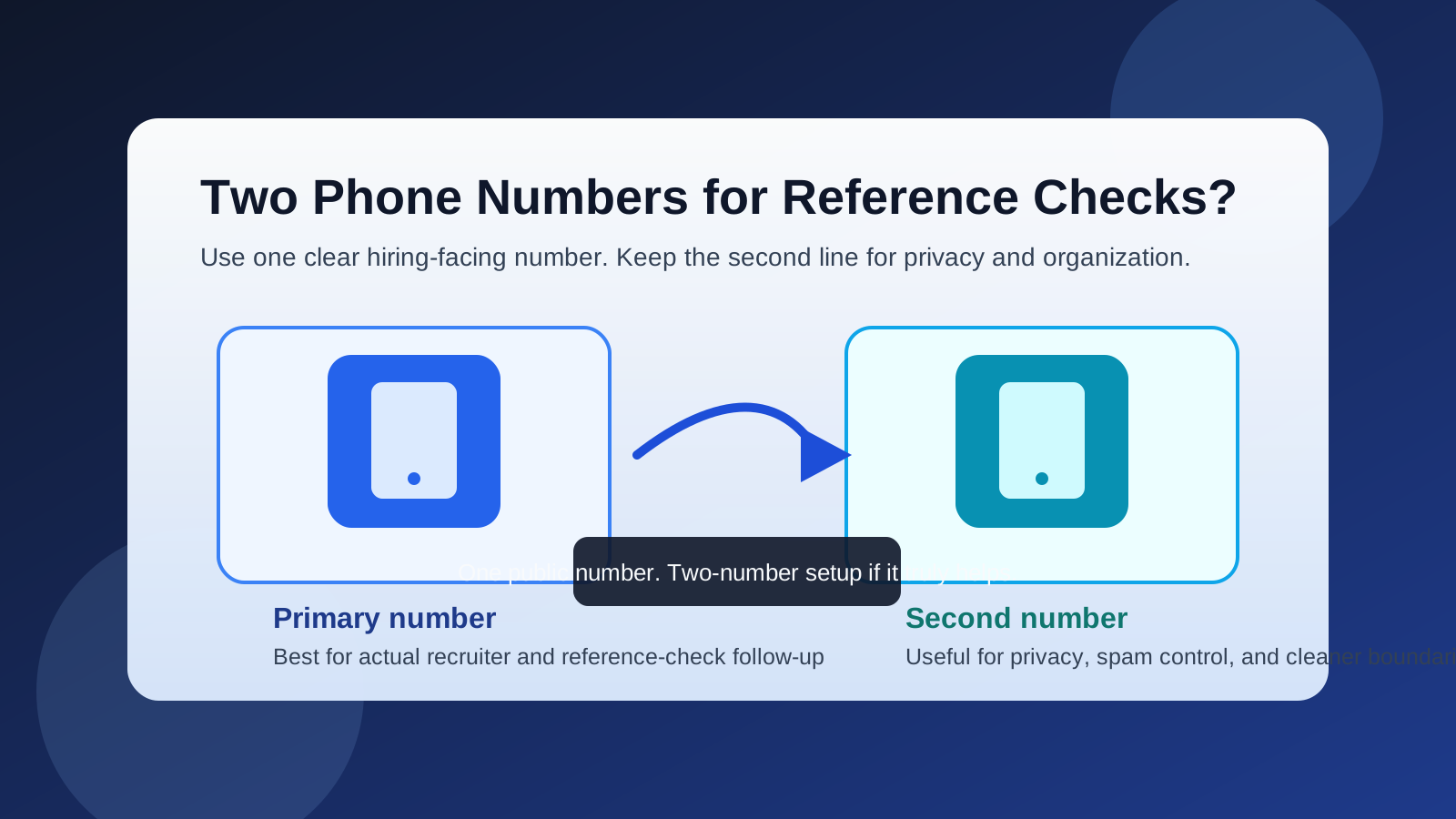
Usually, no — you do not need two phone numbers for reference checks. But a separate number can be useful if you want more privacy, better organization, or cleaner boundaries during a job search.
Reference checks are usually a late-stage hiring step, so the best choice is the number that keeps you reachable, professional, and in control. For many people that is one reliable personal number. For others, a second line is a smart upgrade rather than overkill.
What reference checks actually need from you
Reference checks are not the same as cold job applications. By the time an employer asks to contact your references, they are usually trying to confirm timing, verify details, and move a hiring decision forward. That means the main question is not “How many numbers can I provide?” but “What is the cleanest, most dependable way to stay reachable if something needs clarification?”
In most cases, one working number is enough. If a recruiter or hiring manager needs you, they usually just want one reliable way to reach you quickly if a reference misses an email, if availability changes, or if they need permission to contact someone sooner than planned.
Short answer: one number is enough for most people
If your main personal number is stable, private enough for your comfort, and easy for you to monitor, you usually do not need two phone numbers for reference checks. Giving two numbers can create extra friction if nobody knows which one to use first, which one takes voicemail, or which one you actually check.
That said, “usually” is not “always.” A second number can make sense when your personal line is already overloaded, you want a cleaner job-search boundary, or you are dealing with multiple recruiters and late-stage hiring processes at the same time.
When a second phone number can help
1. You want job-search calls separated from personal life
If your main number is tied to family, friends, school, delivery apps, banking alerts, and everything else, job-search calls can get buried. A separate line can keep reference-check follow-up from mixing with the rest of your day.
2. You are in a busy multi-company hiring cycle
When several roles are moving at once, it becomes easier to track callbacks, voicemails, and texts if hiring-related communication lands in one place. That is especially true if you are coordinating references across different employers on tight timelines.
3. You want more privacy with older references or less-trusted intermediaries
Sometimes reference checks involve outside recruiters, staffing partners, or third-party coordination. If you prefer not to give every participant your long-term personal number, a second line can reduce how widely your main number spreads.
4. Your current number is public or spam-heavy
If your main line already gets a lot of robocalls, scam texts, or general noise, using it for a time-sensitive reference-check stage can be risky. A cleaner line may help you notice real hiring calls faster.
When using two phone numbers is probably unnecessary
- You are only in one serious hiring process. One reliable number is simpler.
- Your personal number is already well managed. If you answer it, check voicemail, and keep spam under control, there may be no real benefit to adding a second line.
- You might confuse employers. Giving multiple numbers without context can create uncertainty about which one is best.
- Your references do not need the extra complexity. Reference checks work best when the contact path is obvious.
In other words, a second number is a tool, not a status symbol. If it does not solve a real communication problem, it may just create another thing to maintain.
The real risk is confusion, not a lack of options
Most people worry that one phone number is not “enough.” In practice, the bigger risk is being hard to reach because your setup is messy. If a recruiter sees two numbers, they may wonder:
- Which number should I call first?
- Is one a landline and one mobile?
- Is one monitored less often?
- Will voicemail on one number sound more professional than the other?
If you do use two numbers, the solution is simple: only share one for the hiring process unless there is a clear reason to do otherwise. You can keep a second number for your own organization without putting both numbers on every form or email.
Best practice: use one hiring-facing number, even if you own two
This is the most practical middle ground. You can absolutely maintain two numbers behind the scenes, but for reference checks, it is usually best to present one primary contact number consistently.
That gives you the benefits of separation without making the employer guess. If you have a dedicated job-search number, use that one consistently across the final stages of the process. If you prefer your main number, then stick with it and keep the rest of your setup simple.
How a second number can fit into a privacy-first workflow
Some job seekers already separate their hiring communications on purpose. They may use a dedicated inbox for applications, a cleaner browser profile for job-search portals, or a temporary address for early-stage signups. A second phone number can fit that same logic.
For example, you might use Anonibox for low-risk early email intake, keep your main inbox out of unnecessary outreach, and then pair that with a dedicated phone line once the process becomes serious enough for real calls. That keeps your long-term personal contact details from spreading too early while still making you reachable when an employer is close to a decision.
The key is not to treat temporary tools and serious hiring steps the same way. Reference checks are late-stage and important. By then, you want reliability first, with privacy layered in through organization and compartmentalization.
What number should you actually give for reference checks?
Use the number that meets these standards:
- You check it regularly.
- Voicemail works and sounds professional.
- You can answer time-sensitive calls or return them quickly.
- You are comfortable using it for several weeks if the process stretches out.
- You are not likely to miss real calls because of spam overload.
If that is your main number, great. If that is a separate number, also fine. The right answer is the number you will actually manage well.
Should you ever list both numbers?
Usually, no. Listing both numbers for reference checks is rarely necessary unless there is a very specific reason, such as travel constraints, unreliable service in one location, or an employer explicitly asking for a backup contact method.
If you do provide both, label them clearly. For example:
- Primary mobile: 555-123-4567
- Backup line: 555-987-6543
Without labels, two numbers can look untidy rather than helpful.
Situations where a separate number is especially useful
- You are job searching while still employed and want tighter control over when hiring calls appear.
- You are working with several recruiters at once and want better tracking.
- Your current number is attached to public directories or past freelance work.
- You want the option to retire a hiring-only line later if it begins attracting spam.
- You are coordinating a move, career change, or sensitive transition and want stronger boundaries.
Situations where your main number is probably best
- You are in one serious process and want zero friction.
- You already know the employer is legitimate and communication is straightforward.
- You rarely miss calls or voicemails on your main line.
- You want references, recruiters, and hiring managers all using the same consistent contact path.
A simple checklist before you decide
- Am I trying to solve a real privacy or organization problem, or just adding complexity?
- Will a second number help me catch important calls more reliably?
- If I use two numbers privately, can I still present one clear number to the employer?
- Does my voicemail sound professional on the number I plan to share?
- Will I still monitor this number closely if the process stretches beyond a few days?
Common mistakes to avoid
- Using a number you barely monitor. A “privacy” setup is not helpful if it causes missed callbacks.
- Providing two unlabeled numbers. That creates uncertainty instead of flexibility.
- Switching numbers mid-process without explanation. Consistency matters in late-stage hiring.
- Treating reference checks like anonymous browsing. This stage is not about hiding; it is about controlled, professional reachability.
- Forgetting voicemail. A strong voicemail greeting matters more than having multiple lines.
Final answer
So, should you use two phone numbers for reference checks? Usually not. One reliable, well-managed number is enough for most candidates, and it keeps communication simple.
But if a second number helps you separate job-search activity from personal life, reduce spam, or manage late-stage hiring more cleanly, it can be a smart setup. Just do not make the employer guess. Keep one clear primary number for the actual process, monitor it closely, and use the second line as your private organizational buffer rather than as extra clutter.
That balance gives you the real benefit: better privacy and control without making yourself harder to hire.