A temp email for AskNicely is useful when you want to test signup, review early NPS and feedback workflows, and keep another software trial out of your main inbox.
It becomes a poor long-term choice once live customer feedback alerts, team access, billing notices, or account recovery depend on that address.
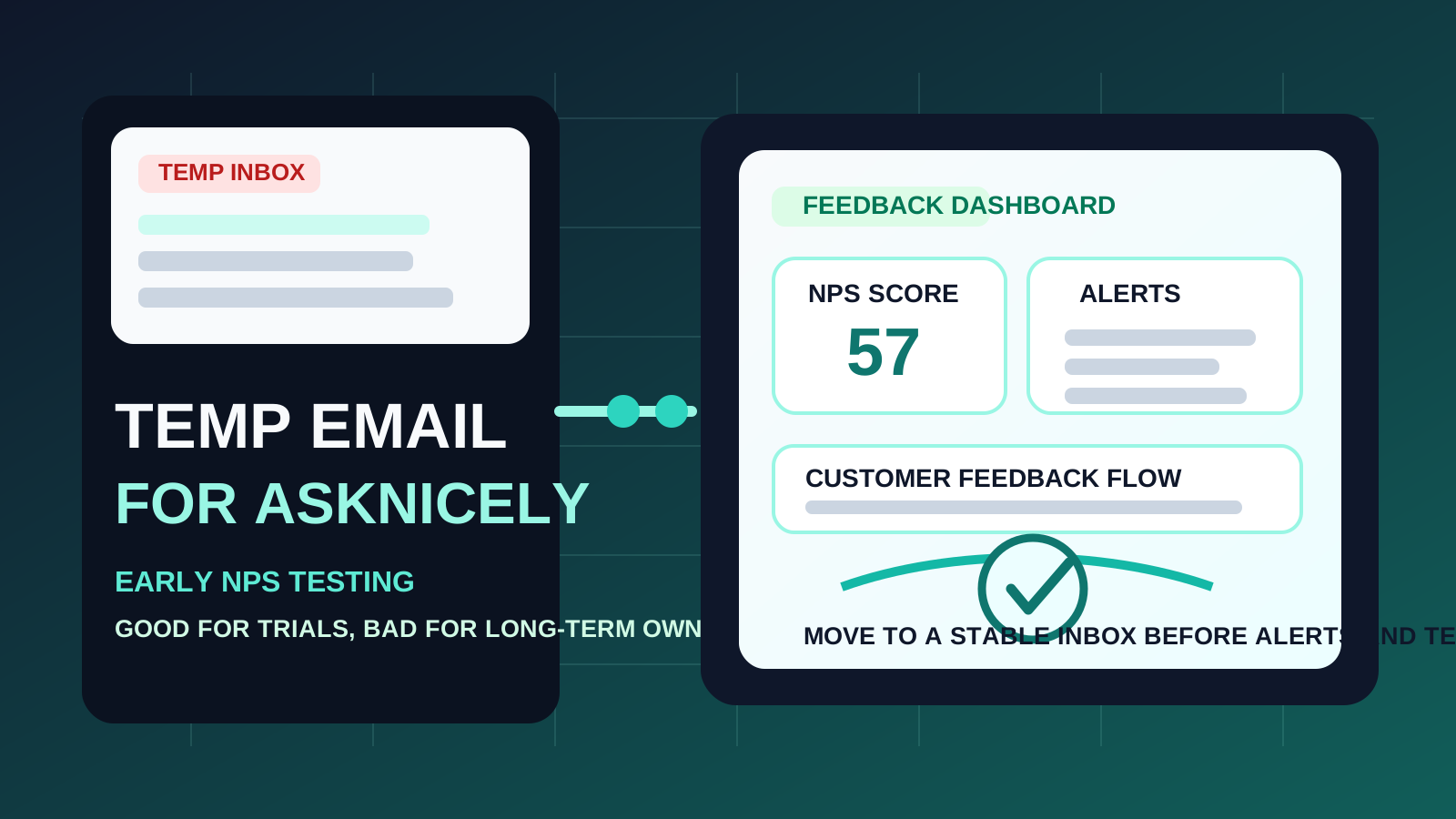
AskNicely sits in a category where teams often want to test quickly before they commit. Maybe you are checking the signup flow, comparing customer feedback platforms, reviewing how notifications feel, or seeing whether the product fits your service or CX process. That first phase is exactly where a temporary inbox can make sense.
Instead of attaching another trial to the address your team already depends on every day, you can isolate the evaluation. You still receive verification messages, welcome emails, and setup prompts, but you avoid turning your main inbox into a museum of tools you trialed once and never adopted. That is the practical value of a temporary inbox here.
The catch is simple: the more real the workspace becomes, the worse disposable email looks. A test account is one thing. A live feedback system that sends alerts, stores ownership, and controls admin recovery is something else entirely.
Why people look for a temp email for AskNicely
Feedback software creates a specific kind of inbox clutter. It is not just one confirmation email. You may get onboarding sequences, feature tours, best-practice guides, webinar invites, product updates, and prompts to complete setup. If you are comparing several customer feedback or survey tools at once, that noise adds up fast.
That is why temporary email feels attractive. It gives you a buffer between “I am evaluating this product” and “this vendor now has my long-term contact path.” When used carefully, that separation is useful. It lets you test without overcommitting.
On a site like Anonibox, the smarter pattern is not using a temp inbox forever. It is using one deliberately during the short evaluation phase, then switching to a stable inbox before the account becomes operational.
When a temp email makes sense for AskNicely
A temporary inbox is a reasonable choice when the account is clearly experimental, low stakes, and short lived. Common examples include:
- Checking the signup and verification flow: you want to see how quickly you can get into the product and what the first messages look like.
- Comparing feedback tools: you are reviewing AskNicely alongside options like GetFeedback, Delighted, Survicate, or Qualaroo.
- Running a sandbox test: you want to inspect setup, notifications, and workflow structure before deciding who should really own the account.
- Protecting your main inbox: you do not want another vendor trial feeding long nurture sequences into the email account your team already monitors constantly.
- Evaluating fit before sharing access: you want to see whether the tool is promising before inviting teammates or attaching a real department inbox.
In those situations, the account is supporting research rather than business-critical work. That is exactly the window where temporary email is most helpful.
What temporary email actually helps with
It helps to be realistic here. A temp inbox is not a magic privacy shield and it does not solve weak passwords, unclear ownership, or messy access controls. What it does well is reduce clutter and delay unnecessary commitment while you are still figuring out whether the platform belongs in your stack.
Cleaner trial management
If you are testing several customer feedback products in the same week, a separate inbox keeps each trial self-contained. That makes it easier to compare onboarding quality, email frequency, and first-run experience without mixing everything into one crowded mailbox.
Better short-term privacy
Not every product needs your permanent work address on day one. When you are only exploring, it is reasonable to keep some distance until you know the tool is worth a deeper relationship.
Easier cleanup if the trial goes nowhere
If AskNicely does not make the shortlist, you can walk away cleanly instead of spending the next two months unsubscribing from product emails tied to an account you barely used.
Clearer boundaries between tests and real systems
A dedicated temporary inbox makes it obvious which accounts are experiments and which ones are real production systems. That distinction sounds small, but it prevents a lot of avoidable admin confusion later.
Where a temp email becomes risky
The common mistake is not using a temp inbox at the beginning. The real mistake is leaving it in place after the account starts to matter.
Customer feedback tools rarely stay static. A simple trial can become the place where response alerts arrive, team members get invited, admins manage settings, and operational ownership quietly settles in. At that point, the email behind the account is no longer just a signup detail. It becomes part of reliability.
You should not rely on a temporary inbox if it is tied to:
- the main workspace owner or long-term admin
- live customer feedback programs or real response notifications
- team invites, permissions, or shared access
- password resets and account recovery
- billing, contract, or renewal messages
- any production workflow where missing an email would create confusion or delays
Once the workspace controls something your team genuinely cares about, continuity matters more than the convenience of a throwaway address.
Temp email vs a dedicated project inbox
These are not the same solution. A temp inbox is good for quick evaluation, side-by-side comparison, and low-commitment testing. A dedicated permanent project inbox is better for long-term ownership, recovery, shared responsibility, and vendor communication.
For many teams, the right answer is using both at different stages. Start with temporary email when the goal is just to test. Move to a monitored long-term inbox once the platform survives the shortlist and starts looking real. That way you get the privacy and cleanup benefits early without building production habits on a disposable foundation.
How to use a temp email for AskNicely without causing future problems
1. Decide whether the account is truly disposable
Before you sign up, ask the honest question: is this just a quick evaluation, or is there a real chance this exact workspace could become the one your team keeps? If it might become production, starting with a permanent inbox is often the safer move.
2. Keep one inbox per experiment if possible
Reusing the same temporary inbox across too many unrelated trials makes everything messier. Verification emails overlap, setup notes get harder to track, and it becomes less clear which product generated which follow-up. One inbox per test is cleaner.
3. Save the messages that matter early
During evaluation, the important emails are usually simple:
- the verification link
- welcome or setup instructions
- anything helpful for comparing onboarding quality
- details you may need if you recreate or update the account later with a permanent inbox
Temporary inboxes are useful because they are lightweight, but that also means they should not be treated like permanent archives.
4. Test deliberately while the temp inbox is attached
If you are going to use a temp email, make that short window count. Instead of just confirming that the account works, check what actually matters:
- how clear the signup and verification flow feels
- whether the early onboarding is helpful or noisy
- what kind of email notifications appear first
- whether the product seems to fit the way your team handles customer feedback
- how it compares with alternatives you are evaluating
This is the best use of temporary email: faster first-pass testing with less inbox pollution.
5. Switch before inviting teammates
The safest handoff point is before the workspace becomes collaborative. Once other people depend on the account, keeping a disposable inbox in the owner position creates risk for no real benefit.
When a permanent inbox is the better choice
Skip the temp-email step and start with a stable address if any of these are already true:
- you expect to keep the workspace beyond a short trial
- real customer responses or alerts will come through the account
- you want dependable recovery later
- you are inviting teammates or assigning admin roles
- the account may be tied to billing or ongoing vendor communication
Once one of those conditions is true, the convenience of disposable email is usually smaller than the ownership headache it creates later.
Common mistakes to avoid
- Letting a trial quietly become production: this is the classic failure mode. The account starts as a test, then ends up owning something real.
- Waiting too long to switch: if the tool clearly looks promising, move to a permanent inbox early instead of telling yourself you will fix it later.
- Ignoring recovery flows: the first verification email is not the only one that matters. Reset and security emails often matter more over time.
- Reusing one inbox for too many products: what feels convenient at first turns into a messy comparison trail later.
- Optimizing only for privacy and not continuity: inbox hygiene matters, but durable control over the account matters too.
A simple workflow that usually works
- Use a temp inbox for first-pass evaluation.
- Verify the account and review the initial onboarding.
- Test the core feedback workflow in one focused session.
- Decide quickly whether the platform is disposable to you or strategically useful.
- If it is useful, recreate or update the account with a permanent inbox before team access, billing, or recovery become important.
That approach gives you the practical benefits of temporary email without pretending it is the right long-term admin strategy for a customer feedback workspace.
Final takeaway
A temp email for AskNicely is a smart move when you want to test signup, compare feedback software, and review early NPS workflows without handing over your main inbox too early.
Once the account starts handling real notifications, shared access, or anything you would hate to lose later, move to a permanent inbox. Temporary email is great for the trial stage. It is a weak foundation for production ownership.