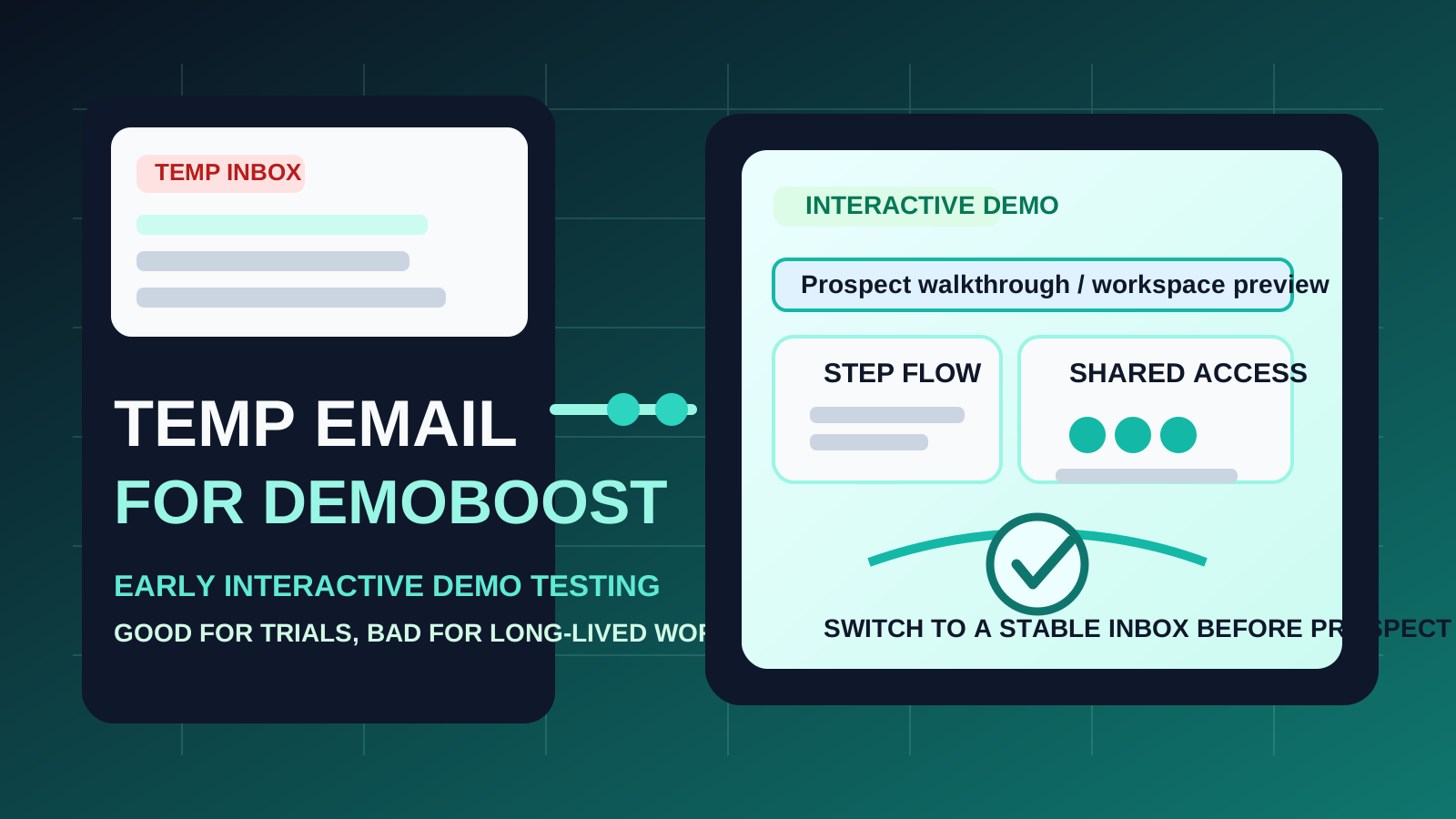
A temp email for Demoboost is useful for early interactive demo testing, quick vendor comparison, and low-stakes account setup.
It becomes a risky choice once shared workspaces, prospect-facing demo links, or account recovery start to matter.
If you are evaluating demo software, it is easy to understand the appeal of a disposable inbox. You want to see the product, confirm the account, click through the onboarding, and decide whether the tool is worth your time without giving every vendor permanent access to your main inbox. That is especially true when you are comparing several platforms in the same week and do not want a flood of follow-up campaigns, webinar invites, and “just checking in” sales emails filling your work account.
Demoboost fits that pattern well. Someone exploring interactive demo software may only need enough access to inspect the builder, review how demo flows are organized, test the first-run experience, and compare it against nearby tools such as Storylane, Navattic, Walnut, or Reprise. In that first stage, a temp inbox can be practical. The risk appears later, when the account stops being a throwaway trial and starts turning into a real workspace with reusable assets, shared access, and prospect-facing links.
When a temp email for Demoboost makes sense
There are a few situations where using a temporary email is completely reasonable.
- Early product comparison: you are evaluating multiple interactive demo tools and want to keep each trial separate.
- Inbox protection: you want the confirmation message and first onboarding steps without inviting long-term vendor email into your primary account.
- Low-stakes testing: you mainly want to inspect the interface, understand the setup flow, and see whether the product feels usable.
- Short-lived research: you are not yet building a real demo library, sharing assets with teammates, or relying on the account to support active deals.
This is the best use case for a service like Anonibox. A temporary address helps you get through the sign-up gate, collect the initial messages, and keep early research cleanly separated from the inbox you depend on for actual work.
Why people use temporary email during demo-software trials
Demo platforms usually do not stop at one verification message. Once you sign up, you may receive onboarding checklists, feature spotlights, template suggestions, customer stories, calendar prompts, product-update announcements, and sales follow-ups. None of that is unusual, but it adds up quickly when you are reviewing several vendors at once.
A disposable inbox helps in three ways:
- It keeps evaluation tidy. You can isolate one vendor from another instead of mixing everything into your daily inbox.
- It reduces pressure. You can assess the product before deciding whether the vendor deserves your long-term contact information.
- It makes comparison easier. You can focus on the product experience rather than the marketing sequence attached to it.
That is useful, but it only stays useful while the account itself remains temporary in spirit. Once the account begins to matter, your email choice needs to matter too.
Where disposable email becomes risky
Demoboost is not just another newsletter sign-up. It is the kind of product that may hold reusable demos, team workflows, and assets that could end up in front of prospects. That changes the risk calculation.
1. Shared workspaces need continuity
If the account may become a real workspace, the email behind it needs to be reliable. A throwaway inbox is fine for solo exploration, but it is not a great foundation for an environment that multiple people may revisit later.
2. Prospect links can outlive the trial stage
Interactive demo platforms often produce links or assets intended for buyers, prospects, or internal stakeholders. If you create something useful and later need to edit, duplicate, or recover it, a disposable inbox can become an obstacle instead of a convenience.
3. Account recovery is the obvious weak point
The first login is rarely the real problem. The trouble usually shows up later when you need to reset a password, confirm a change, or regain access after a few weeks of inactivity. Temporary inboxes are great until the service assumes you still control them.
4. Team invites and ownership create friction
Once coworkers, contractors, or sales teammates enter the picture, the account is no longer a casual experiment. Ownership, permissions, billing conversations, and admin changes are all much easier when the account is tied to a permanent inbox you control long term.
A simple rule of thumb
Use a temp email for Demoboost if you are evaluating the product. Do not use one if you already expect the account to become part of a real demo workflow.
That rule sounds obvious, but it prevents most of the headaches people create for themselves. Temporary inboxes are good for privacy, speed, and noise reduction. Permanent inboxes are better for continuity, team coordination, and recovery. Problems begin when you use a disposable address for an account that is no longer disposable.
How to use a temp email for Demoboost without making a mess
1. Decide whether this is research or real setup
Before signing up, be honest about your goal. If you only want to see how the product feels, compare it to alternatives, and decide whether it deserves a deeper look, a temp email is reasonable. If you already know the platform might become part of your sales or onboarding process, start with a stable email instead.
2. Save the messages that matter
During early evaluation, you usually only need a small handful of emails:
- the verification message
- the initial welcome or onboarding links
- any setup notes that help you compare the trial experience
- information you may want later if you recreate the account properly
Do not assume you will remember everything or still have the temporary inbox later. Capture what matters while the account is fresh.
3. Test with a clear checklist
A temporary email is most useful when you move through the product deliberately. For example, you might check:
- how quickly you can get from signup to a usable first demo
- whether the interface feels intuitive for non-technical teammates
- how the workspace is organized
- whether the product supports the kind of guided flow you actually need
- how easy it is to imagine using it in a real prospect or onboarding context
That keeps the trial honest. You are using the disposable inbox to reduce clutter, not to create a half-finished workspace you forget about.
4. Switch early if the tool proves useful
The best time to move to a permanent address is before the account matters, not after. If Demoboost clearly belongs on your shortlist, make the switch while the setup is still simple. Waiting until there are shared assets, internal links, or team invitations involved only makes the cleanup harder.
When a permanent email is the better choice
Start with a stable email address if any of these are true:
- you expect to keep using the account beyond an initial trial
- you plan to build demos that may later be reused or shared
- you want a dependable recovery path
- you expect to invite coworkers, sales reps, or client-facing teammates
- the account may eventually own prospect-facing assets or workflow history
In those cases, the convenience of a disposable inbox is smaller than the long-term control you give up.
Realistic examples
Example 1: comparing interactive demo tools on one afternoon
You want to open a few trial accounts, inspect the builder experience, and decide which platform deserves a deeper evaluation. A temp inbox is a smart fit here. You get the access you need without adding another long email sequence to your main account.
Example 2: testing as a solo operator
If you are exploring on your own and do not expect to keep the account, disposable email can still make sense. Just make sure the account stays disposable too. Do not quietly let a temporary test turn into the place where you store valuable demo assets.
Example 3: building demos for a real pipeline
This is where the disposable approach usually stops making sense. If the workspace may support active selling, onboarding, or shared review, treat the account as real from the beginning and use a permanent inbox.
Common mistakes to avoid
- Using a throwaway inbox for a non-throwaway account: the most common mistake is creating something valuable in an account you cannot reliably recover.
- Waiting too long to switch: if the trial becomes useful, move early instead of promising yourself you will fix it later.
- Thinking only about spam: inbox clutter matters, but so do ownership, recovery, and team access.
- Ignoring prospect exposure: demo links and assets may have a longer life than the original test account.
- Mixing evaluation with production behavior: if your actions show the account matters, your email choice should match that reality.
A practical evaluation workflow
- Use a temporary inbox for first-pass evaluation.
- Verify the account and review the first-run onboarding.
- Test the core interactive demo workflow in one focused session.
- Decide whether the platform is a disposable experiment or a serious contender.
- If it is a real contender, recreate or update the account with a permanent email before shared workspaces and prospect links matter.
This gives you the privacy benefit without pretending that disposable email is the right answer for every stage of product adoption.
Final takeaway
A temp email for Demoboost is helpful when you want fast access for early interactive demo testing, quick comparison, and less inbox noise.
It becomes a bad long-term fit once the account may hold reusable demos, team access, prospect-facing links, or any workflow you might need to recover later. Use a temporary address for the trial phase, then move to a stable inbox before the account starts carrying real weight.