A temp email for Fourthwall can be useful for early creator-store testing, first-pass signup privacy, and keeping your main inbox out of another storefront funnel.
It becomes risky once real orders, receipts, shipping updates, customer notifications, or account recovery depend on that inbox.
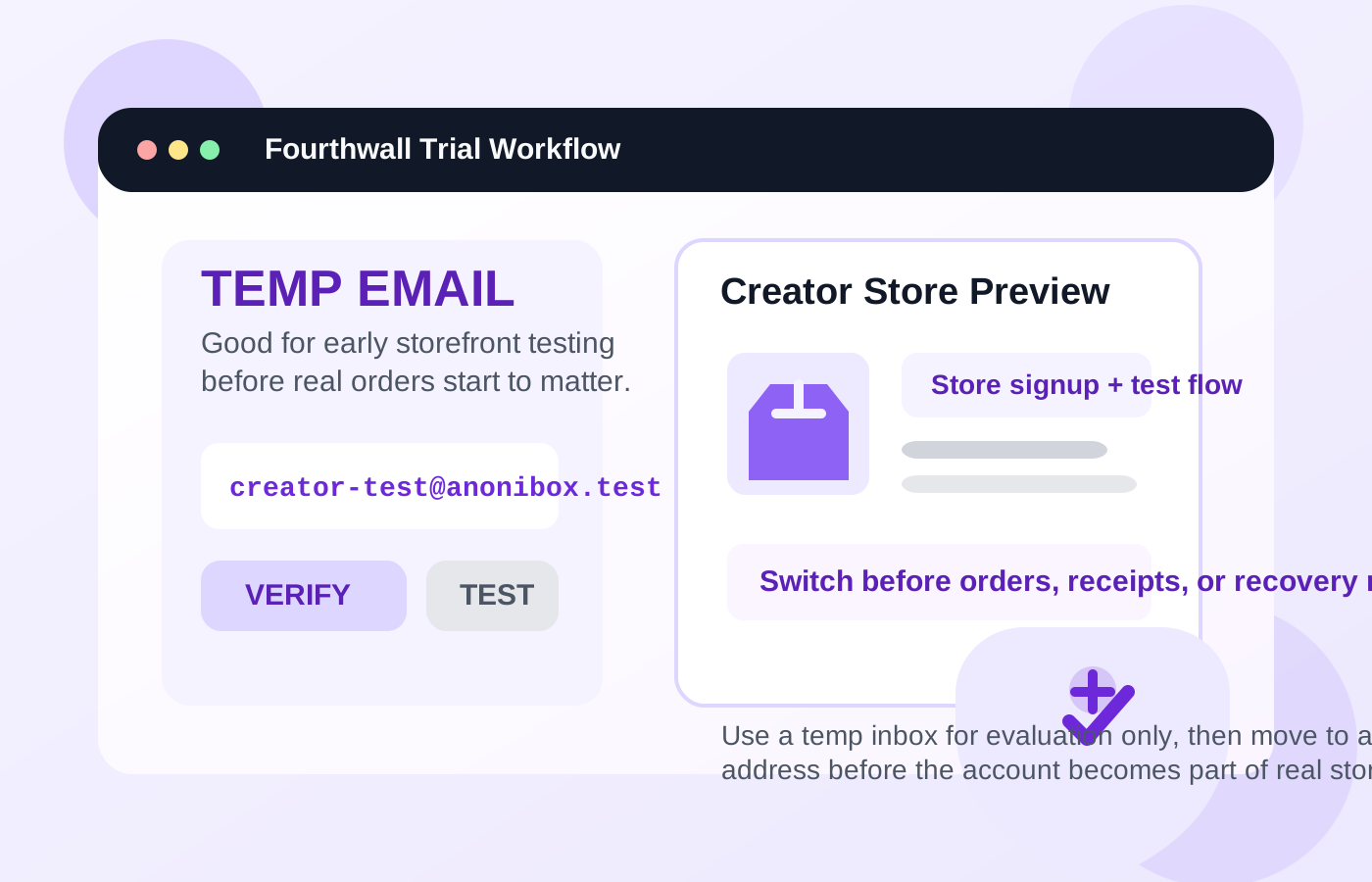
When a temp email for Fourthwall actually makes sense
Fourthwall sits in the same tricky category as other creator-commerce platforms: it can start as a casual test and then quietly become a real account with real consequences. At the beginning, you may only want to inspect a storefront flow, test a creator-side setup, or claim a one-off freebie without turning your personal inbox into a permanent destination for promo messages.
That is where a temporary inbox can help. If you only need the first confirmation email, a first login link, or a little breathing room while you evaluate whether the platform matters to you, a tool like Anonibox can be a practical filter.
- Testing a creator storefront: You want to see how signup, onboarding, and first emails work before committing your long-term address.
- Checking a creator tool as the store owner: If you are comparing storefront platforms, a temp inbox can keep early trial clutter out of your main work email.
- Separating low-stakes experiments from real operations: Sometimes you only want to explore the interface, not build a permanent relationship with the platform yet.
- Reducing inbox noise from early-stage creator tools: Creator platforms often lead to follow-up sequences, product prompts, setup nudges, and marketing emails you may not want long term.
In short, temporary email works best when the account is still disposable in the plain-English sense. If losing the inbox tomorrow would not matter, using a short-lived address can be reasonable.
Where temporary email starts to become a bad idea
The problem is not the first email. The problem is everything that might come later.
Once a Fourthwall account becomes tied to real storefront activity, temp email stops being a privacy tool and starts becoming a weak point. The inbox may end up connected to order confirmations, purchase receipts, product-access messages, support replies, account security notifications, or recovery links. That is fine when the inbox is stable and under your control. It is a headache when it is disposable.
- Order receipts: If you buy something or sell something, receipts may matter later for support, bookkeeping, or proof of purchase.
- Shipping or fulfillment updates: Even if you do not think you will need them, order-status messages can suddenly matter when something goes wrong.
- Account recovery: Password resets and ownership verification are much easier when the email address is durable.
- Customer communication: If the account becomes part of a real creator-business workflow, losing the inbox can mean losing context.
- Ongoing product access: Digital items, gated content, or future updates are safer when attached to an address you actually control.
The basic rule is simple: temporary email is good for testing, weak for ownership.
If you are a shopper versus if you are a creator, the answer changes
If you are browsing or buying from a creator
If you are only looking around, checking a storefront, or making a low-stakes first pass, a temp inbox can make sense. It keeps your primary email away from yet another store sequence while still letting you verify the first step.
But once you place a real order or expect to need updates later, the calculation changes. Shipping notices, receipts, support replies, and account resets are not spam. They are part of the transaction. That is when a durable inbox becomes more useful than a disposable one.
If you are the creator testing Fourthwall
Creators need to be even more careful. A temporary inbox can be fine for the earliest evaluation stage, but it should not remain attached to anything important for long. Once your store becomes real, your inbox becomes operational infrastructure.
You may need it for platform alerts, security notices, order-related communication, payment-related messages, and general account ownership. Building a real store on top of a fragile inbox is a classic “future me will hate this” move.
A better creator workflow usually looks like this:
- Use a temp inbox only for the earliest platform test if you want to keep evaluation noise separate.
- Review the onboarding flow, setup steps, and first emails.
- Save anything important right away.
- Switch to a monitored permanent address before you launch the store, connect customers, or rely on the account.
That gives you the privacy benefit early without making the email layer brittle later.
The safest way to use a temp email for Fourthwall
If you want the upside without the obvious downside, do not treat the choice as permanent. Use temp email as a stage, not as the final state.
1. Decide whether this is only a test
Before you sign up, ask yourself whether this account is truly experimental. If you already suspect you may keep the account, launch a store, place a real order, or need support later, using a permanent inbox from the start may save you friction.
2. Keep the temporary use narrow
Use the temp inbox only for the first verification step, a quick look at the workflow, or a basic product test. The wider the account becomes, the weaker the temporary-email choice becomes.
3. Save what matters immediately
If a message contains a setup link, important confirmation, or reference you might need later, save it right away. Do not rely on a short-lived inbox to behave like permanent storage.
4. Switch before the account becomes valuable
The best time to replace the temp inbox is before real money, real customers, or real access depend on it. Waiting until after a problem appears is much worse.
5. Use a separate long-term inbox if privacy still matters
Sometimes the real need is not “throwaway.” It is “separate.” A dedicated creator-economy or shopping inbox can protect your main address without sacrificing recovery and continuity.
Common mistakes to avoid
- Using a temp inbox for a real purchase: then later needing a receipt, support thread, or order confirmation.
- Leaving the temp address in place after a test becomes real: the account gains value, but the inbox never graduates.
- Assuming every message is just marketing: some are, but some are the exact messages you need later.
- Forgetting that recovery matters: account resets are easy to ignore until you suddenly need one.
- Confusing privacy with disposability: a separate controlled inbox often gives better long-term privacy than a truly temporary one.
A better alternative for most serious use cases
If your real goal is privacy without chaos, a permanent secondary inbox is usually the stronger option. It keeps creator-store activity out of your main personal email while still preserving order history, support continuity, and recovery access.
That might mean one inbox for creator platforms, one for online purchases, or one just for software and storefront experiments that you actually want to keep if they turn into something real. The key difference is control. You own it, you monitor it, and you can recover accounts through it later.
Anonibox and other temporary-email tools are still useful. They are excellent for filtering low-stakes signups. They are just not the best foundation for anything that may become financially, operationally, or personally important.
Quick checklist before you use a temp email on Fourthwall
- Am I only testing the platform or storefront?
- Would I care if I lost access to this inbox next week?
- Could I need receipts, support replies, or order updates later?
- Am I about to make this account part of a real customer or creator workflow?
- Would a separate but permanent inbox solve the privacy problem better?
If the account is low stakes and temporary, a temp inbox can work well. If the account is about to matter, switch to something durable before you regret it.
Final answer
Using a temp email for Fourthwall is smart when you are only doing early creator-store testing, first-pass signup checks, or trying to avoid more long-term inbox clutter during evaluation.
It becomes a bad idea once real customers, receipts, order updates, account recovery, or ongoing store activity enter the picture. Use temporary email for the trial phase, then move to an address you actually control before the account becomes important.
That is the cleanest balance between privacy and practicality.