A temp email for MojoAuth is useful for early passwordless auth testing, signup verification, and first-pass evaluation, but a permanent inbox is the safer choice once production users, admin ownership, or account recovery start to matter.
If you only need to open a test tenant, inspect the workflow, and see how MojoAuth handles magic links, OTP-style email flows, or early onboarding, a temporary inbox can keep your real address out of one more vendor sequence. Once the account becomes important to a team or a live product, though, that convenience stops being worth the risk.
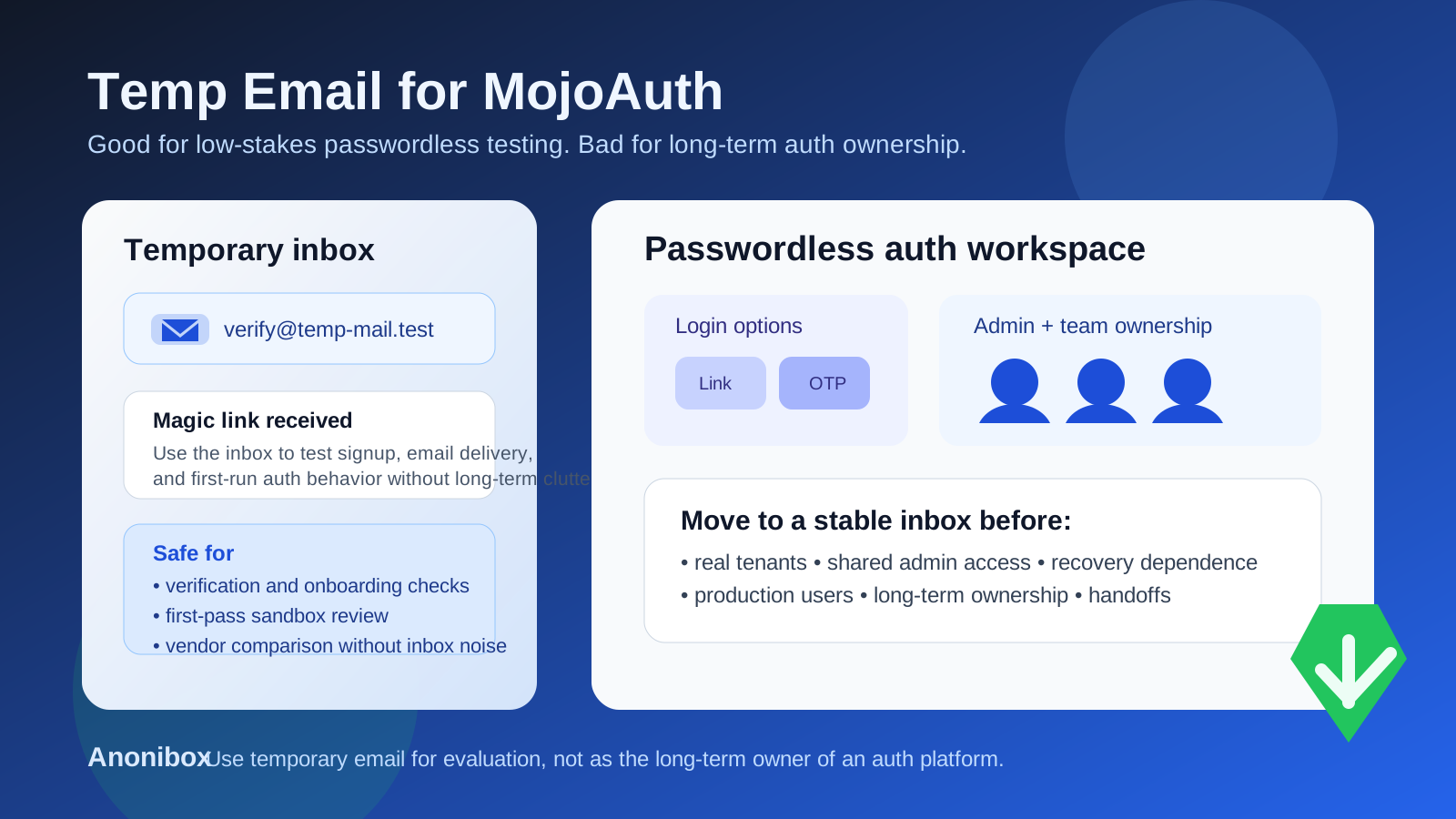
That trade-off is why people look for a temp email for MojoAuth in the first place. Identity and authentication tools often ask for email immediately because email is part of the product itself. It may be needed to create a workspace, verify ownership, invite teammates, test email-based sign-in, or review how the platform handles user flows. If you are comparing several auth products at once, your main inbox can get cluttered quickly.
Using a disposable address through a service like Anonibox can make that early research cleaner. You can receive the welcome email, click the first verification link, and judge whether the platform feels worth deeper attention without committing your main work address before you are ready. The key is keeping that use narrow and intentional.
Why someone would use a temp email for MojoAuth
Most people are not trying to be secretive. They are trying to stay organized. Identity vendors, developer tools, and SaaS infrastructure products often trigger onboarding messages, follow-up emails, feature announcements, and demo nudges as soon as you sign up. That is normal, but it becomes noisy if you are evaluating multiple tools in the same week.
A temporary inbox gives you a buffer between early curiosity and long-term commitment. It helps when you want to:
- open a trial or sandbox without routing everything into your main inbox immediately,
- test basic email verification or magic-link behavior,
- compare several identity or passwordless vendors side by side,
- separate low-stakes evaluation from the inbox your team actually relies on, and
- avoid carrying months of vendor follow-up after a short test that goes nowhere.
For that narrow use case, temporary email is practical rather than dramatic. It is just good inbox hygiene.
When a temporary inbox makes sense for MojoAuth
1. You are doing a first-pass product review
If the account exists only so you can look around the dashboard, understand the setup flow, and decide whether the product belongs on a shortlist, a disposable inbox is usually fine. At that stage, you are still in exploration mode, not operational mode.
2. You want to test signup and verification behavior
Email is often part of the product experience with auth platforms. You may want to see how fast verification arrives, how the email template looks, or whether a magic-link flow behaves the way you expect. A temporary inbox can be enough for that kind of mechanical testing.
3. You are comparing several auth vendors at once
Teams rarely evaluate identity tools one by one in total isolation. They might compare MojoAuth with other products that cover passwordless login, CIAM, SSO, passkeys, or developer-friendly authentication flows. Giving each vendor its own separate inbox can make the early evaluation less messy.
4. You only need a low-stakes sandbox
If you are spinning up a throwaway environment to check the admin UI, sample workflows, or basic developer experience, the temporary address can match that temporary purpose. The main rule is simple: keep temporary access tied to temporary work.
When a temp email becomes a bad idea
The problem is not using a temporary inbox for twenty minutes. The problem is forgetting to replace it after the account stops being disposable.
1. The tenant is becoming real
Once the environment starts looking like something your team may actually keep, ownership matters. If the inbox behind the account disappears or becomes inaccessible, you can end up with recovery trouble, admin confusion, or a handoff headache later.
2. Teammates are being invited
Shared admin access changes the risk profile. The moment more than one person depends on the workspace, the owner email should be a durable address that someone is truly responsible for monitoring.
3. Production users or customer-facing flows are involved
A temporary inbox is fine for isolated testing. It is the wrong foundation for live authentication. If real users, real applications, or real support consequences are attached to the account, the login email is no longer a throwaway detail.
4. Account recovery matters now
Recovery feels abstract until the day it is needed. Password resets, admin ownership transfers, billing-related messages, security alerts, or critical notices lose their value if the original inbox was never meant to last.
A smart workflow for using temp email with MojoAuth
Start with a narrow goal
Know why you are using the temporary inbox before you sign up. Maybe you want to verify the dashboard, test the welcome flow, or inspect how an email-based sign-in journey feels. That is good. Temporary email works best when the task is concrete.
Keep early testing low stakes
While the account is tied to a disposable inbox, avoid building real dependency around it. Do not treat it as your future production owner account by accident. This is the stage for observation, not for durable setup.
Evaluate the product, not just the email flow
It is easy to get distracted by whether the verification message arrived. The bigger questions are more important: does the admin experience make sense, do the workflows feel predictable, and would you trust the platform enough to keep evaluating it? The inbox only opens the door; it should not become the whole evaluation.
Switch to a permanent inbox early if the platform survives the first cut
If MojoAuth looks promising, move the account to an address your team actually controls before the tenant grows roots. Early migration is much easier than trying to unwind ownership after multiple people rely on the workspace.
Use a stable address for anything shared or durable
That might be an engineer’s real work address, a monitored product inbox, or a team-owned mailbox used for vendor trials. The important thing is stability, not ceremony.
What to evaluate during an early MojoAuth trial
If you are going to use a temporary inbox, make the session count. A useful first-pass review usually includes questions like:
- How clear is the onboarding for a new tenant or project?
- Are email-based sign-in or verification flows easy to understand?
- Does the dashboard feel approachable for the people who would actually manage it?
- Would the product fit your authentication model, or are you forcing a mismatch?
- Is the platform’s follow-up helpful, or does it become noise immediately?
- If the evaluation continues, is there an obvious path to stable ownership and team administration?
Those questions tell you much more than simply proving that one verification email landed successfully.
Common mistakes people make
Letting a throwaway login become the default owner account
This happens all the time with infrastructure and developer tools. Someone signs up casually, the product looks interesting, a few settings get configured, then the account quietly becomes important. Weeks later, nobody wants to deal with the original disposable inbox choice. Avoid that by switching early if the platform matters.
Inviting teammates too soon
If you are still using a temporary inbox, keep the account personal and exploratory. Team invites are usually the moment when a harmless experiment turns into a shared dependency.
Confusing inbox privacy with operational safety
A temporary inbox helps you avoid clutter and oversharing during evaluation. It does not solve governance, admin continuity, recovery, or long-term accountability. Those need a real email address under real control.
Ignoring the difference between testing and production
Early auth testing is exactly where disposable email can be useful. Production identity systems are exactly where it should stop. Mixing those two phases creates avoidable problems later.
Should you use a temp email for MojoAuth?
Yes, if your goal is a genuine first-pass evaluation. A temporary inbox is a reasonable way to test signup flow, inspect passwordless email behavior, and keep your main mailbox cleaner while you decide whether MojoAuth deserves deeper review.
No, if the account is turning into something durable. Once team access, customer-facing login, admin recovery, or long-term ownership enter the picture, switch to a permanent address before the temporary setup becomes a liability.
Final takeaway
A temp email for MojoAuth is best treated as an evaluation tool, not a permanent identity strategy. It can help you test early workflows, reduce inbox clutter, and compare vendors without committing your primary address too early.
That said, the moment the tenant starts to matter operationally, move to a stable inbox your team actually owns. That keeps the convenience of a low-friction first look without creating future headaches around admin access, recovery, and shared responsibility.