A temp email for Permit.io can be useful for early authorization testing, trial signup, and sandbox work. It becomes risky once production policy ownership, shared admin access, security notices, or account recovery depend on that inbox.
If you are only validating a hosted account, opening a short-lived proof of concept, or comparing authorization tools side by side, a disposable address can keep your main inbox cleaner. But if you expect the account to outlive a quick evaluation, you should move to a durable address before important workflows start hanging off the account.
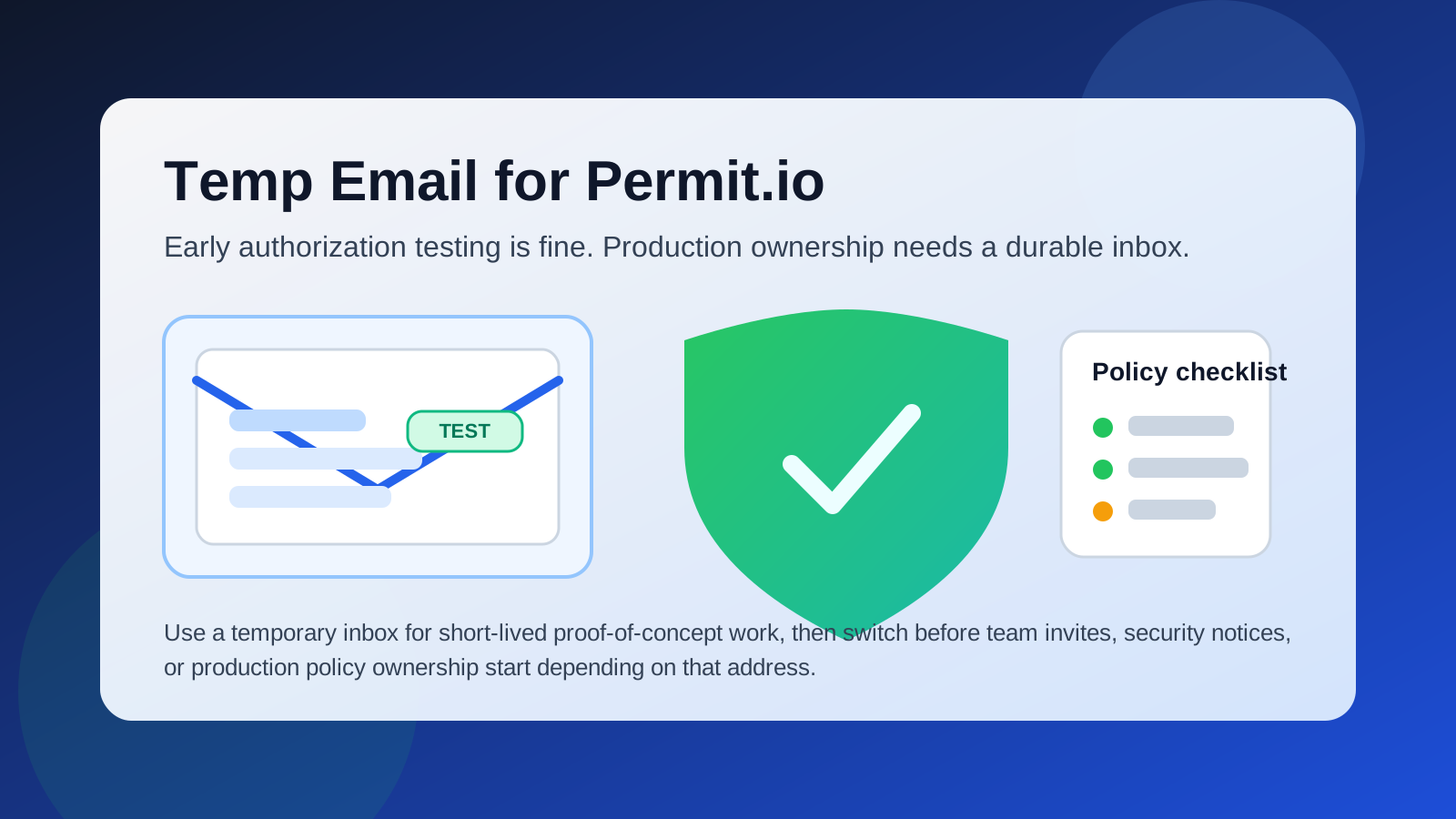
Why someone would use a temp email for Permit.io in the first place
Authorization platforms often sit early in architecture evaluations. A developer, founder, or platform engineer may want to see how account setup feels, what the dashboard looks like, how onboarding emails are handled, and whether the product fits a test app before involving the rest of the team. That is a completely different situation from committing the tool to a long-term production workflow.
In that early phase, a temporary inbox can be practical. It lets you receive the verification email, explore the first-run experience, and avoid adding another long nurture sequence to your everyday work inbox before you even know whether the product is a serious contender. If you are testing several identity and access tools in the same week, that separation can make the evaluation feel much less noisy.
This is especially relevant when the signup is only there to unlock a hosted trial, demo environment, or proof-of-concept workspace. In that situation, the inbox is just a door into the product. It is not yet the long-term owner of a real environment.
When a disposable address usually makes sense
A temp email is usually reasonable when your goal is narrow, short-lived, and low-risk. That includes:
- First-look evaluation: you want to inspect the hosted signup flow and basic dashboard before deciding whether the tool deserves deeper time.
- Solo sandbox testing: you are experimenting alone with sample apps, role models, or policy ideas that are not tied to a live production team.
- Vendor comparison work: you are comparing Permit.io with adjacent auth or authorization products and do not want every trial to keep marketing to your main inbox forever.
- Inbox hygiene: you want onboarding messages, welcome emails, and follow-up sequences to stay separate until the tool proves useful.
If that is your use case, a temporary address can be a sensible filter rather than a permanent communication strategy. Tools like Anonibox are most useful in exactly this stage: you get the confirmation email you need, but you do not instantly hand a permanent address to every experiment.
Where a temp email starts becoming a bad idea
The risk changes as soon as the Permit.io account becomes important rather than merely interesting. Once the environment holds real ownership value, a throwaway inbox stops being convenient and starts being fragile.
1. Production policy ownership
If the account is connected to real authorization rules, real tenants, or real application decisions, the owner email matters. You do not want a critical environment anchored to an address you cannot reliably revisit later.
2. Shared team access
The moment you invite teammates, admins, or stakeholders, the account is no longer a private experiment. People will assume the owner can receive security notices, ownership updates, and recovery messages. A temporary inbox is weak glue for a shared system.
3. Security and recovery workflows
If password resets, suspicious-login alerts, admin-verification steps, or other important account messages go to a disposable inbox, recovery becomes unnecessarily brittle. Even if nothing goes wrong today, you are creating future friction for yourself.
4. Long-running staging or pre-production environments
Many teams say an environment is “just for testing” and then keep it around for months. Once that happens, the original disposable signup becomes technical debt. A stable inbox is much safer for anything that may survive beyond a quick demo week.
5. Billing, procurement, or audit expectations
If an account is heading toward paid use, internal approval, or documented governance, a throwaway address can create confusion. A durable work inbox is easier to hand over, document, and defend.
A practical rule of thumb
Use a temp email only while the account is disposable too. If you would be comfortable deleting the whole environment tomorrow, a disposable inbox can fit. If losing access would cause real pain, switch to a permanent address immediately.
That rule keeps the decision simple. The right inbox should match the importance of the environment behind it.
A safer workflow for evaluating Permit.io
If you want the convenience of a temporary inbox without making a mess later, this workflow is the safest middle ground.
- Use the temp address only for first signup. Limit it to the earliest validation step: registration, verification, and a short look around.
- Keep the project clearly marked as a test. Name it in a way that makes the temporary nature obvious, so nobody mistakes it for a production-ready environment.
- Decide quickly whether the trial is real or disposable. If Permit.io looks promising, move the ownership email to a durable address before inviting anyone else or wiring it into serious systems.
- Switch before team access expands. Do not wait until multiple people depend on the workspace. Make the email durable while the account is still easy to clean up.
- Store important setup notes outside the inbox. Do not assume the original verification email will always be available. Save any configuration notes you need in your own documentation.
This gives you the privacy benefit of a disposable inbox at the beginning, while avoiding the classic mistake of leaving a growing account attached to a fading address.
Should you use a temp email if you are testing auth and authorization flows end to end?
Sometimes yes, but be specific about what you are testing. If you are only checking whether signup works, whether a dashboard opens, or whether a sample environment is easy to create, a temporary inbox is fine. If you are testing a workflow that depends on long-term collaboration, admin continuity, or repeat access over time, it is better to use a stable address from the start.
This matters because auth and authorization tools often start as developer experiments and then quietly become infrastructure. What begins as “just a quick test” can turn into a shared dependency once a demo impresses the team. The inbox choice should anticipate that possibility.
What not to do
- Do not use a disposable inbox for the final owner account if the environment may become important.
- Do not invite teammates first and clean up later. That turns a simple evaluation shortcut into a coordination problem.
- Do not assume recovery will be easy. If the inbox disappears and a future security or ownership step needs it, you may have boxed yourself in.
- Do not treat “staging” as automatically low risk. Many staging environments end up carrying valuable settings, integrations, or institutional memory.
Temp inbox or dedicated work inbox?
If you already know the evaluation will last more than a day or two, a dedicated work inbox is often the better compromise. It gives you separation without fragility. You still keep vendor traffic out of your main personal inbox, but you retain reliable access for follow-up, ownership changes, and recovery.
That is often the best answer for teams that care about privacy but also know their tests tend to evolve into real projects. A disposable inbox is great for short-lived exploration. A dedicated work inbox is better for anything with a meaningful chance of survival.
Quick checklist before you decide
- Is this just a first-look signup, or could this workspace become long-lived?
- Will anyone besides you need access?
- Would losing the inbox make recovery painful?
- Are you likely to connect the account to real staging or production workflows?
- Do you mainly want privacy and inbox hygiene, or do you actually need a lasting owner account?
If most answers point to a short-lived solo test, a temp email is fine. If they point toward shared ownership, real environments, or ongoing accountability, use a stable address instead.
Bottom line
A temp email for Permit.io is a smart option for early authorization testing, hosted trial signup, and quick proof-of-concept work. It is not a smart long-term home for production policy ownership, team access, security alerts, or recovery.
The cleanest approach is simple: use a disposable inbox only while the account itself is disposable. Once the workspace becomes real, move to a durable address before the account becomes important enough to hurt when access goes sideways.