Yes, a temp email for Stoplight can be practical when you only want to verify a low-stakes signup, compare API design tools, or inspect the workspace without feeding more trial mail into your main inbox.
No, it is a poor long-term choice once shared workspaces, project ownership, account recovery, support replies, or team invites depend on that inbox still being available.
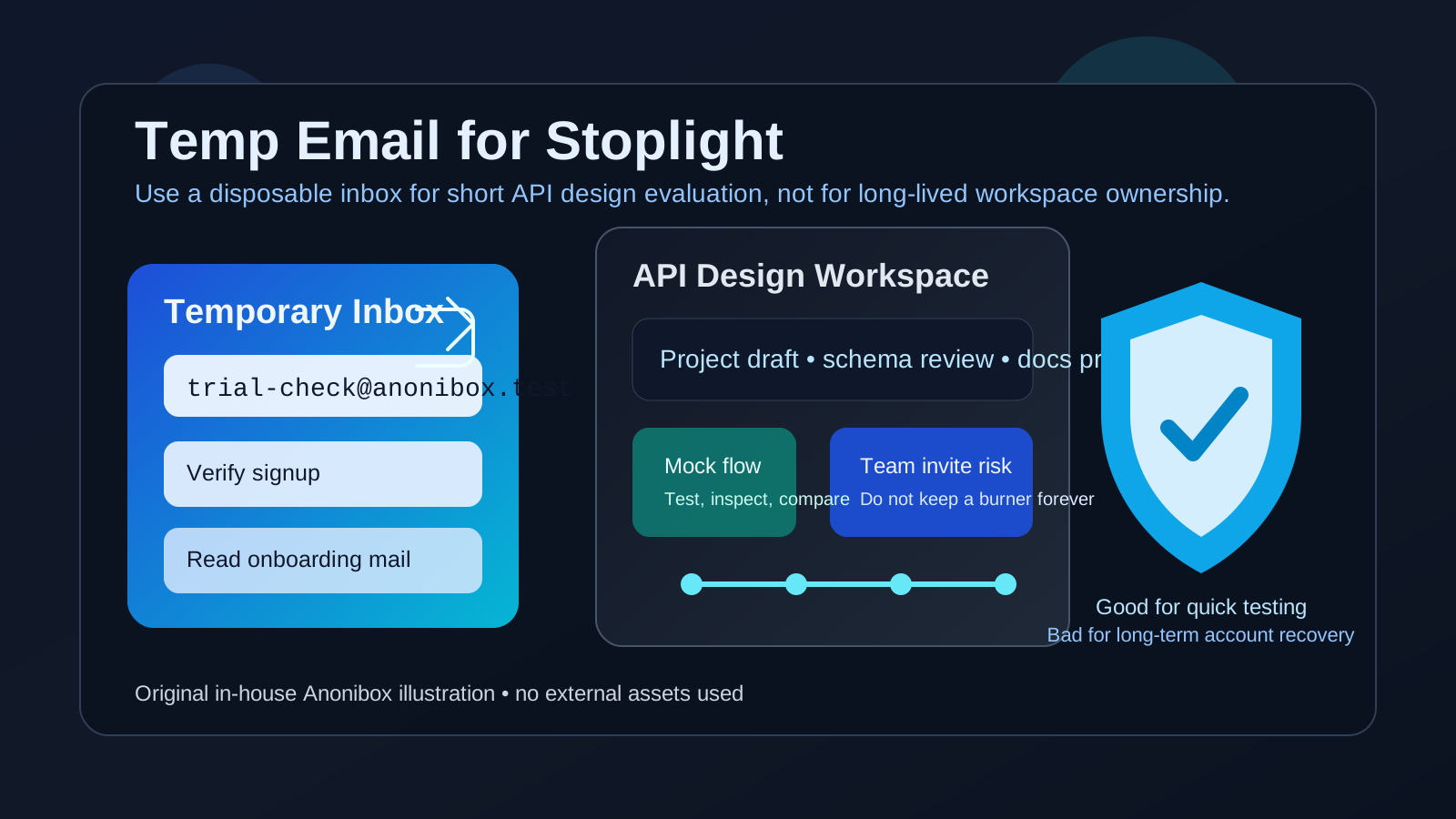
Developer-tool evaluations have a habit of turning into inbox clutter. One afternoon of comparing API platforms can produce a week of verification emails, welcome sequences, roadmap updates, webinar invites, pricing nudges, and follow-ups from products you only touched for fifteen minutes. That is usually the real reason people look for a temporary inbox here: not secrecy, just cleaner testing.
Stoplight fits that pattern well. Many people first arrive in research mode. They want to inspect how an API design workspace feels, see how documentation previews look, understand the review flow, and decide whether the product belongs on a real shortlist. In that early phase, a disposable inbox can be useful. The problem starts when a short experiment quietly becomes a real account.
When a temp email for Stoplight makes sense
There are a few situations where using a disposable address is perfectly reasonable.
- Quick product comparison: you are evaluating several API design or documentation tools and want each trial isolated from your permanent inbox.
- Low-stakes verification: you only need to confirm the account, open the workspace, and see whether the product is worth more attention.
- Early solo testing: nobody else depends on the account yet, and you are not planning to keep the project around if the tool disappoints you.
- Inbox hygiene: you want the welcome messages and vendor follow-up to stay out of your daily work email until you actually care.
- Disposable research: the account exists only to answer one question: does this tool deserve a real setup?
That is the safe zone. A temporary inbox lets you confirm the signup, read the first onboarding messages, and move quickly without giving every trial access to your long-term contact identity.
Why people look for a temp email here
Most people searching this are not trying to game anything. They usually want one of three things: less inbox noise, more privacy during evaluation, or a cleaner boundary between casual testing and production work.
That makes sense. API teams often compare tools in batches. One week you may be reviewing design platforms, documentation tooling, mock workflows, or collaboration features across several vendors. If every comparison feeds your main inbox, the communication overhead starts to outweigh the evaluation itself.
Using Anonibox or another disposable inbox for the first pass can fix that. You still get the confirmation message and onboarding email you need, but you keep the experiment separate from your durable work identity. That is useful as long as the account stays temporary in practice, not just in theory.
What you can safely do with a disposable inbox during early evaluation
If the account is truly short-lived, a temp inbox is usually fine for a narrow set of tasks:
- creating the initial account
- clicking the verification link
- reading the welcome or setup emails
- opening the workspace and testing the interface
- comparing the product against adjacent tools on your shortlist
That is plenty for a first-pass review. In many cases, you do not need anything more. The goal at this stage is not to build your permanent process. It is to decide whether the product deserves one.
When a burner inbox becomes a bad idea
The risk changes the moment the account starts holding anything you would be annoyed to lose.
Shared workspaces and team invites
If you are inviting teammates, collecting feedback, or giving other people a reason to rely on that account, the email should stop being disposable. Team collaboration has a way of turning a quick experiment into a living system, and disposable inboxes are bad foundations for that.
Long-lived project ownership
A throwaway address is fine for a trial project that you may delete tomorrow. It is not fine when the account becomes the owner of work you may revisit next month. Even if the tool itself performs well, your recovery path becomes fragile if the inbox disappears.
Support, notices, and account changes
Once a vendor starts sending messages you may genuinely need later, such as account notices, support replies, or plan-related communication, a temporary inbox stops being tidy and starts becoming a liability.
Account recovery
This is the boring risk people ignore until the day it matters. If you lose access, forget how you signed up, or need to confirm control of the account later, a disposable inbox can turn a minor annoyance into a dead end.
A better workflow than keeping the burner forever
The smartest approach is not “always use your main email” and it is not “always use a burner.” It is a staged workflow.
- Use a temp inbox for the first look. Keep low-stakes product evaluation separate from your permanent inbox.
- Decide quickly whether the tool is staying on the shortlist. If the answer is no, delete or abandon the trial and move on.
- Switch to a permanent address before the account becomes important. If the product survives the first cut, give it an inbox you actually control long term.
- Invite teammates only after that handoff. Avoid building collaborative workflow on top of a disposable identity.
- Store key account details somewhere sensible. Do not rely on memory for which inbox you used during a tool binge.
This gives you the best of both worlds: fast, low-noise evaluation at the start, and safer ownership once the product becomes real.
What to evaluate while the trial is still low-stakes
If you are going to use a temporary email for the first pass, make that pass count. Focus on practical questions instead of getting distracted by the signup flow.
- Does the workspace feel clear? You should be able to understand where drafts, references, and review steps live without hunting.
- Can your team realistically use the tool? A clean solo experience is not enough if collaboration feels awkward.
- Do the docs and previews feel usable? Early impressions matter because documentation tooling is often where daily friction shows up.
- Is the workflow opinionated in a helpful way? Good structure saves time; bad structure becomes ceremony.
- Would you trust yourself to revisit this account later? If yes, that is usually the moment to stop using a disposable inbox and migrate to a durable one.
Those questions are more useful than obsessing over the welcome email. The inbox is just a gate. The product experience is the real decision.
Common mistakes people make
- They keep the temporary inbox too long. What started as a harmless trial becomes the real account by accident.
- They invite others before stabilizing ownership. That creates avoidable recovery and access headaches later.
- They forget which inbox they used. This is surprisingly common during periods of heavy vendor evaluation.
- They assume recovery will be easy. It may not be, especially if the account later matters more than expected.
- They optimize for less spam and forget operational continuity. Inbox cleanliness is nice; account durability matters more.
Should you use your main work email instead?
Sometimes yes, but not automatically. If you already know the tool is a serious contender, going straight to your normal work inbox can be the cleaner choice. If you are only browsing and comparing, that is usually overkill.
A good rule is simple: use a disposable inbox for curiosity, and a permanent inbox for commitment. The moment an account touches collaboration, ownership, or anything you may need to recover later, move it to an address you control and monitor.
Final answer
A temp email for Stoplight is useful for early API design evaluation, quick verification, and keeping low-stakes vendor mail out of your main inbox. It is not a smart long-term choice once the account matters to real work.
If you only want a first look, a disposable inbox is fine. If the product survives the trial and starts holding team value, ownership responsibility, or recovery importance, switch to a permanent address before that temporary shortcut turns into a permanent headache.