Yes, a temp email for RapidAPI can make sense when you are only testing the marketplace, verifying a low-stakes signup, or comparing APIs without feeding more trial mail into your main inbox.
No, it is a poor long-term choice once production keys, paid API subscriptions, usage alerts, billing notices, or team access depend on that inbox still being available.
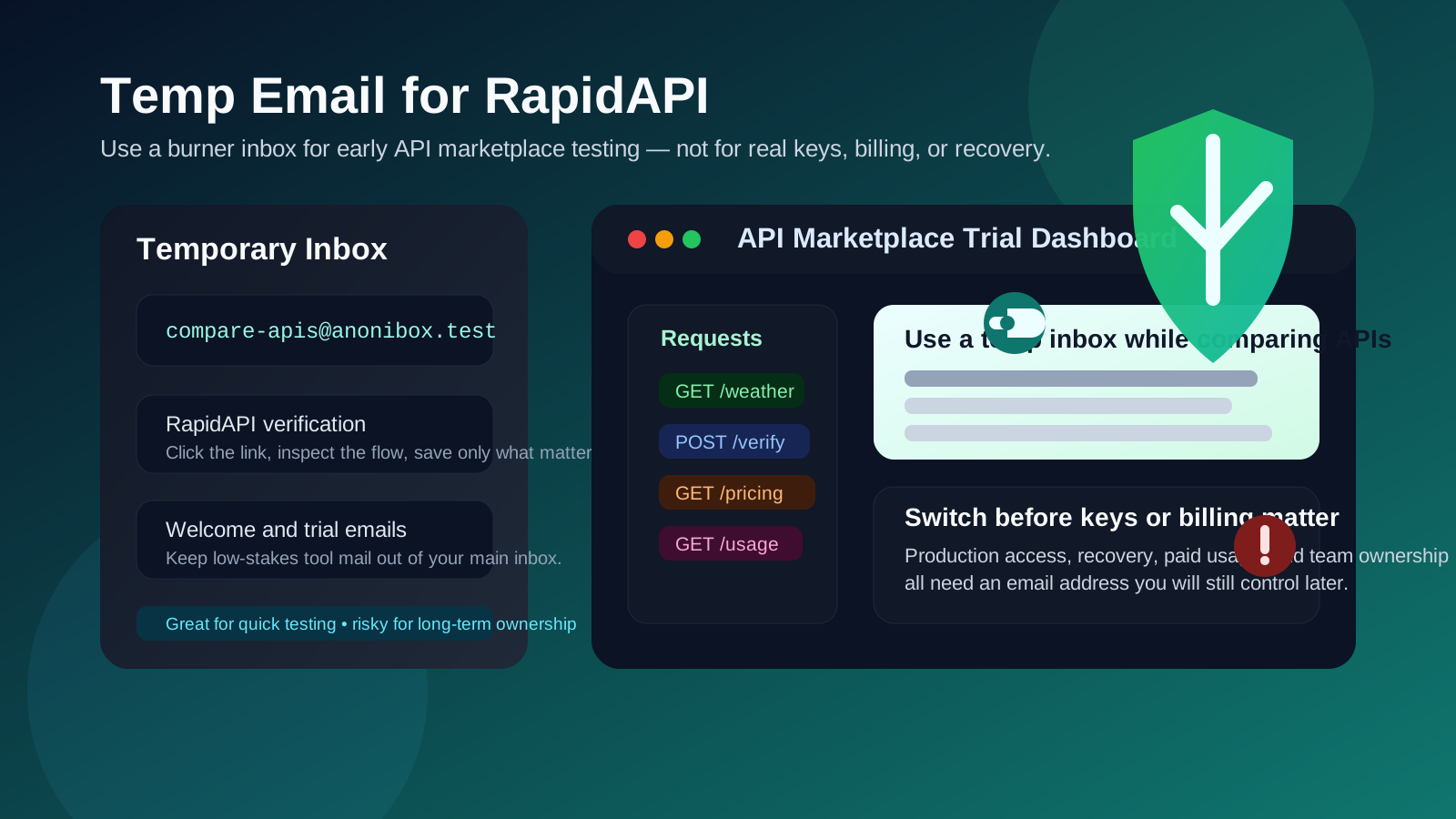
If you browse API marketplaces often, you already know how quickly the signup noise stacks up. One comparison session can turn into a week of welcome emails, plan nudges, product announcements, webinar invites, and follow-ups from tools you may never use again. A disposable inbox can be a practical buffer during that early research phase.
RapidAPI fits that pattern especially well because many people arrive there in exploration mode. They want to inspect a few public APIs, look at pricing tiers, request example endpoints, test response shapes, and decide whether a given provider is worth deeper work. In that stage, using a temporary address can help keep your main inbox clean.
But the email decision stops being trivial once your account starts holding anything you may need later. That could mean production-facing API keys, paid usage, quota or overage warnings, support replies, security notifications, or shared access with teammates. At that point, a burner inbox stops being tidy and starts becoming a liability.
When a temp email for RapidAPI makes sense
There are several normal situations where a temporary inbox is a reasonable choice.
- Quick API marketplace comparison: you are checking several APIs or adjacent tools and want to separate each trial from your permanent inbox.
- One-off verification: you only need to confirm the account, inspect the dashboard, and see whether the platform is worth more of your time.
- Early developer research: you are browsing docs, endpoints, or provider options before you commit to an integration path.
- Inbox hygiene: you do not want low-stakes evaluation to trigger months of product mail and sales follow-up.
- Disposable testing: the account truly is temporary, and nothing valuable will be tied to it later.
That is the right zone for a temp inbox. You get access to the confirmation message and early onboarding, but you avoid giving your primary identity to every product you investigate for fifteen minutes.
Why people look for a temp email here
Most people searching this are not trying to hide anything dramatic. They usually want one of three things: less inbox clutter, more privacy during tool evaluation, or cleaner separation between casual testing and real work.
That is sensible. Developers, founders, and technical teams often compare API providers in bursts. You might test one service for mapping, another for email verification, another for scraping, another for OCR, and then reject half of them in the same afternoon. If every comparison lands in your daily inbox, the noise becomes larger than the evaluation itself.
Using Anonibox or another disposable inbox can reduce that friction during the first pass. The benefit is real. The catch is that the account itself must stay low-stakes too.
Where a disposable inbox becomes risky
The signup is not the dangerous part. The danger shows up later, when the account matters more than you originally expected.
1. API keys and access details may matter later
If the account ends up tied to keys, tokens, application approvals, or access changes you may need again, a temporary inbox becomes fragile fast. You do not want account control resting on an address that disappears or goes unmonitored.
2. Billing alerts and paid plans need continuity
If you subscribe to a paid API, add a card, or rely on usage notices, receipts, renewal messages, or overage warnings, disposable email is the wrong foundation. Anything with real spend attached deserves a durable inbox.
3. Usage, quota, and incident notices can be important
During casual testing, missing an email is usually not a big deal. During active integration work, missing a notice about limits, access, or account changes can waste time and create preventable confusion.
4. Team access turns a private shortcut into a shared problem
If coworkers, clients, or collaborators may rely on the same account, the email behind it needs to be stable. What feels clever for a solo test becomes messy once another person needs continuity, handoff, or recovery support.
5. Account recovery is where burner-email decisions usually fail
The first login is easy. The problem arrives later when you need a password reset, a security confirmation, or proof that you still control the account. A temporary inbox is convenient right up until the platform expects you to still have it.
A practical rule of thumb
Use a temp email for RapidAPI only if the account is temporary.
If you are just evaluating the marketplace, comparing APIs, or checking documentation and early setup, disposable email is reasonable. If the account may become part of a real integration, a paid workflow, or a shared team setup, start with a permanent inbox or switch to one very early.
How to use a temp email for RapidAPI without creating a mess
1. Decide whether this is a trial or a real account
Before you sign up, be honest about your goal. Are you only browsing and comparing, or do you already suspect the account may survive beyond today? That answer should determine the inbox choice.
2. Keep the first session focused
A temporary inbox works best when the evaluation is deliberate. Instead of letting the test sprawl for days, move through a short checklist:
- Does the marketplace make it easy to compare providers?
- Are the docs and examples clear enough for your use case?
- Can you judge the API quickly without turning the account into a dependency?
- Does the product help you narrow decisions, or is it just another tab?
- Would you trust this setup for more than a short experiment?
That kind of focused session is where temporary email is actually useful: quick access, less inbox clutter, and faster decision-making.
3. Save the small number of messages that matter
During early testing, you usually only need a few emails: the verification message, maybe a welcome link, and sometimes a note you want to compare later. Save those if they matter. Do not assume the inbox will still be around when you need it next week.
4. Do not attach real work to a disposable identity
If the account starts accumulating anything important, stop pretending it is still a throwaway. Move to a stable address before you depend on the account for API access, paid usage, or support continuity.
5. Switch before billing, recovery, or shared access matter
The best time to move from a burner inbox to a permanent one is before the account becomes operationally important, not after you get locked into it. Early switching is clean. Late switching is usually annoying.
When a permanent inbox is the better choice from day one
- you expect to keep using the account beyond a quick comparison
- you may subscribe to paid APIs or real usage plans
- you want dependable access to billing receipts or usage alerts
- you may share the account or coordinate with teammates
- you need a reliable recovery path for security or support issues
- the account may become part of a production integration or client workflow
If any of those sound true, the convenience of a disposable inbox is smaller than the long-term hassle it can create.
Realistic examples
Example 1: comparing public APIs over one afternoon
You want to look at several providers, inspect sample responses, and decide which ones deserve deeper attention. In that case, a temp inbox is sensible. The account is low-stakes, the goal is short-term, and you mainly want to protect your main inbox from noise.
Example 2: solo prototyping for a weekend project
If you are experimenting and nothing valuable depends on the account yet, a disposable address can still be fine. The important part is remembering that the account should stay disposable too.
Example 3: a real integration for work or a client
This is where the disposable approach usually stops making sense. If live keys, usage, recovery, billing, or support could matter later, start with a durable email and avoid the migration headache.
Common mistakes to avoid
- Using a throwaway inbox for a non-throwaway account: this is the biggest mistake by far.
- Waiting too long to switch: people often say they will update the email later, then later arrives after the account already matters.
- Thinking only about signup privacy: later recovery and continuity are usually the bigger issue.
- Ignoring billing and usage consequences: any account tied to money or production traffic deserves a monitored inbox.
- Letting a personal test quietly become team infrastructure: what begins as solo experimentation can drift into shared dependency surprisingly fast.
How this compares with adjacent API tools
The same logic often applies when people test tools like Postman, Insomnia, Hoppscotch, Apidog, SwaggerHub, or Bruno. A burner inbox is often helpful during evaluation. It becomes risky the moment the account crosses into real ownership, shared use, or long-lived work.
RapidAPI just makes that transition especially important because marketplace exploration can quickly turn into actual API dependency. The distance between “I am only testing” and “this key is now part of something real” is often shorter than people expect.
Final takeaway
A temp email for RapidAPI is a practical choice when you are doing short-lived marketplace research, low-stakes signup verification, or early API comparison work.
It is the wrong choice once the account becomes important for keys, paid usage, quota notices, billing, support, or team access. Use temporary email for the trial phase if you want inbox privacy, then switch to a stable address before the account becomes something you actually need to keep.