Yes, a temp email for Upvoty can make sense when you only want to test the signup flow, inspect a feedback board, or compare product-feedback tools without tying another SaaS account to your main inbox right away.
No, it is not a good long-term setup once real admins, team invites, customer feedback workflows, or account recovery depend on that address, so you should switch to a permanent inbox before the account becomes important.
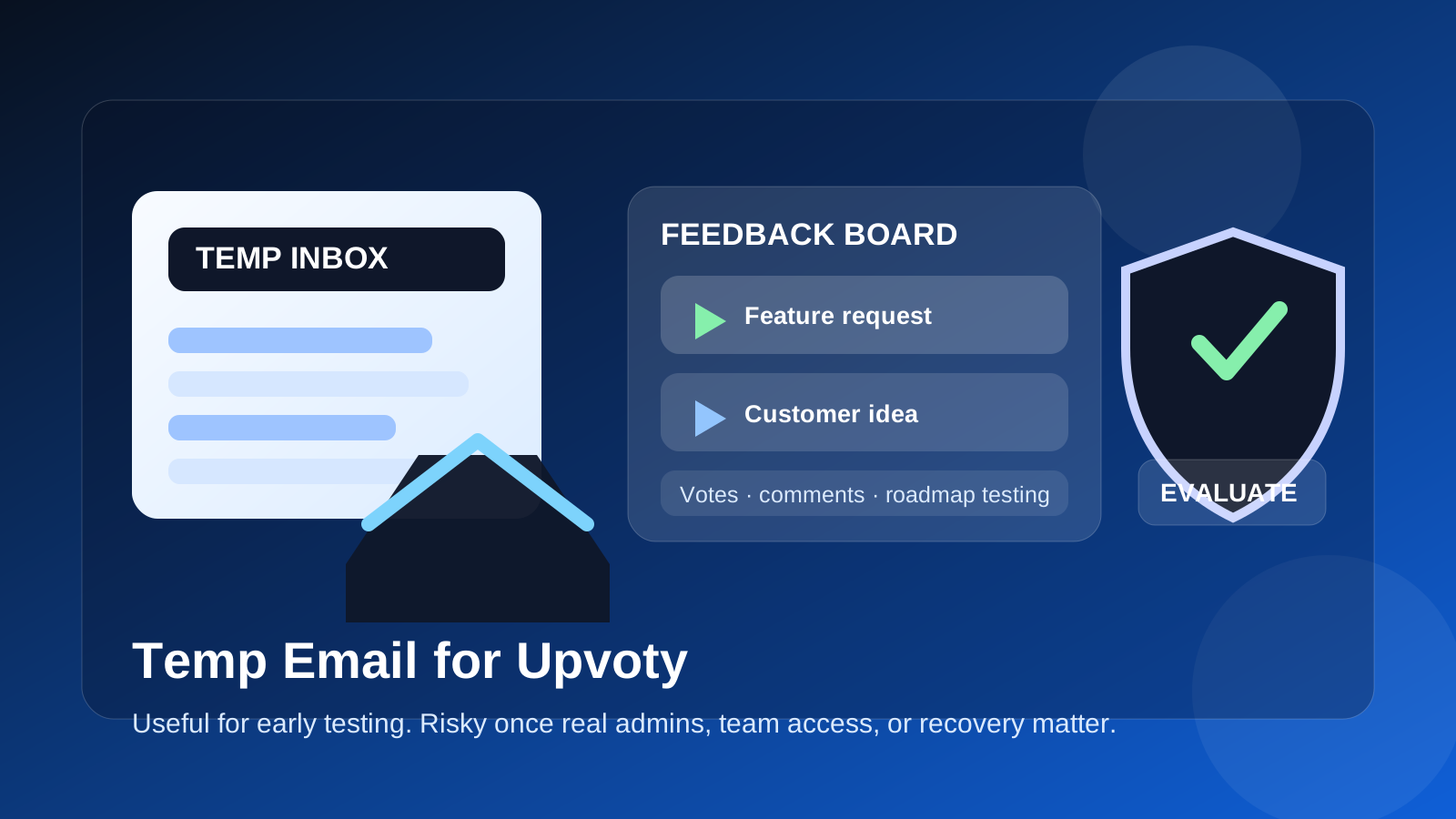
That is the practical answer behind the keyword temp email for Upvoty. A temporary inbox is useful during the evaluation stage because feedback platforms often send more email than you want before you have even decided whether the product belongs in your stack. You may only want to verify the account, click through the dashboard, test the voting experience, and see whether the platform fits your team. In that short window, keeping the experiment separate from your primary inbox is a perfectly reasonable move.
The trouble starts when the trial stops being a trial. Feedback and roadmap tools have a habit of becoming part of a real workflow. One person signs up to take a look, then the board gets shared internally, then customer ideas start arriving, then teammates are invited, and suddenly the email behind the account matters much more than it did on day one. That is where a disposable inbox becomes a liability instead of a convenience.
If you use Anonibox or another temporary inbox service for low-stakes software testing, the safest rule is simple: use it while the account is still disposable in practice, then move to a durable address before the account begins to own anything real.
Why people look for a temp email for Upvoty
Most people are not looking for a temp email because they are doing something shady. Usually they are trying to stay organized. Product teams, founders, indie makers, agencies, and software evaluators often test several tools in the same week. Every one of those tools wants an email address, and every one of them may send welcome messages, setup prompts, release notes, webinar invites, feature announcements, and sales follow-up.
Upvoty fits that pattern. You may want to see how the board looks, whether the interface feels clean, how suggestions are displayed, whether voting is intuitive, and whether the product seems better suited to your workflow than alternatives. None of that requires committing your main inbox immediately.
Common reasons people try a temp email for Upvoty include:
- comparing several feedback board or roadmap tools at once
- testing signup, email verification, and initial workspace setup
- checking the customer-facing board before looping in a team
- keeping another software trial out of a busy work inbox
- wanting privacy during early evaluation before deciding which vendor is worth keeping
Those are sensible goals. The key is making sure your inbox strategy changes when the account itself changes.
When a temporary inbox actually makes sense
A temporary inbox is strongest during the short, low-stakes evaluation stage. If you are only testing whether Upvoty is worth further attention, there are several situations where a burner or disposable address is a practical choice.
1. You are comparing feedback tools
If you are reviewing Upvoty alongside tools like Featurebase, Frill, Nolt, Canny, Productboard, or UserVoice, a temporary inbox keeps each trial cleaner. You can verify the account, look at the board structure, and judge the product without mixing every onboarding email into your primary mailbox.
2. You only need a first look
Sometimes the goal is narrow. You want to see the dashboard, test the basic setup flow, inspect how public ideas appear, and decide whether the product should even make the shortlist. A disposable inbox is fine when the account is really just a temporary doorway.
3. You want to evaluate privately before involving a team
Maybe you are doing initial research for a client, a startup, or an internal product team and you do not want another vendor sequence hitting a shared inbox yet. In that case, a temporary inbox can help you filter the market before you bring more people into the process.
4. You want better separation from vendor follow-up
Software evaluations become noisy quickly. A separate inbox can make it much easier to see which messages are actually useful and which ones are just another round of marketing. That is especially helpful if you already know most tools in the shortlist will be rejected.
When a temp email for Upvoty becomes risky
The risky part is not usually the signup. The risky part is forgetting to switch later. As soon as the board starts to matter, the inbox matters too.
1. The workspace is becoming real
If the account is moving beyond a private test and turning into the place where your company, project, or client gathers feature requests, then the original email choice is no longer a minor detail. Real workflows need stable ownership.
2. Teammates or clients are getting invited
Once more than one person depends on the workspace, you should stop treating the owner account like a throwaway. Team invites, moderation, board settings, and handoffs are much easier when the core account sits behind a durable inbox you control long term.
3. Customer feedback is starting to accumulate
The moment users or customers are posting ideas, votes, or comments that you care about, the account has already crossed into higher-stakes territory. You do not want future recovery, notices, or ownership questions tied to an inbox you may stop checking.
4. Notifications and account continuity matter
Temporary inboxes are useful because they are temporary. That same trait makes them fragile for anything you need to monitor consistently. If missing an email would be annoying, disruptive, or confusing later, the account has probably outgrown the temp inbox.
5. Account recovery becomes important
This is the most common long-tail problem. The tool looked disposable at the start, so nobody upgraded the inbox strategy. Weeks or months later someone needs a reset link or ownership confirmation. That is when the earlier shortcut becomes painful.
A safer way to use a temp email for Upvoty
You do not need to choose between perfect privacy and reckless convenience. The better approach is staged use.
Start with the temp inbox only for evaluation
Create the temporary address first, use it for signup and verification, and keep the early test self-contained. That gives you the privacy benefit without overcommitting.
Go into the trial with a clear checklist
Do not sign up just to wander around. Decide what you want to learn: Does the board feel intuitive? Are categories and feedback flows clear? Is the public experience polished enough for customers? Does the product feel better than the alternatives you are considering?
Save any important setup details immediately
If there is a confirmation link, onboarding email, or setup note you may need later, keep a copy while the inbox is still available. Temporary inboxes are great for quick access, not reliable archives.
Switch to a permanent inbox before shared usage begins
The best time to upgrade the account email is before customer ideas start piling up, before other admins join, and before the workspace becomes operationally important. Waiting until later usually makes the switch harder and riskier.
Use a dedicated permanent project inbox if you still want separation
Often people do not actually need a disposable inbox forever. They just want the account separated from a personal or overloaded work mailbox. In that case, a dedicated long-term project inbox is usually the smarter next step.
What to evaluate while you are inside Upvoty
If you are going to use a temp inbox for the trial, make the evaluation count. Focus on the product itself instead of the signup mechanics alone.
Board clarity
Can users understand where to submit ideas, how to browse suggestions, and how voting works? A feedback tool should reduce confusion, not create it.
Admin workflow
Look at how manageable the back-end feels. Even in a short test, you can usually tell whether triaging ideas and organizing requests feels lightweight or awkward.
Customer communication fit
If your team cares about transparent product communication, ask whether the overall experience feels credible enough to put in front of users. A feedback board is not just an internal tool. It can become part of how customers perceive your product maturity.
Long-term ownership questions
Imagine the account surviving for a year. Would the current inbox choice still make sense? If the answer is no, treat that as a sign to move the account to a proper address early.
Common mistakes to avoid
- Leaving the temp inbox in place after the tool becomes important. This is the biggest mistake by far.
- Confusing low-stakes signup with low-stakes account ownership. The first may be disposable even when the second is not.
- Inviting teammates before fixing ownership. Multi-person workflows deserve a stable mailbox from the start.
- Ignoring recovery until something breaks. That works right up until the day it does not.
- Judging the product only by marketing emails. Use the inbox to access the tool, then evaluate the tool on workflow quality.
A quick decision checklist
Before you use a temp email for Upvoty, ask yourself:
- Am I only evaluating the tool, or is there a real chance this becomes our live feedback board?
- Will anyone else need admin access soon?
- Would I care if I lost easy access to the original inbox next week?
- Do I really need a disposable inbox, or do I need a separate permanent project address?
- Am I trying to reduce inbox clutter for a short test, or avoid dealing with proper ownership?
If your answers point toward short-term evaluation, a temporary inbox is fine. If they point toward team ownership, customer-facing use, or long-term continuity, move to a real address early.
Final takeaway
A temp email for Upvoty is a smart short-term option for private testing, feedback-board comparisons, and keeping another vendor trial out of your main inbox. That benefit is real, especially when you are exploring several tools and only need a first look.
It becomes the wrong choice once the workspace starts to matter. If customers, teammates, moderation, notifications, or recovery depend on the account, switch to a permanent inbox before the trial quietly turns into a real operating tool. That way, you keep the privacy and inbox-cleanliness benefits without building future account problems into the foundation.