Yes, a temp email for ReadyAPI can be useful when you only want to test the signup flow, review a trial, or compare API tools without giving another vendor your main inbox right away.
No, it becomes a poor long-term choice once shared projects, license ownership, recovery emails, or team workflow depend on that address.
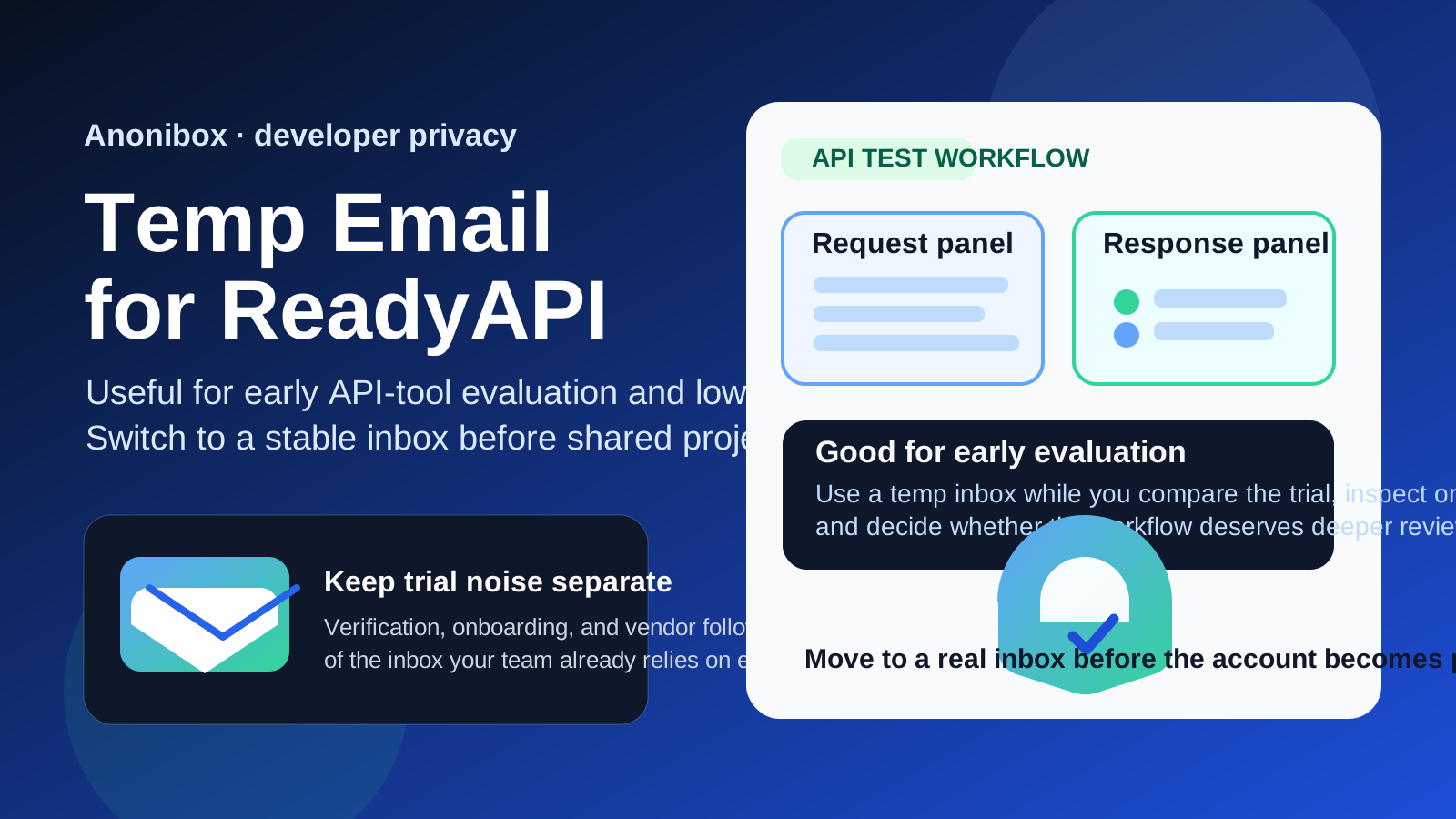
ReadyAPI sits in the part of the software stack where a signup can look low stakes at first and turn into a real dependency surprisingly fast. You may begin with a simple goal: download the trial, inspect the interface, connect to a test endpoint, and see whether the workflow feels better than your current setup. In that early phase, a disposable address can be practical. It helps keep trial messages, onboarding sequences, and vendor follow-up out of the inbox you actually rely on every day.
That convenience has limits. As soon as the account starts mattering for saved work, project handoff, license administration, recovery, or team access, the email address behind it stops being a small detail. It becomes part of operational continuity. That is why the smartest answer is not “always use a temp email” or “never use one.” The real answer is to match the email choice to the stage you are in.
When a temp email for ReadyAPI makes sense
A temporary inbox is most useful when the ReadyAPI account is clearly experimental and short-lived.
- Early tool comparison: you want to evaluate ReadyAPI alongside tools such as Postman, Insomnia, Hoppscotch, or Apidog without tying every test to your permanent inbox.
- Short trial evaluation: you only need the verification email, basic onboarding, and enough access to judge whether the product fits your workflow.
- Inbox hygiene: you want pricing follow-ups, product announcements, and nurture sequences separated from your real work communication.
- Low-stakes research: you are reviewing interface fit, trial friction, or general testing workflow rather than setting up something your team will own.
That is the sweet spot. A disposable inbox gives you room to evaluate without immediately committing your long-term contact path to another vendor relationship.
What a temp email actually helps with
Temporary email does not make an API testing platform more secure, more private, or more durable on its own. What it helps with is exposure control. It lets you decide when a vendor gets your real inbox and when a tool is still just part of an evaluation round.
Cleaner trial management
If you are testing several API tools in one week, the follow-up adds up fast. Welcome emails, setup suggestions, webinar invitations, release notes, upgrade prompts, and sales outreach can pile up quickly. A temp inbox keeps that noise separate so the trial stays easier to manage.
Less premature commitment
Many teams hand out a permanent email too early, before they even know whether a tool will survive the shortlist. Using a disposable address for the first pass can prevent a casual test from turning into months of unwanted follow-up.
Better comparison discipline
One simple but underrated benefit is clarity. When each tool has its own isolated signup path, it becomes easier to compare onboarding quality, trial friction, and how aggressively each vendor follows up. That can tell you a lot about the buying experience before you even decide whether the product is technically strong enough.
Where a temp email becomes risky for ReadyAPI
The danger is usually not the first hour of testing. The real problem starts when an account that was meant to be disposable begins collecting work that is not disposable anymore.
1. Shared projects and collaboration need continuity
If the account starts to matter for a team, a throwaway inbox becomes weak infrastructure. Even if you begin alone, the moment a tool is heading toward shared use, stable ownership matters more than short-term privacy convenience.
2. License ownership should not sit on a throwaway address
With commercial developer tools, billing, activation, renewals, or administrative communication can matter more than the initial signup email. If the inbox disappears or stops being monitored, you can create avoidable friction for yourself later.
3. Recovery and security messages matter more over time
Password resets, verification prompts, suspicious-login notices, and ownership confirmations are easy to ignore during a casual trial. They become much more important if the account sticks around or gets tied to work you care about.
4. Saved work can outlive the “temporary” decision
This is a common mistake in software evaluation. Someone opens a trial account as a quick experiment, builds useful requests or test assets inside it, and only later realizes the account has become part of the workflow. At that point, the disposable inbox stops feeling clever and starts feeling fragile.
ReadyAPI is different from a throwaway content gate
Some signups are basically harmless: you download a PDF, join a webinar, or unlock a single-use asset. A tool like ReadyAPI is different because it can become part of a real testing routine. Even if you only intend to explore, the account may end up associated with saved projects, internal notes, trial extensions, vendor conversations, or future procurement steps.
That does not mean a temp email is wrong. It means you should treat it as an evaluation tool, not as the permanent identity behind software your team may actually use.
Temp email vs a dedicated work inbox
This is often the best way to think about the choice:
- Temp email: best for short trials, comparison rounds, and low-stakes evaluation.
- Dedicated permanent work inbox: best for anything involving team continuity, license administration, procurement, account recovery, or long-term ownership.
Many people frame the decision as one or the other forever. In practice, the cleanest workflow is often staged. You use a temporary address while the tool is still a candidate. If ReadyAPI starts looking like a real fit, you switch to a stable inbox before the account becomes important.
If you use Anonibox for that first step, treat it as a filter for early evaluation rather than the mailbox that will own the relationship forever.
How to use a temp email for ReadyAPI without creating future headaches
1. Decide whether this is a true trial or the start of adoption
Before you sign up, ask the blunt question: am I evaluating this, or am I already halfway to adopting it? If the answer is adoption, starting with a durable address is usually better. If the answer is evaluation, a temp inbox is reasonable.
2. Keep the test narrow and intentional
Temporary email works best when the evaluation window is focused. Verify the account, inspect the onboarding, test the basics you care about, and decide quickly whether the product deserves deeper review. A disposable inbox is much less useful when the trial drifts into an open-ended semi-production setup.
3. Save the messages that matter early
Even during a short trial, a few emails may be worth keeping:
- verification or activation messages
- key onboarding links
- important trial terms or extension details
- anything you may need if you recreate the account later under a permanent address
Do not assume the temp inbox will be a reliable archive.
4. Do not let a disposable account become the team default
If coworkers start relying on the account, that is your signal to stop using the temporary address. Change the email before shared ownership, handoff, or account administration become messy.
5. Switch before recovery and admin issues become urgent
The best time to move to a real inbox is before you need it, not after something goes wrong. If the trial has gone well and the tool looks promising, make the switch while the account is still simple.
When a permanent inbox is the better choice from day one
- you expect to keep the account beyond a short technical evaluation
- you are testing on behalf of a team rather than only for yourself
- the account may be tied to licensing, renewals, or purchasing conversations
- you expect to return to the same saved setup later
- you care about dependable recovery, ownership, and administrative continuity
In those cases, the small privacy benefit of a temp inbox is usually outweighed by the risk of future friction.
Real-world examples
Example 1: side-by-side API tool comparison
You want to compare ReadyAPI with SwaggerHub, Stoplight, and the more hands-on testing workflow in Postman or Insomnia. That is a solid temp-email scenario. You need the first-run access and onboarding, but you do not want every vendor claiming your permanent inbox before you even know which tool feels right.
Example 2: solo consultant doing a quick evaluation
If you are testing whether ReadyAPI is worth recommending for a client and you are not planning to keep the account, a disposable inbox is fine. The account remains genuinely temporary, so the email choice can be temporary too.
Example 3: team-standard testing workflow
This is where a temp email stops making sense. If the tool may become part of your team’s normal process, a permanent inbox is the right foundation from the start or very early in the trial.
Common mistakes to avoid
- Keeping the throwaway inbox after the tool becomes useful: the more value you store in the account, the more fragile that decision becomes.
- Forgetting that admin emails matter: the first verification message is rarely the last important email.
- Optimizing only for privacy and not for continuity: privacy matters, but so does reliable ownership.
- Letting trial work turn into real work: if the test starts producing assets you care about, move to a durable inbox early.
- Assuming every developer-tool signup is equally disposable: some accounts stay trivial, while others become long-lived workflow anchors.
Should you use a temp email for ReadyAPI?
If your goal is short-term evaluation, yes. A temp email for ReadyAPI is a practical way to review the signup flow, compare the trial with other API tools, and keep early-stage vendor messages out of your main inbox.
If your goal is long-term ownership, shared use, or dependable recovery, no. Move to a permanent inbox before the account becomes something you actually depend on. Temporary email is useful for the trial phase. It is a weak foundation for software that may end up inside a real testing workflow.