A temp email for Contentstack is useful when you only want to test the CMS, create a trial stack, or compare headless platforms without feeding your main inbox another long onboarding sequence.
It becomes a weak long-term choice once production admins, shared team invites, billing, critical notifications, or account recovery depend on that inbox.
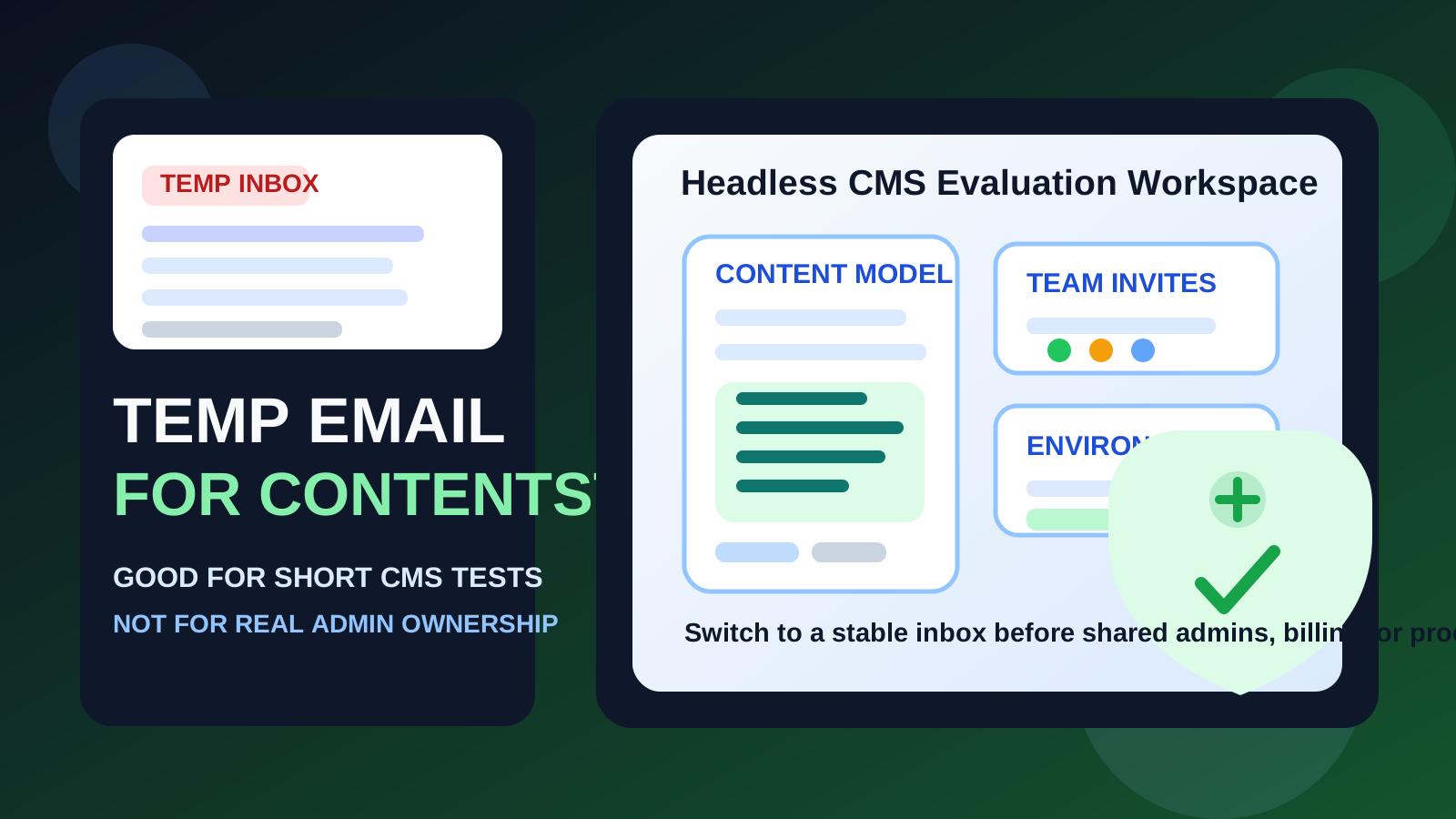
That is the practical answer behind the keyword. Contentstack is exactly the kind of product people often sign up for during an evaluation sprint: test a stack, inspect the editor experience, create a content model, explore environments, review preview options, or compare it against a few other headless CMS tools before deciding which platform deserves deeper work. In that early phase, using a disposable inbox can be convenient because it gets you through verification and onboarding without turning a casual product trial into months of vendor email.
The problem is that headless CMS accounts do not always stay casual for long. A quick sandbox can become the real content hub for a marketing site, app, documentation portal, or multi-team publishing workflow. Once that happens, the email behind the account stops being a minor signup detail. It becomes part of how you handle security notices, ownership, billing, teammate access, and recovery when something goes wrong.
So the smart move is not to treat temporary email as automatically good or automatically bad. It is to use it during the genuinely temporary part of the workflow, then switch to a durable inbox before the account becomes important.
Why people look for a temp email for Contentstack
Most people searching this are not trying to hide anything dramatic. Usually they want cleaner software testing and less inbox clutter. Headless CMS vendors often send welcome campaigns, setup checklists, feature education, webinar invites, pricing nudges, and sales follow-up even if you only wanted a fast product comparison. If you are testing several CMS platforms in the same week, that noise adds up quickly.
Common reasons people want a temp email for Contentstack include:
- Comparing headless CMS options: you may be evaluating Contentstack alongside Contentful, Storyblok, Strapi, Sanity CMS, Payload CMS, or Directus.
- Testing a private proof of concept: maybe you are building a draft content model, trying API delivery, or exploring a one-off prototype.
- Keeping vendor follow-up out of your main inbox: you want the verification email, not weeks of nurture messages from every platform you touched.
- Separating experimental projects from real publishing operations: a disposable inbox can keep low-stakes tests from blending into your actual work communications.
- Running a short trial with a clear end date: if the whole exercise is only supposed to last a day or two, temporary email can feel like a reasonable privacy layer.
Those are all understandable goals. The real question is whether the account is still temporary in practice, not just in your head.
When a temp email for Contentstack actually makes sense
Temporary email is strongest when the stack is low-risk, short-lived, and easy to abandon.
1. You are evaluating the platform before choosing a CMS
If you only want to inspect the interface, create sample content, test the content-model workflow, or see whether the product belongs on your shortlist, a temp inbox is fine. You get through verification and the first login without volunteering your main address to another software funnel.
2. You are running a disposable sandbox or demo
Sometimes the goal is narrow: make one sample stack, create a content type, check editor ergonomics, and decide whether the experience feels right. If the account is truly disposable and nobody else will rely on it later, temporary email can work well.
3. You only need short-term access for setup and learning
If all you need is the confirmation link plus a few early onboarding messages, a temporary inbox can do that job nicely. This is especially useful when you are moving fast and do not want every trial to follow your permanent inbox for the next six months.
4. You want cleaner research while comparing several vendors
Headless CMS evaluation often means opening multiple trials in a short period. Temporary inboxes can keep that comparison cleaner by separating each signup from the address you use for real work, clients, or internal publishing operations.
When it starts becoming a bad idea
The risk changes as soon as the CMS stops being a throwaway experiment. Contentstack can sit underneath real teams, real websites, real apps, and real publishing operations. That is the line you do not want to cross with a burner inbox still attached.
1. The stack is becoming production-adjacent
If the project is likely to power a public site, customer-facing app, knowledge base, or internal publishing workflow that other people care about, the ownership email needs to be stable. Production work should not depend on an address you might never check again.
2. Multiple people may need access
As soon as teammates, editors, developers, contractors, or clients may be invited into the workspace, the owner account matters more. A disposable inbox makes shared ownership messy, especially if someone later needs to confirm permissions, review notices, or transfer responsibility cleanly.
3. Billing, contracts, or upgrades matter
Once plan limits, invoices, usage conversations, or account changes become relevant, the email behind the account becomes operationally important. Missing those messages is no longer a minor inconvenience. It can become an expensive headache.
4. Security and recovery start to matter
The moment the CMS contains anything valuable, account recovery becomes a real concern. Password resets, ownership checks, and security warnings should not be sent to an inbox that was only meant to exist for a short test.
5. The stack owns real publishing workflows
Content entries, structured models, environments, previews, and integrations may all feel temporary at first. But if the CMS becomes the source of truth for anything your team depends on, the account should graduate to an email address you fully control.
What can go wrong if you keep the temp inbox too long?
- You lose recovery access: reset links and verification emails become hard or impossible to retrieve later.
- You miss important notices: plan warnings, security updates, billing emails, or admin messages may go unseen.
- You create ownership confusion: people remember the stack, but nobody cleanly owns the original account email anymore.
- You make handoffs harder: agency-to-client or developer-to-team transfers become more awkward than they need to be.
- You blur the line between testing and production: what started as a quick CMS experiment quietly becomes real infrastructure.
None of those problems usually appear during the first hour. That is why people underestimate them. The danger is not the signup itself. The danger is forgetting to switch once the account starts to matter.
A safer workflow for using a temp email with Contentstack
If you want the privacy benefit without the predictable downside, use a staged approach instead of treating the disposable inbox like permanent account infrastructure.
Start with the temporary inbox only for evaluation
Create the temporary address before signup so the verification message and first onboarding emails stay out of your everyday inbox. A service like Anonibox is useful here because it gives you short-term access without making the trial part of your long-term communication footprint.
Go into the trial with a checklist
Temporary email works best when the evaluation is focused. Decide what you are actually testing: content modeling, editor usability, role setup, API delivery, environment workflow, preview behavior, or overall fit for your team. If you do not define the test, the account is more likely to linger and become something half-real by accident.
Save any important setup details immediately
If a verification link, initial invite, or setup note matters, capture it while the inbox is active. Temporary inboxes are helpful for short access, not reliable long-term storage.
Switch to a permanent inbox before shared or production use
The right time to change the account email is before teammates are invited, before production content lives there, before billing matters, and before the stack becomes the official home of anything important. Waiting until after a problem appears is the messy version of the workflow.
Use a dedicated permanent project inbox if you want separation
Many people do not actually need a throwaway email forever. What they really want is a buffer between experimental tools and their main inbox. In that case, a stable project-specific address is usually the better long-term choice. It preserves separation without sacrificing recovery and ownership.
Realistic Contentstack scenarios
Good use case
You want to compare Contentstack with a few other headless CMS tools this week, create a sample stack, test the editorial flow, and decide whether it deserves deeper evaluation. A temp inbox is a good fit because the work is low-stakes, short-lived, and reversible.
Borderline use case
You are building a prototype that might become real if stakeholders like it. This is where many people fool themselves. If there is a meaningful chance the prototype becomes the real CMS foundation, a separate permanent project inbox is smarter than a disposable one.
Bad use case
You are about to use the stack for a live site, a customer-facing application, a real content team, or anything involving paid plans and shared admins. That should not live behind a burner inbox.
Common mistakes to avoid
- Leaving the temp inbox in place after the trial becomes serious: convenience today becomes fragility later.
- Using one disposable inbox for too many CMS tests: that can make it harder to track which messages belonged to which platform.
- Assuming the content matters but the account does not: recovery, ownership, and billing live behind the account layer.
- Waiting until a password reset is needed to fix the email: the best time to switch is before you depend on recovery.
Quick checklist before you sign up
- Am I only evaluating Contentstack, or is there a real chance this stack becomes permanent?
- Will teammates, contractors, or clients need access later?
- Will billing, plan limits, or vendor communication matter soon?
- Could this stack end up powering a real site or app?
- Do I need a burner inbox, or do I actually need a separate permanent project inbox?
If your answers point toward a short private experiment, a temp inbox is usually fine. If they point toward team ownership, production content, or real operational dependency, move to a durable address early.
Final answer
A temp email for Contentstack is useful for early CMS testing, short product comparisons, and private sandbox work when you want to protect your main inbox from another software trial.
It becomes a bad long-term foundation once production admins, team invites, billing, or account recovery matter. Use the temporary inbox during evaluation, then switch to a stable address before the account becomes something your team actually relies on.
That gives you the privacy and inbox-hygiene benefit of temporary email without quietly building real CMS ownership on top of a contact method you never meant to keep.