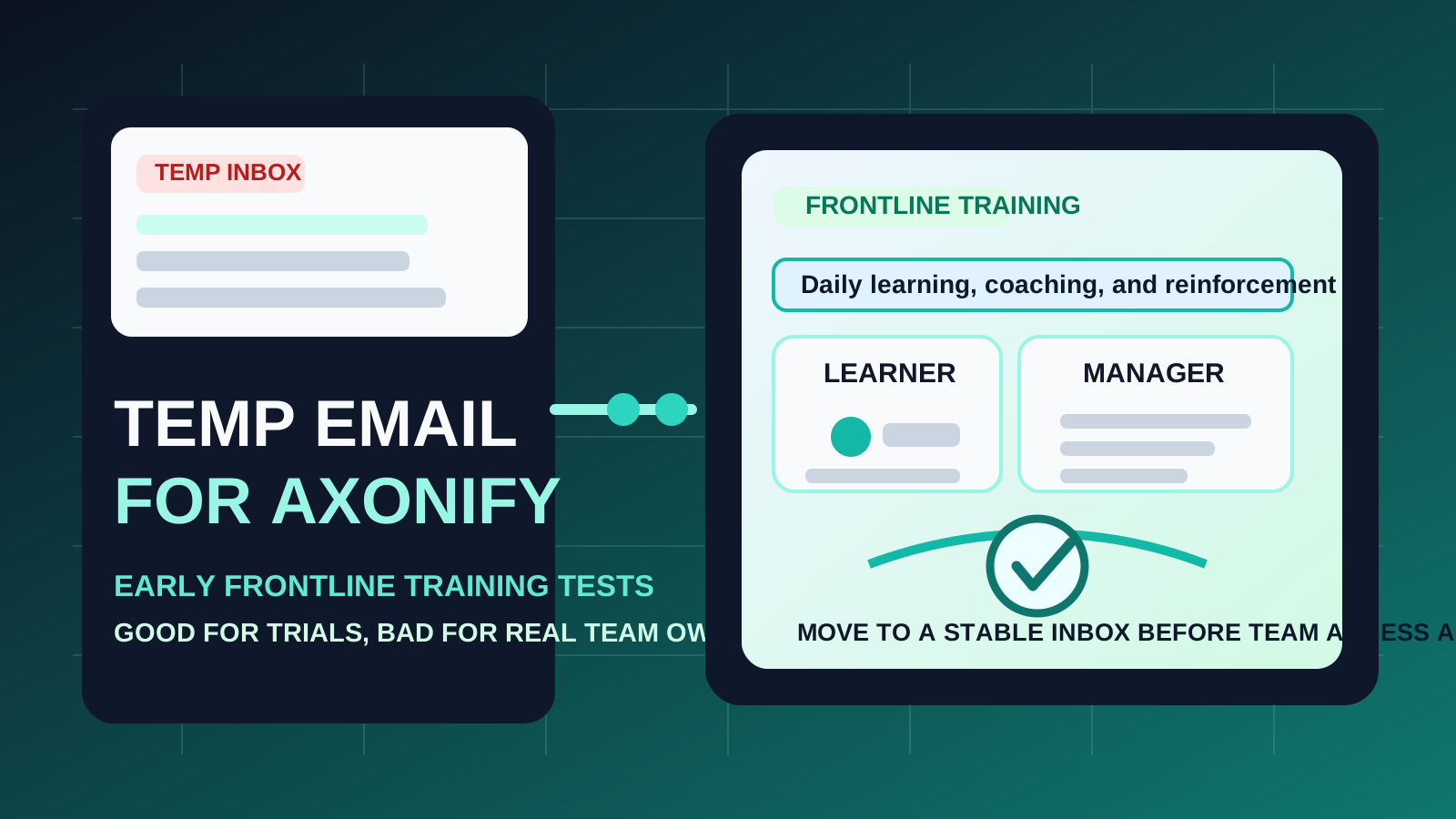
A temp email for Axonify is reasonable for quick signup, first-pass product evaluation, and low-stakes testing of the learning experience.
It becomes a poor long-term choice once team rollout, real learner access, manager visibility, or future account recovery start to matter.
If you are comparing learning and enablement tools, it makes sense to protect your main inbox during the first round of evaluation. Most platforms send a wave of confirmation messages, onboarding tips, feature announcements, webinar invites, and sales follow-ups as soon as you create an account. That can be helpful once you know a platform belongs on the shortlist. Before that, it is mostly noise.
Axonify fits that pattern well. Teams often want to see how the signup works, how the interface feels, whether the learning flow makes sense for frontline teams, and whether the platform looks promising enough for a deeper pilot. That is exactly the stage where a disposable inbox can be practical. But the moment the account starts turning into a real rollout, a real pilot, or something managers and learners may rely on later, temporary email stops being clever and starts becoming fragile.
When a temp email for Axonify makes sense
There are several situations where using a disposable address is a perfectly reasonable first move.
- Quick product comparison: you are reviewing Axonify alongside platforms like WorkRamp, Lessonly, Trainual, or EdApp and want to keep the early-stage inbox clutter separate.
- Low-stakes evaluation: you only want to inspect the dashboard, see the learning flow, and decide whether the platform deserves more attention.
- Shortlisting without commitment: you are not ready to connect the product to your normal work inbox or internal rollout process yet.
- Inbox hygiene: you do not want months of follow-up mail from every training platform your team touched once.
That is the best use case for temporary email. You still receive the verification message and the first onboarding steps, but you do not automatically attach your long-term address to a tool you may never adopt.
Why Axonify is different from a throwaway newsletter signup
Axonify is not just a simple content site or a one-time download gate. It is the kind of product people explore with the idea that it might support training, communication, reinforcement, or frontline enablement over time. That matters because accounts tied to learning platforms often become more important after the first session, not less.
You may begin with a harmless trial mindset, then realize the platform is interesting enough to revisit. Once that happens, the email address attached to the account starts carrying more weight than it did on day one.
Where disposable email becomes risky
1. Team rollout needs continuity
If your evaluation turns into a real internal conversation, continuity matters. Maybe a manager wants to look at the account. Maybe a training lead wants to compare notes. Maybe someone wants to revisit the setup next month. A temporary inbox is fine for private testing, but it is a shaky foundation for a platform that may become part of a team decision.
2. Learner and manager access can outlive the trial
Training platforms often involve more than one person very quickly. Even if you start alone, you may end up discussing learner journeys, manager dashboards, progress reporting, or rollout structure with other stakeholders. If the account is tied to an inbox you no longer control, you create avoidable friction later.
3. Admin ownership is hard to fake later
One of the biggest mistakes with disposable email is pretending the account is temporary while your behavior says the opposite. If you are customizing settings, saving useful information, or discussing the platform seriously with coworkers, ownership matters. A stable inbox is much better for that than a mailbox that may vanish.
4. Account recovery is the obvious weak point
The most common problem is not immediate. It shows up later when you want to sign back in, reset a password, confirm a security change, or prove that the account belongs to you. Disposable inboxes are great right up until the moment the platform expects you to still have them.
A practical rule of thumb
Use a temp email for Axonify if you are evaluating the platform. Do not use one if you already expect the account to become part of a real pilot, a live rollout discussion, or an ongoing training workflow.
That distinction keeps things simple. Temporary email is great for filtering, comparing, and reducing clutter. Permanent email is better for ownership, recovery, and collaboration. Problems usually start when people blur those two stages together.
How to use a temp email for Axonify without creating a mess
1. Decide whether this is a trial or the start of a real rollout conversation
Be honest with yourself before signing up. If you are just checking the product experience, a disposable inbox is fine. If you already know the platform will be shared internally or presented to other stakeholders, starting with a stable address is usually the better call.
2. Save the important first messages
During early evaluation, you usually only need a small handful of emails:
- the verification message
- the first welcome or onboarding links
- any setup notes you may want to compare later
- details that help you recreate the account properly if the tool makes the shortlist
Do not assume the inbox will still be there later. If something matters, capture it while the evaluation is fresh.
3. Test the platform deliberately
The goal is not to create a half-serious account you forget about. The goal is to learn quickly whether the product fits your needs. For Axonify, that might mean looking at things like:
- how clear the initial setup feels
- whether the training experience looks practical for frontline users
- how approachable the reporting and manager view seem
- whether the platform feels lightweight enough for actual adoption
- whether it solves a real training problem better than the alternatives you are reviewing
This is where a temporary inbox helps most: fast access, less email clutter, and cleaner evaluation across multiple tools.
4. Switch before anything real depends on the account
The safest time to move from a disposable address to a stable one is before the account matters, not after. Do it before you invite coworkers, store useful setup work, or start talking about real implementation steps.
If you are using Anonibox to keep the first-pass evaluation clean, treat it as a filter for low-stakes signups, not as the permanent owner of a platform you may actually keep.
When a permanent inbox is the better choice
Start with a stable email address if any of these are already true:
- you expect to revisit the account after the first test session
- you plan to involve training leads, managers, or operations stakeholders
- you may need a reliable recovery path later
- you are saving meaningful settings, notes, or rollout ideas
- you are treating the account as the start of a real pilot rather than a casual look around
Once one of those conditions applies, the convenience of a throwaway inbox is usually smaller than the problems it creates.
Realistic examples
Example 1: one afternoon of vendor comparison
You want to test several learning platforms, compare their first-run experience, and decide which ones deserve a deeper conversation. In that case, a temp inbox is sensible. You can verify the account, inspect the interface, and avoid weeks of marketing mail from products that never make the shortlist.
Example 2: solo evaluation for internal research
If you are only gathering information for yourself before bringing options to a broader team, disposable email can still work well. The important thing is remembering that the account itself should stay disposable too unless the platform earns a second phase.
Example 3: serious internal pilot planning
This is the point where temporary email usually stops making sense. If the account may influence rollout planning, manager review, or live training conversations, use an inbox you control long term.
Common mistakes to avoid
- Using a throwaway inbox for a non-throwaway account: the account feels temporary at first, but your later behavior turns it into something valuable.
- Waiting too long to switch: if the platform looks promising, move to a stable address before invites, settings, and recovery begin to matter.
- Thinking only about marketing spam: inbox clutter is real, but ownership and recovery matter more once the account becomes useful.
- Ignoring the human side of rollout: tools that touch training and frontline adoption rarely stay single-user for long.
- Assuming you will remember everything later: if the inbox disappears, so can the path back into the account.
A cleaner way to evaluate Axonify
- Use a temporary inbox for first-pass evaluation.
- Verify the account and review the early onboarding.
- Test the learning experience in one focused session.
- Decide quickly whether the product is disposable to you or strategically interesting.
- If it is strategically interesting, move to a permanent email before team access, recovery, or ownership become important.
That approach keeps the privacy benefit without pretending a disposable inbox is the right choice for every stage of evaluation.
Final takeaway
A temp email for Axonify is useful when you want to test the signup flow, compare the product with other training platforms, and keep low-stakes evaluation mail out of your main inbox.
It becomes a weak long-term choice once the account starts affecting real learners, managers, rollout planning, or future recovery. Use temporary email for the trial phase, then switch to a stable address before the account becomes something people depend on.